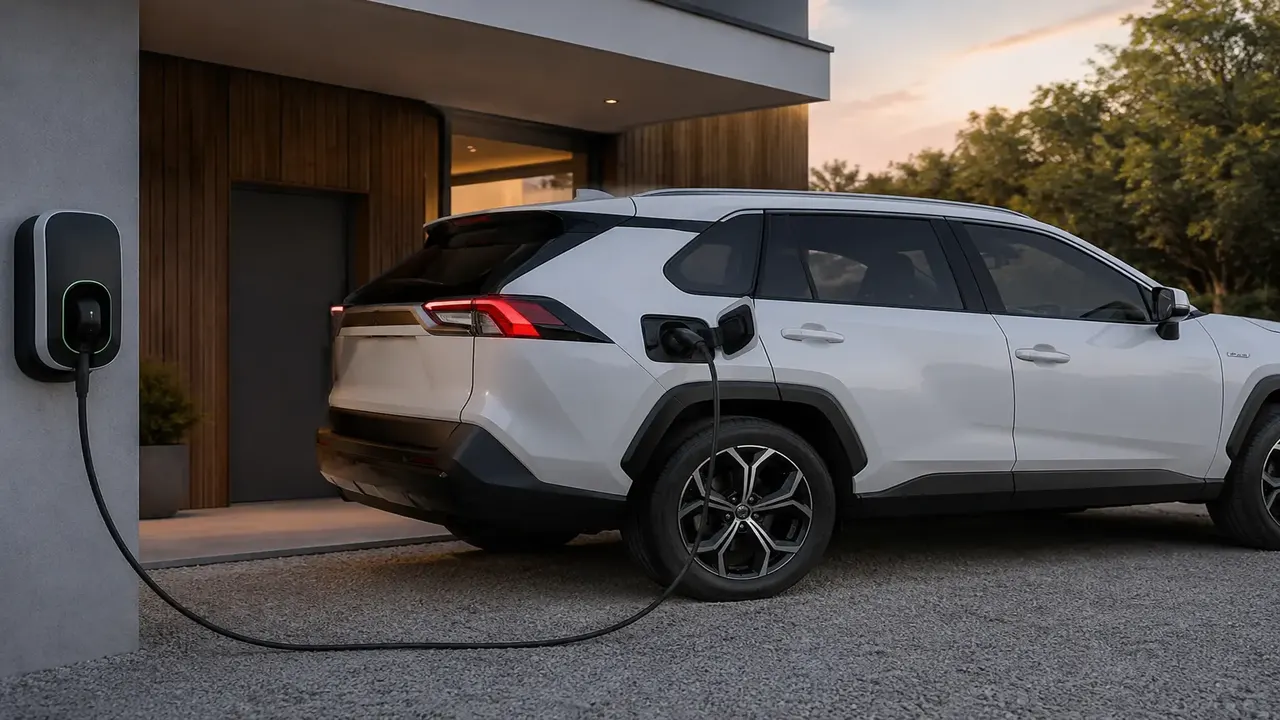
Hybrids still need traditional engine maintenance — oil changes (often on extended intervals of 7,500-10,000 miles thanks to less engine runtime), air filters, and spark plugs — plus hybrid-specific items: 12V battery checks, brake system inspection (pads often last far longer via regenerative braking, but rotors need corrosion checks), and periodic hybrid/inverter coolant service. The high-voltage battery itself needs no routine maintenance under a separate long warranty, commonly 8 years/100,000 miles in the US.
At a glance: hybrid maintenance items
| System | Typical attention |
|---|---|
| Engine oil | Every 7,500-10,000 mi (often extended vs. non-hybrid equivalent) |
| Spark plugs/air filter | Similar to a comparable gas car, per manufacturer schedule |
| 12V battery | Test annually; commonly replaced every 3-5 years |
| Brakes | Pads often last 70,000-100,000+ mi; check rotors for corrosion |
| Hybrid/inverter coolant | Check periodically; full change often ~100,000 mi or ~10 yrs |
| High-voltage battery | No routine maintenance; covered under separate long warranty |
The engine side hasn't gone away
A full hybrid still has a gasoline engine, and that engine still needs oil changes, an air filter, spark plugs, and periodic inspection — just often on somewhat extended intervals because the engine runs less overall, particularly in city driving where the electric motor handles more of the work. Don't skip these because the car "feels electric" — the combustion side needs the same fundamental care as any gas engine, just possibly less often.
What's added on top: hybrid-specific items
12V battery
As covered in our dedicated guide, hybrids still rely on a conventional 12V battery to power accessories and wake the hybrid system, and it typically needs replacement every 3-5 years — sometimes the actual cause of a hybrid that "won't start" when the high-voltage battery is perfectly healthy.
Brakes
Regenerative braking extends pad life significantly, often to 70,000-100,000+ miles, but creates a different maintenance quirk: rotors can develop surface rust from underuse. Inspections should look at rotor condition, not just pad thickness.
Coolant systems
Many hybrids run two coolant loops — one for the engine (standard interval) and a separate long-life loop for the inverter/power electronics (often checked around 100,000 miles or 10 years). Don't assume one coolant service covers both.
The high-voltage battery
Under normal use, the traction battery itself needs no routine owner maintenance — no fluid to check, no filter to replace. It's covered by a separate, longer warranty than the rest of the car, commonly 8 years/100,000 miles in the US federally, sometimes longer in certain states or for certain models.
A practical annual checklist
- Oil and filter change per the manufacturer's hybrid-specific interval (don't default to standard gas-car intervals if the schedule differs).
- 12V battery load test.
- Brake inspection focused on rotor condition as well as pad thickness.
- Coolant level checks for both engine and inverter loops (if separate).
- Tire rotation and alignment check — hybrids carry extra battery weight versus a non-hybrid trim, which can modestly affect tire wear.
- Software/firmware update check if the model supports it.
Some general shops default to a standard gas-car service checklist out of habit. Make sure 12V battery health, brake rotor condition, and hybrid coolant intervals are explicitly part of your service, especially at independent (non-dealer) shops less familiar with hybrid specifics.
Overall cost expectations
Hybrid maintenance tends to land between a comparable gas car (which needs more frequent brake work but no hybrid-specific items) and a full EV (which skips engine maintenance entirely) — not a large premium over a standard gas car, and in many cases similar or slightly lower over the ownership period thanks to reduced brake wear offsetting the added complexity.
Frequently asked questions
Do hybrids need more maintenance than gas cars?
How often do hybrids need oil changes?
Does the hybrid battery need maintenance?
Is hybrid maintenance more expensive than gas car maintenance?
Can a regular mechanic service a hybrid?
Sources & further reading
- U.S. Department of Energy — Alternative Fuels Data Center, hybrid vehicle basics
- Consumer Reports — hybrid car maintenance costs and schedule
Figures, prices and policy details were current at the last-updated date above. Automotive pricing, incentives and regulations change frequently — verify time-sensitive details with the linked primary sources. Read our editorial policy and fact-checking standards.