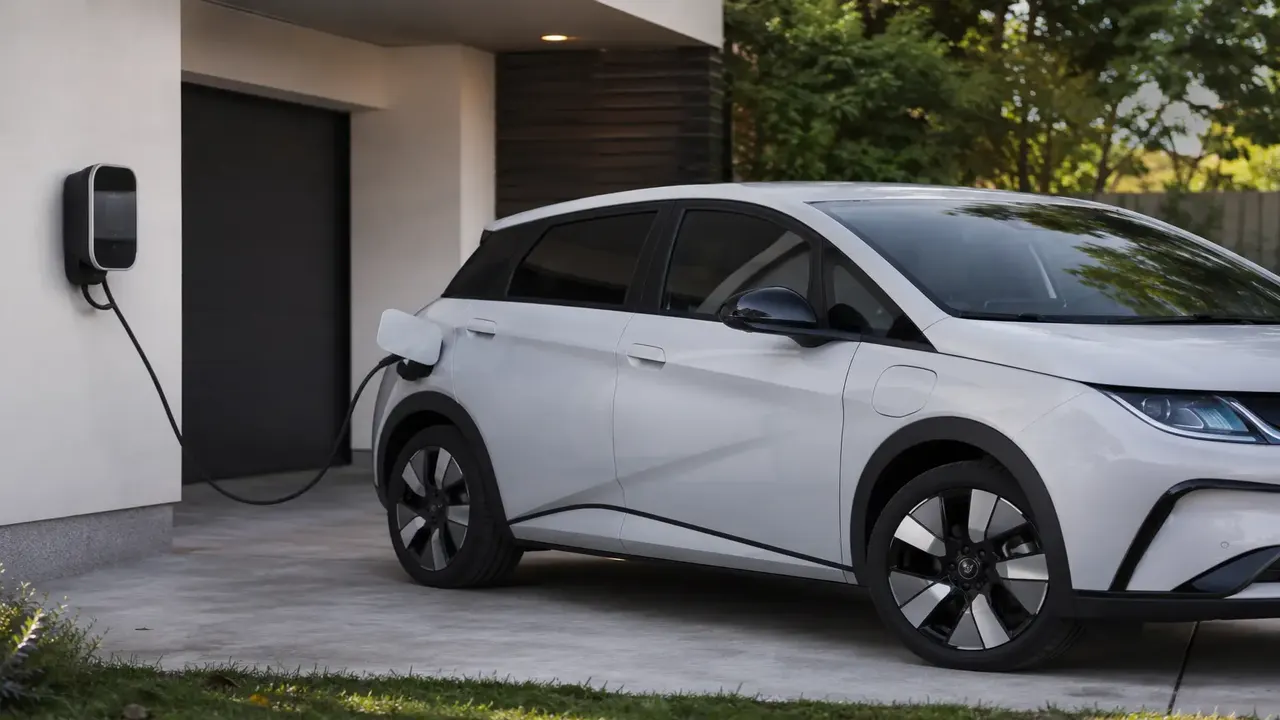
For storage beyond roughly two weeks, most manufacturers recommend leaving the battery between 50% and 80% state of charge, not full and not near-empty, and parking somewhere temperature-stable rather than extreme heat or cold. Turn off phone-as-key search, Sentry Mode/dashcam-style monitoring, and unnecessary connectivity to cut phantom drain, which can otherwise pull 1-3% of charge per week even when parked. Check back and top up every 4-8 weeks for longer layoffs.
At a glance
| Storage length | Recommended action |
|---|---|
| Under 2 weeks | Normal parking; no special prep needed |
| 2 weeks - 3 months | Set charge to 50-80%; disable non-essential connectivity; check monthly |
| 3+ months | Same as above, plus recheck charge every 4-8 weeks and recharge if it drops toward 20% |
Why charge level matters for storage
Lithium-ion batteries age fastest when held at the extremes — full charge or nearly empty — for long stretches, especially in heat. A pack sitting at 100% for months experiences more chemical stress than one resting in the middle of its range. That's why most automakers' storage guidance lands in the 50-80% band: enough charge to run the battery management system and cover phantom drain, but not enough to stress the cells.
What is phantom drain?
Even parked and "off," an EV's computers periodically wake up to check battery health, communicate with a companion app, or listen for a phone key. That draws a small but real amount of power — commonly cited estimates run from under 1% to a few percent of the battery per week, more if features like Sentry Mode, climate preconditioning schedules, or frequent app polling stay active.
Before you park it for a while
- Charge (or discharge) to roughly 50-80%, per your model's guidance.
- Turn off Sentry Mode, dashcam recording, or similar always-on monitoring features if not needed.
- Disable scheduled preconditioning or climate presets tied to your calendar or phone location.
- If parking outdoors, use a cover and, in freezing climates, plan for reduced range on the first drive out.
- Leave the vehicle plugged in at a low-power trickle if that's supported and convenient — it lets the car manage its own charge level rather than relying on you to check.
Temperature matters as much as charge level
Extreme heat accelerates battery aging regardless of charge level, and extreme cold can make a low-charge battery harder to wake up or precondition. A garage or covered, shaded spot is better than a driveway baking in summer sun or an unheated space in a harsh winter.
Letting an EV sit until the pack is fully depleted risks a deep-discharge state that can, in rare cases, require dealer intervention to recover or even damage the pack. If you know a vehicle will sit for months, set a reminder to check the charge level well before it could run out.
Coming back after storage
Before a long-idle EV goes back into regular use, charge it to your normal daily level, check tire pressures (they drop over time even without driving), and take it for a short local drive before a long trip so the battery management system and tires can settle back into normal operating condition.
Frequently asked questions
Should I store an EV fully charged?
How much charge does an EV lose sitting unused?
Is it bad to leave an EV plugged in for months?
Can cold weather damage a stored EV battery?
How often should I check on a stored EV?
Sources & further reading
- U.S. Department of Energy — Alternative Fuels Data Center, EV battery care
- J.D. Power — EV ownership and battery care guidance
Figures, prices and policy details were current at the last-updated date above. Automotive pricing, incentives and regulations change frequently — verify time-sensitive details with the linked primary sources. Read our editorial policy and fact-checking standards.