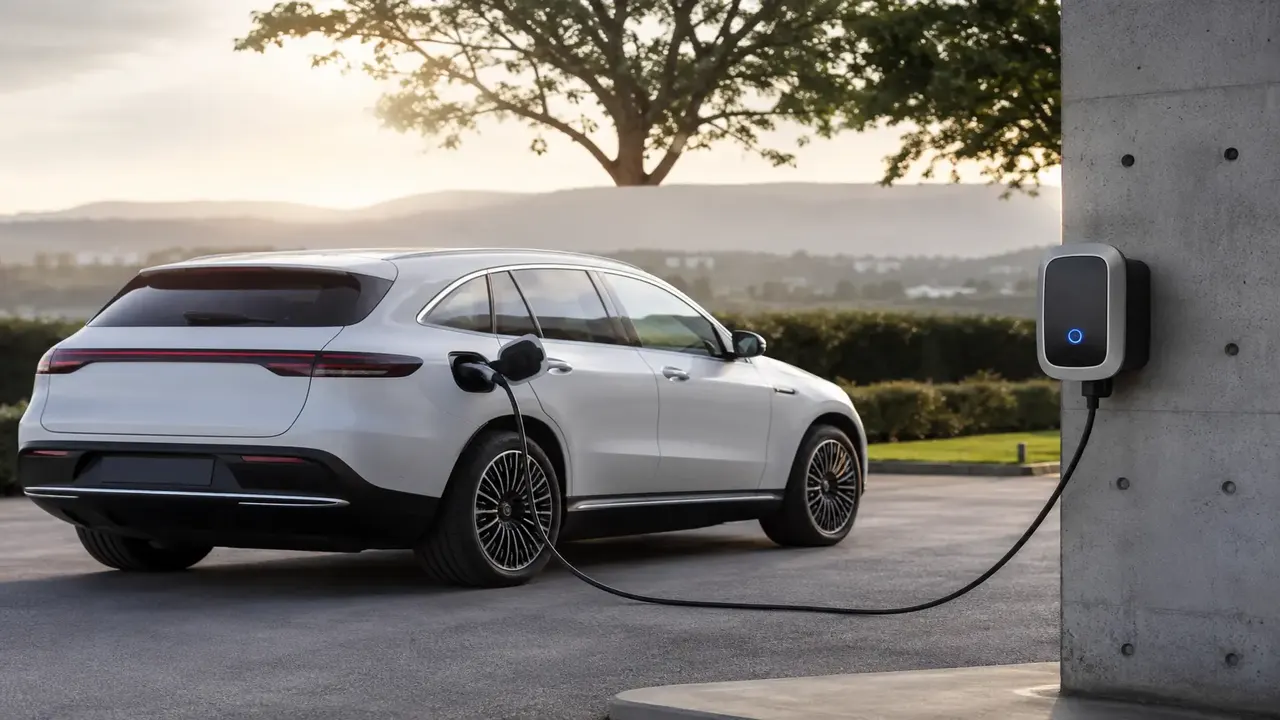
Before a long EV trip: map your charging stops with a route-planning app rather than relying on range alone, aim to arrive at fast chargers with roughly 10-20% battery for the fastest charging curve, precondition the battery for DC fast charging when the car offers it (especially in cold weather), and check tire pressure since range drops noticeably on underinflated tires. Build in 15-20% route-plan buffer and know your backup charging network in case a station is down.
At a glance
| Prep item | Why it matters |
|---|---|
| Route/charging app (e.g. built-in nav, PlugShare, A Better Routeplanner) | Plans stops around your car's real efficiency, not EPA range |
| Battery preconditioning before fast charging | Can cut charging time meaningfully, especially in cold weather |
| Tire pressure check | Underinflated tires can cost noticeable range |
| Backup charging network/app | Avoids being stranded if one network or station is down |
Plan the route around charging, not just distance
EPA/WLTP range ratings assume ideal conditions. Real-world range on a highway trip is usually lower — highway speeds, headwind, cold weather, and cabin heating all cut into it. Use your car's built-in navigation (most EVs now plan charging stops automatically) or a third-party app to map a route based on your actual observed efficiency, and build in a buffer rather than planning to arrive at 0%.
Charging strategy on the road
- DC fast charging is fastest between roughly 10% and 80% state of charge; the curve slows sharply above 80%, so it's often quicker to charge to 80% and add a shorter second stop than to wait for a full charge.
- Precondition the battery (many EVs do this automatically when a fast charger is set as the navigation destination) — this warms the pack to its optimal charging temperature and can noticeably shorten charging time in cold weather.
- Have at least one backup charging network app/account in case your primary network has an outage or a broken plug at a station.
Before you leave
- Check tire pressure — low pressure increases rolling resistance and cuts range.
- Charge to your trip-appropriate level (often 90-100% for a long day, since road trips are one of the few times charging past 80% makes sense).
- Update navigation/software if an update is pending — see our software update checklist.
- Pack a Level 1 (standard outlet) charging cable and, if your car uses a different fast-charge connector than the majority of stations on your route, the correct adapter.
- Check wiper blades and washer fluid — visibility matters as much as range on a long trip.
Cold-weather road trips
Winter cuts EV range noticeably — commonly cited real-world estimates run 20-40% in freezing temperatures with cabin heat running. Preconditioning the cabin while still plugged in (rather than using battery power once unplugged) preserves range, and seat/steering wheel heaters use far less energy than blowing hot air through the cabin.
Even reliable charging networks have occasional outages or broken stalls. Before a long trip, note at least one alternative charging option near your planned stops — a second network, a dealership, or a hotel with Level 2 charging — so a single broken charger doesn't derail the day.
At the destination
If your hotel or destination offers Level 2 charging, use it overnight rather than relying on fast charging for every leg — it's gentler on the battery and usually cheaper. If not, locate the nearest fast charger to your destination before you arrive rather than searching for one on low charge.
Frequently asked questions
What percentage should I charge to for a road trip?
Does cold weather really cut EV range that much?
Should I charge to 100% every night on a road trip?
What if a charging station is broken when I arrive?
Do I need an adapter for a road trip?
Sources & further reading
- U.S. Department of Energy — Alternative Fuels Data Center, EV range and charging
- fueleconomy.gov — EPA electric vehicle range ratings
Figures, prices and policy details were current at the last-updated date above. Automotive pricing, incentives and regulations change frequently — verify time-sensitive details with the linked primary sources. Read our editorial policy and fact-checking standards.