EVs skip oil changes, spark plugs, and exhaust work entirely, but still need tire rotation every 5,000-7,500 miles, a cabin air filter every 12-18 months, brake fluid every 2-3 years, and periodic checks of coolant, 12V battery health, and suspension components. Brake pads typically last far longer than on a gas car — often 70,000-100,000+ miles — because regenerative braking does most of the work. Expect a shorter, cheaper maintenance list overall, not a zero-maintenance one.
At a glance: EV vs. gas car maintenance
| Item | EV | Typical gas car |
|---|---|---|
| Oil changes | None | Every 5,000-10,000 mi |
| Spark plugs | None | Every 30,000-100,000 mi |
| Brake pads | Often 70,000-100,000+ mi (regen braking) | Often 30,000-70,000 mi |
| Tire rotation | Every 5,000-7,500 mi (often more important — see wear note) | Every 5,000-8,000 mi |
| Cabin air filter | Every 12-18 months | Every 12,000-15,000 mi |
| Coolant | Check ~4-5 yrs; replace ~8-10 yrs | Every 30,000-60,000 mi (varies) |
What genuinely disappears from the maintenance list
Electric motors have no oil to lubricate combustion, no spark plugs to foul, no timing belt or chain, no exhaust system, and no transmission fluid in the traditional sense (most EVs use a simple single-speed reduction gear with its own long-life lubricant, occasionally checked rather than routinely changed). That alone removes several of the most common line items on a gas-car service invoice.
What still needs regular attention
Tires
EVs are typically heavier than comparable gas cars and deliver full torque instantly, both of which accelerate tire wear — commonly cited estimates put EV tire wear meaningfully faster than on equivalent gas vehicles. Rotate every 5,000-7,500 miles, check pressure monthly (pressure affects range, not just tire life), and consider EV-rated tires when replacing.
Brakes
Regenerative braking uses the motor to slow the car and recapture energy, so friction brake pads see far less wear — many owners report pads lasting 70,000 miles or more. The catch: rotors can develop surface rust from underuse, especially in wet climates, so occasional firm braking and a visual inspection matter even when pads look fine.
Cabin air filter and 12V battery
The cabin filter still needs replacing on a similar schedule to gas cars — roughly every 12-18 months or per manufacturer guidance. Many EVs also carry a conventional 12V battery to run accessories and wake the system; it typically lasts a few years and should be tested periodically, since a dead 12V battery can leave an EV unable to start even with a full main battery.
Coolant and thermal system
Battery and power-electronics coolant loops need far less frequent attention than an engine's — often a check around 4-5 years and full replacement around 8-10 years or 100,000+ miles, depending on the manufacturer.
A simple annual checklist
- Tire rotation and tread/pressure check.
- Visual brake inspection (pads and rotor condition, not just pad thickness).
- 12V battery health test.
- Cabin air filter check/replacement.
- Software update check (see our software update guide).
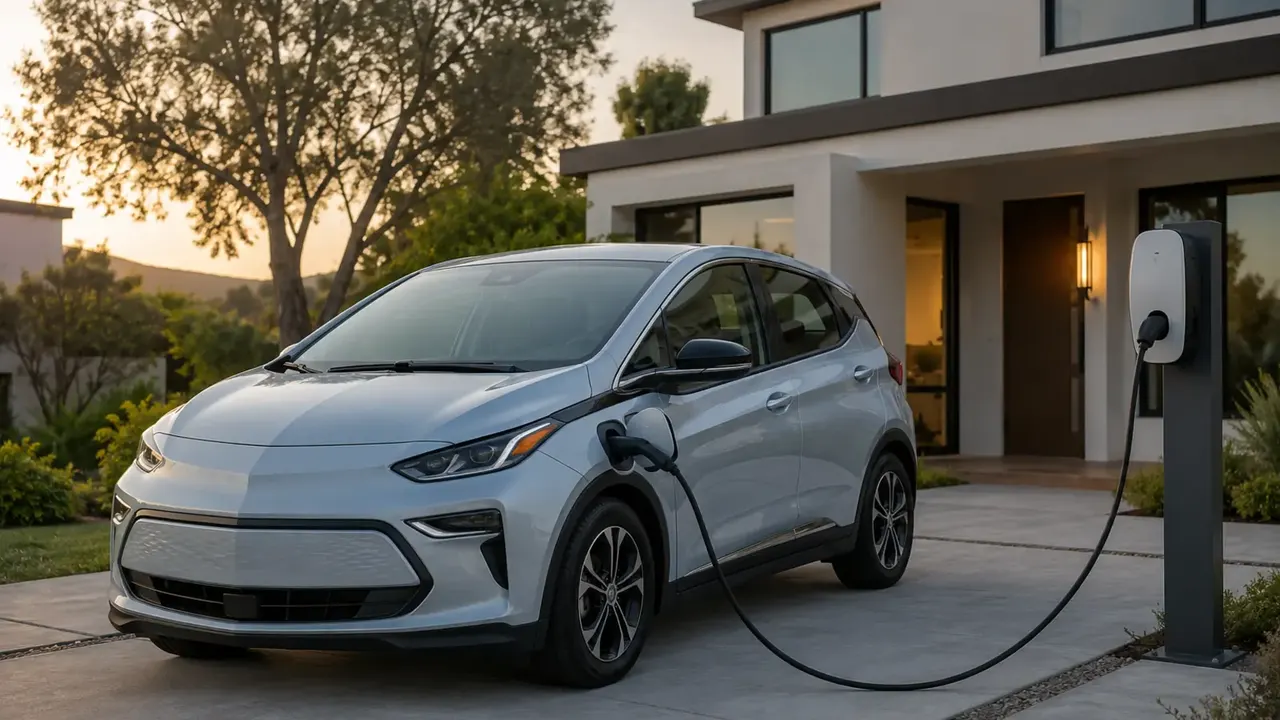
- Charging equipment and cable condition check.
The traction battery is covered by a separate, longer warranty (commonly 8 years/100,000 miles in the US, sometimes more elsewhere) that's distinct from routine maintenance. Following the maintenance schedule doesn't affect that battery warranty, but skipping recommended checks like coolant service could, in some cases, affect coverage — read your specific warranty terms.
Frequently asked questions
How much cheaper is EV maintenance than gas car maintenance?
Do EVs need any fluid changes at all?
Why do EV tires wear out faster?
Does an EV need annual servicing at all?
Can I do EV maintenance myself?
Sources & further reading
- U.S. Department of Energy — Alternative Fuels Data Center, EV maintenance
- Consumer Reports — electric vehicle maintenance costs
Figures, prices and policy details were current at the last-updated date above. Automotive pricing, incentives and regulations change frequently — verify time-sensitive details with the linked primary sources. Read our editorial policy and fact-checking standards.