The small Audi gets a big-Audi treatment
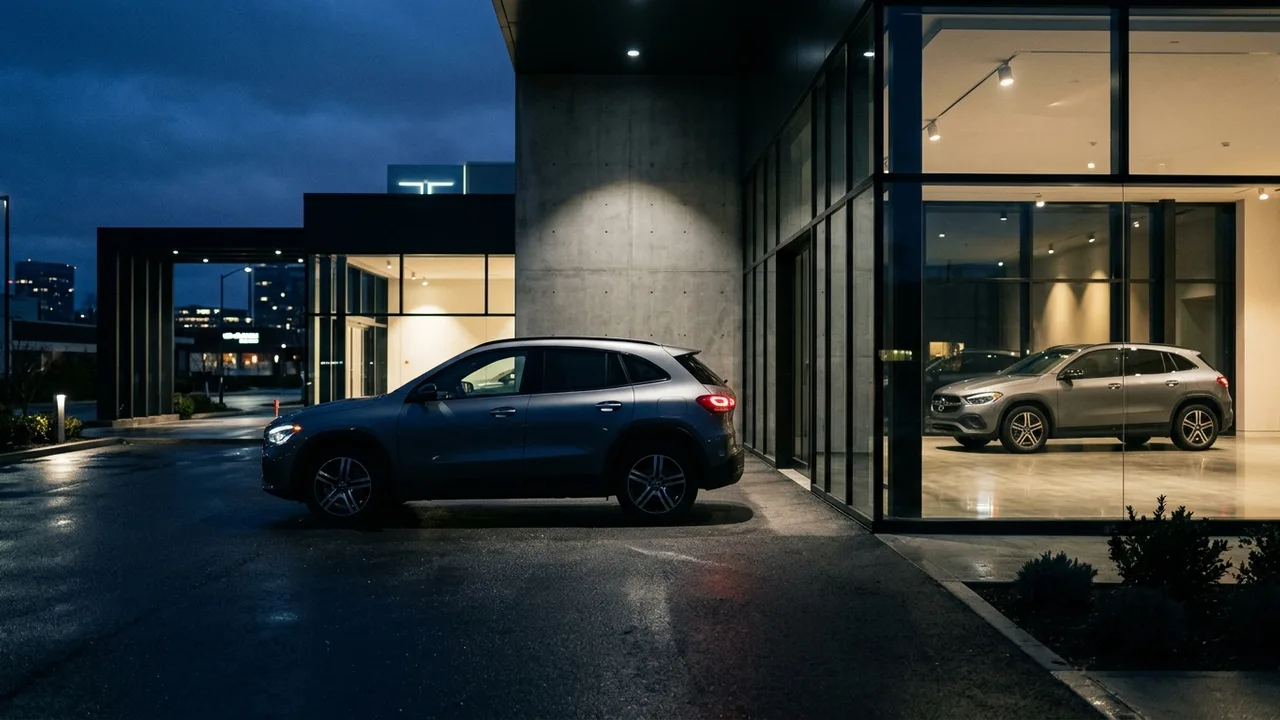
Audi's smallest SUV has quietly been one of its most important — the brand's entry point for young premium buyers. The third-generation 2026 Q3 arrives in the US with a striking strategy: the entire line-up is one configuration. No base trim, no options ladder to climb — every US Q3 is an S line quattro with the equipment already loaded.
What the single spec includes
The 2026 Q3 S line quattro carries a turbocharged 2.0-litre four-cylinder tuned to 255 hp, paired with a new seven-speed dual-clutch transmission and standard quattro all-wheel drive. Audi quotes 0–60 mph in 5.5 seconds — genuinely quick for the class, and a meaningful step over the old car.
Standard equipment reads like an old Q3's option sheet: a dual-screen digital cockpit, panoramic sunroof, acoustic front glass, S line exterior styling and a full driver-assistance suite. The interior adopts Audi's latest cockpit architecture with sharper graphics and more processing power than the outgoing generation.
The price for all of it: $43,700 plus a $1,295 destination fee — $44,995 delivered.
Why one trim?
The single-configuration strategy mirrors what Audi has done with the related S3: simplify production, guarantee residual-friendly spec consistency, and eliminate the sparsely-equipped base cars that discount poorly. For buyers, the trade is clear — you cannot get into a Q3 for less, but the car you get wants for little. In an era of bewildering configurators, there is honesty in that.
The risk is at the entry point. The old Q3's appeal was partly its accessible starting price; at $45k delivered, the new car overlaps larger, well-equipped mainstream SUVs and brushes against its own bigger sibling's territory.
The honest assessment
The third-generation Q3 is a better car by every measurable margin — faster, better equipped, more sophisticated inside. The tested consensus from early US drives is that it sits at or near the top of the small luxury SUV class. But the value question has inverted: the Q3 used to be the affordable Audi with expensive options; now it is a fixed $45k proposition, take it or leave it. Buyers who would have specced one lightly no longer have that choice.
If the budget stretches to it and the size suits, it is among the most complete small premium SUVs on sale. If the appeal was "an Audi under $40k", that car no longer exists in this showroom.
The questions buyers actually ask
Can I get a cheaper Q3? Not new, not in the US — one trim is the whole 2026 range at launch. The outgoing generation on dealer lots is the only sub-$40k route into the badge's smallest SUV.
Is 255 hp enough to skip the SQ3 question? There is no US SQ3, and at 5.5 seconds to 60 the standard car covers most of that ground anyway.
Lease or buy? Single-spec premium cars tend to lease predictably because residuals are easier to set — worth pricing both ways before assuming.
Key takeaways
- Third-generation Q3 reaches US dealers with exactly one configuration: S line quattro
- 255 hp, new seven-speed dual-clutch, quattro standard — 0–60 in 5.5 seconds
- $43,700 + $1,295 destination = $44,995 delivered, with equipment to match
- Simplified line-up means no cheap entry point — the sub-$40k Q3 is history
- Early US testing places it at the top of the small luxury SUV class
Sources & further reading
- Audi USA media releases on the 2026 Q3
- manufacturer specification and pricing sheets
- early US instrumented-test coverage, 2026
Figures, prices and policy details were current at the last-updated date above. Automotive pricing, incentives and regulations change frequently — verify time-sensitive details against the primary sources listed below. Read our editorial policy and fact-checking standards.