What happened, precisely
On 18 March 2026, NHTSA's Office of Defects Investigation upgraded its Tesla Full Self-Driving probe from a Preliminary Evaluation (PE24031) to a formal Engineering Analysis (EA26002).
The scope: an estimated 3,203,754 vehicles — 2016–2026 Model S and Model X, 2017–2026 Model 3, 2020–2026 Model Y, and 2023–2026 Cybertruck, all equipped with FSD.
This matters because of where an Engineering Analysis sits in the process. NHTSA has three investigative tiers. An EA is the second, and it is the last step before the agency can issue an influence letter, demand a recall, or close the case. Historically, an EA is completed within about 18 months.
An EA is not a recall. It is not a defect finding. But it is the stage at which the agency stops asking questions and starts testing.
The actual defect allegation
This is more specific — and more damning — than most coverage conveys.
NHTSA is not investigating whether FSD crashes. It is investigating whether FSD knows when it cannot see.
Tesla's FSD relies exclusively on vision-based cameras. It has a "degradation detection system" — software designed to recognise when the cameras are impaired and warn the driver. The allegation is that this system fails.
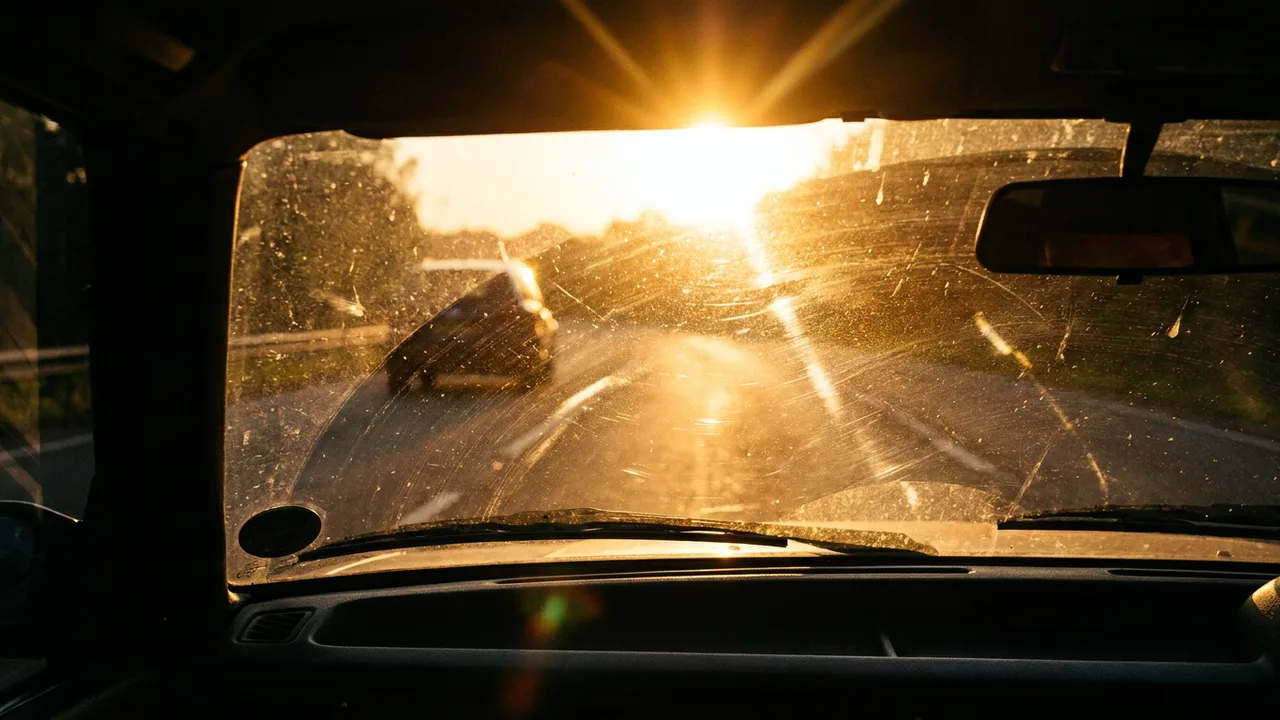
In ODI's own framing, available incident data raises concerns that Tesla's degradation detection system — both as originally deployed and after Tesla's update — fails to detect or appropriately warn the driver under degraded visibility conditions such as glare and airborne obscurants.
In the crashes reviewed, ODI found that FSD did not detect the conditions impairing camera visibility, or did not alert the driver until immediately before impact. And in each of those crashes, the system lost track of, or never detected, a lead vehicle in its path.
The system went blind. And it did not know it had gone blind.
The incidents
Nine crashes are in the docket:
- One fatality — a pedestrian, struck on 28 November 2023
- At least one injury crash (some accounts say two)
- The remainder under review
NHTSA is separately examining six additional potentially related incidents.
The conditions across the crashes: sun glare, fog, and airborne dust.
Two findings that should worry Tesla more than the crashes
1. Tesla's own fix doesn't work.
During the preliminary phase, Tesla told NHTSA that its updated degradation detection system — the 28 June 2024 software update — "may have affected" only 3 of the 9 identified crashes had it been installed at the time.
That is Tesla's own analysis, in NHTSA's own escalation document. By the manufacturer's admission, its remedy would not have helped in two-thirds of the incidents.
2. Tesla may be under-reporting.
Tesla told the agency that internal "data and labeling limitations" prevented it from uniformly identifying and analysing crashes where the subject system was engaged.
ODI's response is unusually pointed: it believes this limitation could have led to under-reporting of subject crashes over portions of the defined period.
There is also a timing detail worth noting. The fatal crash occurred on 28 November 2023. Tesla filed its required Standing General Order report seven months late, on 27 June 2024. Tesla reportedly began developing a software update one day after filing that report.
The bigger regulatory picture
This is the third concurrent federal investigation into FSD:
| Probe | Focus |
|---|---|
| EA26002 | Visibility degradation detection (3.2m vehicles) |
| PE25012 | 58 incidents of traffic violations — running red lights, crossing into opposing lanes |
| Separate inquiry | Tesla's crash-reporting practices |
Tesla is simultaneously fighting to hand over data in one probe while another escalates, and has received multiple deadline extensions.
Not everything has gone against Tesla. The Smart Summon investigation was closed without a defect finding, and a pedal-misapplication petition was rejected. NHTSA is not on a crusade. It is, however, making a specific and technically coherent argument about a specific system.
Why "vision-only" is the real subject here
Strip away the docket numbers and this investigation is a referendum on Tesla's foundational engineering bet.
Tesla moved from a camera-and-radar setup to the camera-only "Tesla Vision" system in mid-2021. Every rival pursuing autonomy — Waymo, Rivian's Gen 3, Mercedes Drive Pilot — uses lidar or radar alongside cameras, on the reasoning that a camera can be blinded and a radar cannot.
Tesla's counter-argument has always been that humans drive with two cameras and no lidar, and that sensor fusion introduces more problems than it solves.
NHTSA's investigation attacks this at its weakest joint. The problem is not that a camera can be blinded — human eyes can be blinded by sun glare too. The problem is that a human knows when they cannot see, and slows down. The allegation is that FSD does not.
That is not a bug in a software build. It is an architectural question about whether a vision-only system can reliably self-diagnose its own perception failure. And that question does not get answered by an over-the-air update.
What happens next
Three outcomes are possible:
- NHTSA closes the case without a defect finding, as it did with Smart Summon.
- NHTSA issues an influence letter — pressuring Tesla toward a voluntary recall.
- NHTSA demands a recall of FSD across 3.2 million vehicles.
A "recall" of FSD would almost certainly mean an over-the-air software restriction rather than a physical fix — possibly disabling or constraining FSD in low-visibility conditions. Which is, arguably, what should happen anyway.
The timeline is the thing to watch. NHTSA typically completes an EA in about 18 months, putting a decision somewhere around late 2027. That is a long overhang for a company whose valuation increasingly rests on robotaxis and autonomy rather than on selling cars.
There is also an international dimension. The Dutch regulator (RDW) has been weighing FSD approval, and a negative decision in the Netherlands would create precedent friction for broader EU approval.
What it means if you drive one
Be blunt with yourself about this.
FSD is a Level 2 driver-assistance system. You are the driver. You are legally and practically responsible for the vehicle at every moment, regardless of what the marketing name implies.
And the specific finding here has a specific practical implication: in glare, fog or dust, do not trust the system to tell you it is struggling. NHTSA's evidence suggests it may not know. Take over early, and take over often.
That was always the correct advice. It is now the officially documented advice.
Key takeaways
- NHTSA upgraded its FSD probe to Engineering Analysis EA26002 on 18 March 2026
- Scope: 3,203,754 vehicles — Model S, X, 3, Y and Cybertruck
- Nine crashes including one pedestrian fatality; six more under review
- The allegation: FSD's degradation detection fails to recognise when cameras are blinded by glare, fog or dust
- Tesla conceded its own software fix would have affected only 3 of the 9 crashes
Sources & further reading
Figures, prices and policy details were current at the last-updated date above. Automotive pricing, incentives and regulations change frequently — verify time-sensitive details with the linked primary sources. Read our editorial policy and fact-checking standards.