Two numbers, moving apart
Average UK motor premium, Q1 2026: £560. Down £20 year on year. Down £38 in real terms. Down roughly 29% from the December 2023 peak.
Average accidental damage claim, Q1 2026: £3,699. Up 8% in a single quarter.
Those two lines are diverging, and they cannot diverge forever. Understanding why they are moving apart is the key to understanding what your renewal will look like this autumn.
Where premiums actually are
The ABI's Motor Insurance Premium Tracker is the number to trust. It analyses over 28 million policies a year and — crucially — it is based on prices customers actually pay, not prices they are quoted. Quote-based indices (like Confused.com's, which showed £711 in Q1 2026) always run higher.
The recent trajectory:
| Quarter | Average premium |
|---|---|
| Q1 2024 | £636 |
| Q1 2025 | £580 |
| Q3 2025 | £551 |
| Q4 2025 | £559 |
| Q1 2026 | £560 |
Read that carefully. Premiums fell every quarter through 2025. Then in Q1 2026 they stopped falling — up £1, a 0.2% increase.
The ABI's own language is that premiums "remained stable". That is a polite way of saying: the decline has ended.
Why repairs cost so much more
Of the £2.9 billion insurers paid out in claims in Q1 2026, £1.9 billion — 65% — was for vehicle repairs, up 3% on the previous quarter.
Four forces are driving this, and only one of them is going away.
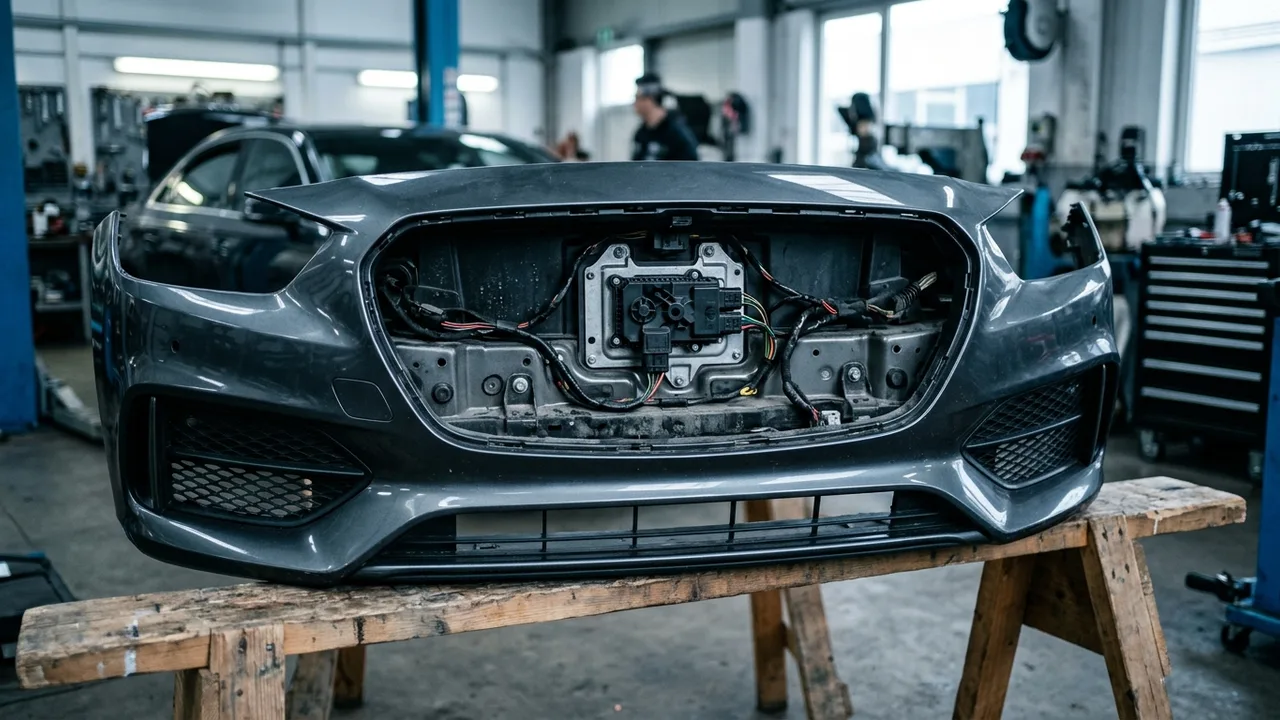
1. Cars have become computers with bumpers. This is the big one, and it is deeply ironic. Advanced Driver Assistance Systems — the cameras, radar and sensors that have genuinely reduced crash frequency — have massively increased crash cost. A bumper is no longer a bumper; it is a mounting point for a radar array that must be recalibrated after any disturbance.
ADAS recalibration can turn a £300 bumper repair into a £1,500 claim.
The ABI puts it plainly: today's advanced technologies help improve road safety and reduce claim frequency, but make repairs and replacements considerably more expensive when damage occurs.
2. Labour. Repair labour costs are up roughly 40% since 2022. There is a genuine shortage of technicians qualified to work on modern vehicles — particularly on EVs, which require high-voltage certification. The ABI has explicitly called on government to invest in repair-sector training.
3. Parts and materials. Parts and paint are rising at roughly 16% a year. Elevated oil prices through 2026 have pushed material costs higher again.
4. Theft. Keyless-entry relay attacks have driven theft payouts to around £669 million, up 35%, concentrated in high-value SUVs and EVs.
The lag, and what it means for your renewal
Here is the mechanism that most consumer coverage misses.
Premiums lag repair costs by one or two quarters. Insurers absorb cost increases before passing them on — partly because of competitive pressure, partly because pricing cycles are slow.
Repair costs rose 3% in a single quarter in Q1 2026, and the average damage claim rose 8%.
Apply the lag. If repair inflation continues at that rate through the summer, renewal quotes in autumn 2026 will be noticeably higher than they are now.
EY forecasts insurers will pay out £1.11 for every £1 earned in 2026 — an underwriting loss. Companies do not sustain that. They reprice.
The practical conclusion: if your renewal falls in the second half of 2026, get comparison quotes early. Most insurers will lock a quote for up to 30 days before your renewal date. In a market that is about to turn, that is a free option worth taking.
What actually reduces your premium
In descending order of impact:
1. Shop around. Every year. Without exception. The FCA banned loyalty pricing in 2022, so your insurer cannot legally charge you more than a new customer for the same risk. But that does not mean it is the cheapest insurer for you. Different insurers price different drivers differently. Ten minutes of comparison consistently beats auto-renewal. 61% of drivers now switch at renewal; those who don't are simply paying more for no reason.
2. Choose the right car. Every car sits in one of 50 insurance groups (administered by Thatcham Research for the ABI). Cars registered from August 2024 also carry a Vehicle Risk Rating from 1–99, scoring performance, damageability, repairability, safety and security. Choosing a group 1–5 car — a Hyundai i10, Kia Picanto, VW up! — can more than halve your premium versus a group 50 car.
3. Telematics, if you're young. Around 78% of 17–20 year olds now pay less with a black-box policy, saving an average of £379 a year. A 17-year-old pays roughly seven times the national average (~£2,847); this is the single biggest lever available to them. Young-driver premiums fell around 25% year on year into 2026, which is the genuinely good news in this data.
4. Increase your voluntary excess — but only to a level you could actually pay tomorrow.
5. Do not shave cover to save money. 15% of UK drivers have reduced their cover in response to cost. Third-party-only is frequently more expensive than comprehensive, because the third-party pool self-selects for higher-risk drivers. Check both. Comprehensive often wins.
The honest verdict
Premiums are £560 and stable. That is genuinely better than the £636 of two years ago, and the industry deserves some credit — the ABI's 10-Point Roadmap on fraud, claims handling and repair efficiency has had real effect.
But the underlying cost base is not improving. Repair labour is up 40% since 2022. Parts are up 16% a year. Motor claims hit a record £9.9 billion. Insurance Premium Tax remains at 12%. The Motor Insurers' Bureau levy — funding claims against the million-plus uninsured drivers on UK roads — adds roughly £15 to every honest policy.
Most forecasters now expect 2026 to mark the floor before modest rises return.
The window in which UK car insurance is getting cheaper is closing. Use it.
Key takeaways
- Average premium: £560 (Q1 2026) — stable after nine quarters of falls
- Average accidental damage claim: £3,699, up 8% in one quarter
- Repairs account for 65% of all motor claims payouts (£1.9bn of £2.9bn)
- ADAS recalibration can turn a £300 repair into a £1,500 claim
- Premiums lag repair costs — autumn 2026 renewals are likely to be higher
Sources & further reading
- ABI Motor Insurance Premium Tracker Q1 2026 (published 30 April 2026)
- Which?
- Insurance Times
- Thatcham Research
- EY
- FCA
Figures, prices and policy details were current at the last-updated date above. Automotive pricing, incentives and regulations change frequently — verify time-sensitive details with the linked primary sources. Read our editorial policy and fact-checking standards.