True Motion Auto Verdict: 7.5/10
The bZ4X was a swing and a miss — a compliance-car-feeling EV with mediocre range and slow charging. The 2026 bZ fixes almost all of it: more range, native NACS, faster charging, a nicer cabin, and a lower price. It's finally a genuinely competitive Toyota EV. It's just not an exciting one.
From punchline to contender
Toyota — the world's largest automaker and the company that made the hybrid mainstream — was, for years, curiously bad at pure EVs. Its first serious effort, the bZ4X, launched in 2023 to a collective shrug: a pleasant-driving crossover with plenty of kit, but only ~222–252 miles of range and slow charging, priced at ~$43,000. It felt, as more than one reviewer put it, like a glorified compliance car.
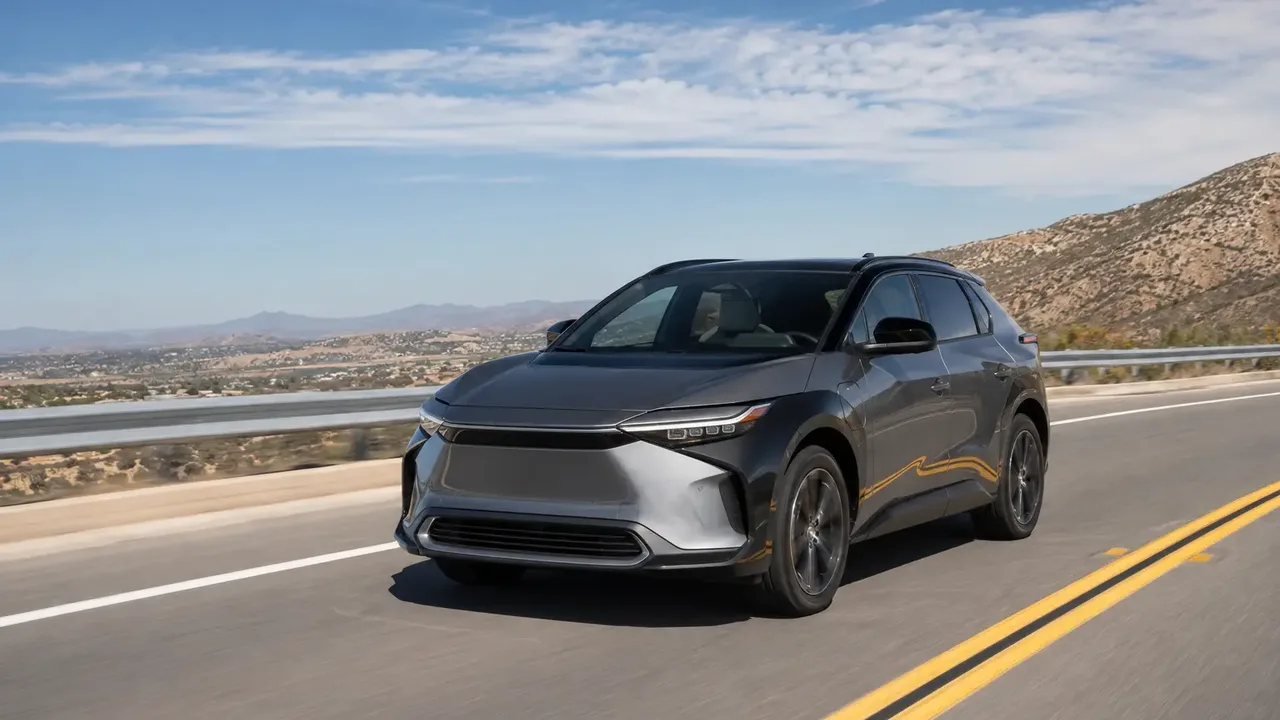
The 2026 model changes that — starting with the name. Toyota dropped the clumsy "4X" suffix (it's now just bZ), and used the update to fix nearly everything that held the original back. Having spent time with it, we can report the redemption is real. This is a vastly better EV than its predecessor. It's just not the EV that will make anyone's pulse race.
What Toyota fixed
1. Range — up to 62 miles more. The big-battery bZ now delivers up to 314 miles (XLE Plus FWD), a huge leap from the old car's 252-mile ceiling and enough to clear the psychologically crucial 300-mile bar. Even lesser trims are far more competitive: the base FWD manages ~236 miles, AWD trims ~288–299.
2. Charging — finally sorted. Gone is the old CCS port; in comes a native NACS connector for Tesla Supercharger access. Peak DC charging is now 150 kW, with a 10–80% top-up in about 30 minutes (we've seen real-world results beat that, at ~26 min). A heat pump and improved preconditioning come standard.
3. More power. The FWD models get a modest bump to ~221 hp; the AWD models leap to 338 hp (from the old 214), with a sub-5-second 0–60 in the strongest trims.
4. A better cabin. A 14-inch touchscreen across the range (raised higher on the dash), physical knobs for climate and volume, dual wireless chargers, softer materials, and cleaner body-coloured exterior trim replacing the old black cladding. It's a materially nicer place to sit.
5. A lower price. Toyota cut the price by around $6,800 versus the old car — the base XLE now starts around $34,900, and value-focused trims land close to a gas RAV4's price.
The numbers
| Spec | 2026 Toyota bZ |
|---|---|
| Starting MSRP | ~$34,900 (XLE FWD) |
| Battery | 57.7 kWh (base) / 74.7 kWh (Plus & most trims) |
| Range | 236 mi (base FWD) → 314 mi (XLE Plus FWD); AWD 288–299 mi |
| Power | 221 hp (FWD) / 338 hp (AWD) |
| Peak DC charging | 150 kW (10–80% ≈ 30 min, often faster) |
| Charge port | NACS (native) |
| Ground clearance | 8.2 in |
| Standard | 14-in screen, heat pump, dual wireless chargers |
What it's like to drive and live with
Comfortable and competent — and that's the ceiling. The bZ drives like a well-sorted electric crossover: quiet, smooth, easy, with the instant low-speed shove EVs give you. The interior is genuinely lovely now — a pleasant, well-made space. But nothing about the driving experience stands out. It's average for the segment in the best sense: no flaws, no thrills.
The AWD-performance trap. Yes, the 338 hp AWD does a sub-5-second 0–60. But it's still well off a genuine performance EV like the Ioniq 5 N or Kia EV6 GT, and the performance trims cost meaningfully more while cutting range. If you want a fast EV, this isn't where you'll end up — the value is in the efficient FWD Plus, not the power trims.
Toyota's reliability halo. The unquantifiable advantage: it's a Toyota. Buyers who want an EV from the brand they trust for durability finally have one that isn't embarrassing on the spec sheet. That counts for a lot with a particular (large) kind of buyer.
Where it still falls short
It's not class-leading, just class-competitive. The bZ has caught up to the Ioniq 5, EV6 and Mustang Mach-E rather than surpassing them. Range, space and charging are now all in the same ballpark as rivals — matching, not beating.
Some reviewers note a remaining gap. Even praise for the 2026 car comes with "one thing still holds it back" caveats in places — the transformation is big but not total. It's a good EV now, not a category-defining one.
Built in Japan — so, in the tariff era, subject to the 15% deal-rate tariff on Japanese imports (see our tariff coverage), which factors into its pricing versus US-built rivals.
The competition
Hyundai Ioniq 5 / Kia EV6: the segment benchmarks — sharper design, strong range and charging, more character. The bZ now competes with them rather than trailing them.
Chevy Equinox EV (from ~$34,995): similar money, strong range, US-built — a direct value rival.
Tesla Model Y: the volume leader the bZ is chasing on range; cross-shop on charging, software and price.
Who should buy it
Buy the bZ if: you want a Toyota EV (brand trust matters to you), you value a lovely, well-equipped cabin, ~300 miles of range and easy Supercharger access, and you prioritise sensible competence over excitement. The XLE Plus FWD (314 miles, ~$39k as tested) is the sweet spot.
Look elsewhere if: you want driving excitement or class-leading anything (Ioniq 5/EV6), maximum performance (Ioniq 5 N), or you specifically want US assembly for tariff reasons (Equinox EV).
The bottom line
The 2026 bZ is the EV the bZ4X should have been. Toyota dropped two letters, added up to 62 miles of range, fixed the charging with native NACS, lifted the cabin, and cut the price by ~$6,800 — turning a compliance-car punchline into a genuinely competitive electric crossover. It doesn't lead its class and it won't quicken your pulse, but it's now a car you can recommend without caveats about range or charging. For the huge cohort of buyers who simply want a good Toyota EV, the bZ finally, belatedly, makes sense.
Key takeaways
- The 2026 bZ (formerly bZ4X) fixes the original's flaws: up to 314 miles of range (+62), native NACS, 150 kW charging, nicer cabin, and a ~$6,800 price cut (from ~$34,900)
- Power ranges from 221 hp (FWD) to 338 hp (AWD); the value sweet spot is the 314-mile XLE Plus FWD
- It's now genuinely class-competitive with the Ioniq 5, EV6 and Mach-E — matching them rather than beating them
- Comfortable and lovely inside, but the driving experience doesn't stand out; performance trims cost more and cut range
- Built in Japan (15% deal-rate tariff applies); the definitive choice for a buyer who specifically wants a good Toyota EV
Sources & further reading
- Toyota press materials
- U.S. News
- InsideEVs
- Car and Driver
- Ever
- KBB
- NBC News. Verified July 2026.
Figures, prices and policy details were current at the last-updated date above. Automotive pricing, incentives and regulations change frequently — verify time-sensitive details with the linked primary sources. Read our editorial policy and fact-checking standards.