True Motion Auto Verdict: 8.5/10
The Bolt was America's affordable-EV conscience, GM killed it, and the backlash brought it back better. Same accessible price, far faster charging, native NACS, and 250-plus miles of range. It's not exciting — but it's the most sensible cheap EV in America, and its return matters.
The car GM shouldn't have killed — and knew it
Here's a rare thing: a manufacturer publicly admitting, through its actions, that it made a mistake.
GM discontinued the Chevrolet Bolt at the end of the 2023 model year — and promptly took blowback for pulling its lowest-priced EV off the market at exactly the moment EV affordability became the industry's biggest problem. With the $7,500 federal tax credit now phased out, that affordability gap only widened. So GM did a swift about-face and brought the Bolt back, substantially improved.
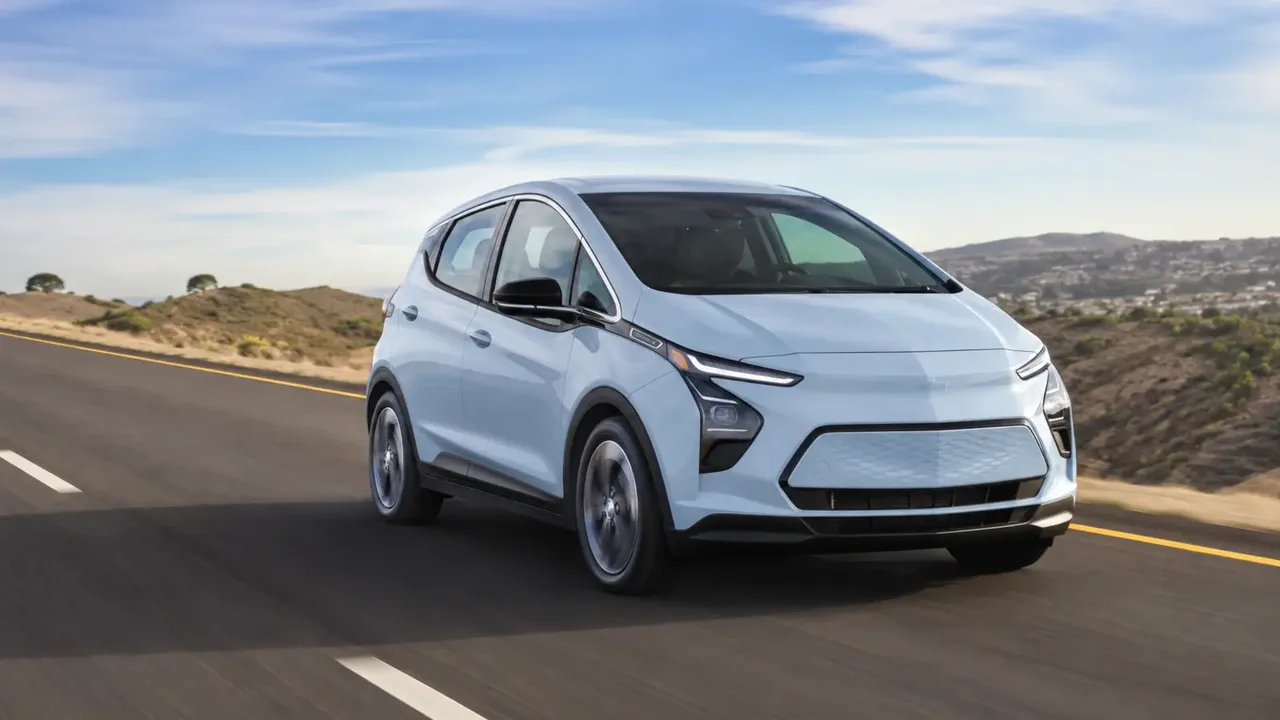
The reborn Bolt (GM has dropped the "EV"/"EUV" suffixes — it's just "Bolt" now) is that rare returnee that's genuinely better than the car it replaces. It arrives as America's cheapest new EV, and after a week with it, we think its return is one of the more important product decisions in the affordable-EV space.
What's new — and it's the right things
GM didn't just re-release the old Bolt. It fixed the two things that most held the original back:
1. Charging — transformed. The old Bolt's Achilles heel was glacial DC fast charging (~55 kW). The new Bolt charges at up to 150 kW, taking a 10–80% top-up in about 26 minutes versus the old car's painful stretch. This is the single biggest improvement, and it changes the Bolt from a pure city car into something you can actually road-trip.
2. Native NACS — a first for Chevy. The new Bolt is the first Chevrolet with a native NACS port, giving it direct access to Tesla's Supercharger network — the largest, most reliable fast-charging network in America. For an affordable EV whose buyers are least likely to have flawless home charging, Supercharger access is a genuinely big deal.
Underpinning both: GM switched from the old Ultium lithium-ion pack to cheaper, more durable lithium-iron-phosphate (LFP) chemistry — the key to holding the price down while improving the car.
The numbers
| Spec | 2026/27 Chevrolet Bolt |
|---|---|
| Starting MSRP | $29,990 (launch LT, incl. destination); later LT from $28,995 |
| Battery | 65 kWh LFP |
| Range | ~250–255 miles (GM-estimated) |
| Motor | Single front-mounted, 210 hp / 169 lb-ft |
| Drivetrain | Front-wheel drive |
| Peak DC charging | 150 kW (10–80% ≈ 26 min) |
| Charge port | NACS (native) — first for Chevy |
| Assembly | GM Fairfax, Kansas City, Kansas |
| Notable | Bidirectional (V2H) capability, one-pedal drive |
Note the US assembly (Fairfax, Kansas) — relevant in the tariff era, though its parts are domestically and globally sourced.
What it's like to live with
The good news is how normal it is. The Bolt doesn't try to dazzle; it tries to work, and it does.
Range that's enough. ~250 miles isn't headline-grabbing, but it's genuinely sufficient for the daily commuting and errands that are 95% of a cheap EV's life — and now, with fast charging that actually works, the occasional longer trip is viable too.
A cabin that's grown up. GM gussied up the interior over the old car — better materials, a cleaner layout. It won't be mistaken for a luxury car, but it's a pleasant, functional place that no longer feels like a penalty box.
Easy to drive. One-pedal driving, light controls, compact dimensions, good visibility, an SUV-inspired body style that's more practical than the old hatchback. It's an effortless urban companion.
Value-adding extras. Bidirectional charging (vehicle-to-home) means the Bolt can power your house during an outage — a genuinely useful feature at this price. Over 20 standard safety/driver-assist features come included.
Where it falls short
We're honest about the compromises, because at this price there are some:
It's not exciting. 210 hp and FWD make it adequately brisk (EV torque helps off the line) but not fun. This is transport, not entertainment. If you want an engaging EV, look elsewhere and pay more.
Range is merely fine. ~250 miles trails pricier rivals. The Nissan Leaf, redesigned for 2026, offers up to ~303 miles at a similar starting price — a real range advantage if that's your priority.
FWD only. No AWD option — fine for most, a limit for snow-belt buyers wanting all-weather traction.
"Limited run" caveat. GM has described the returning Bolt as a limited-run model. If you want one, availability may not be indefinite — a strange stance for a car this in-demand, and worth confirming with dealers.
The competition
Nissan Leaf (2026, from ~$29,990): the Bolt's most direct rival, now redesigned into SUV-like form with ~303 miles of range — more range, but check charging speeds and network access against the Bolt's NACS advantage.
Chevy Equinox EV (from ~$34,995): the Bolt's bigger sibling, more space and range for more money. If the Bolt feels too small, the Equinox is the logical step up within Chevy.
Volvo EX30 (from ~$40,000): more premium and more fun to drive, but a full ~$10,000 more than the Bolt — a different budget entirely.
Who should buy it
Buy the Bolt if: you want the most affordable new EV in America, you value Supercharger access (native NACS), you do mostly daily driving with occasional trips, and you want a sensible, no-drama, US-assembled EV that just works. It's the default recommendation for a first, affordable EV.
Look elsewhere if: you need maximum range (consider the Leaf), you want AWD or driving excitement (pay more), or you need three rows / lots of space (Equinox EV or up).
The bottom line
The Bolt's return is a quiet vindication of the buyers and critics who told GM that killing America's affordable-EV standard-bearer was a mistake. The reborn car fixes the old one's two real flaws — slow charging and no Supercharger access — while holding the accessible price via LFP chemistry. It isn't thrilling, its range is merely adequate, and the "limited run" framing is odd. But as the cheapest new EV in America, now with fast charging that works and native NACS, the 2026 Bolt is the most sensible affordable EV on sale. GM shouldn't have killed it. We're glad they admitted as much.
Key takeaways
- The reborn Bolt is America's cheapest new EV, from $29,990 (later ~$28,995), US-assembled in Kansas
- Two transformative fixes: 150 kW fast charging (10–80% in ~26 min) and native NACS (a Chevy first) for Supercharger access
- LFP battery chemistry holds the price down; ~250 miles of range, 210 hp, FWD, bidirectional V2H capability
- Downsides: not exciting, range merely adequate (Leaf offers more), FWD-only, and an odd "limited run" designation
- The default recommendation for an affordable first EV — sensible, no-drama, and it just works
Sources & further reading
- Chevrolet/GM press materials
- U.S. News
- Car and Driver
- KBB
- AOL Autos. Specs per GM
- verify final trim details on the configurator. Verified July 2026.
Figures, prices and policy details were current at the last-updated date above. Automotive pricing, incentives and regulations change frequently — verify time-sensitive details with the linked primary sources. Read our editorial policy and fact-checking standards.