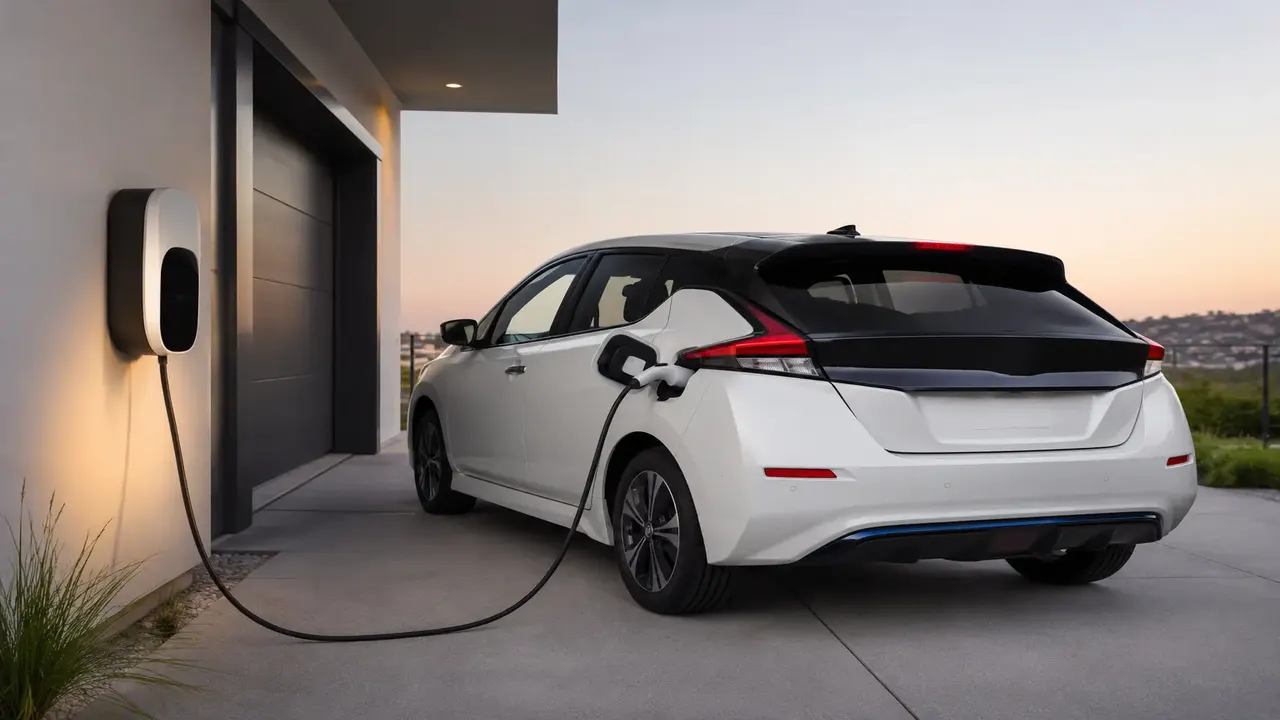
1. Vehicle Overview
The Nissan Leaf, first launched in 2010, was the world’s first mass-market electric car, pioneering the affordable EV movement. Now in its second generation (launched 2017, facelifted 2022), the 2025 Nissan Leaf remains a practical, efficient, and value-oriented compact electric hatchback — though it faces tough competition from newer rivals.
While an all-new third-generation Leaf crossover is on the horizon, the 2025 model continues to deliver what it’s best known for: reliability, affordability, and real-world usability. Available in Leaf and Leaf e+ trims, it suits urban commuters and eco-conscious families looking for an entry point into electric mobility.
2. Key Specifications
| Variant | Powertrain | Power / Torque | Battery (usable) | Range (WLTP) | 0–100 km/h | Charging (DC) |
|---|---|---|---|---|---|---|
| Leaf | Single-motor FWD | 150 hp / 320 Nm | 39 kWh | 270 km | 7.9 s | Up to 50 kW (CHAdeMO) |
| Leaf e+ | Single-motor FWD | 217 hp / 340 Nm | 59 kWh | 385 km | 6.9 s | Up to 100 kW (CHAdeMO) |
| Transmission | Single-speed automatic | |||||
| Drivetrain | Front-wheel drive | |||||
| Dimensions (L x W x H) | 4,490 x 1,790 x 1,545 mm | |||||
| Boot Capacity | 435 L (1,176 L with seats folded) |
3. Exterior Design
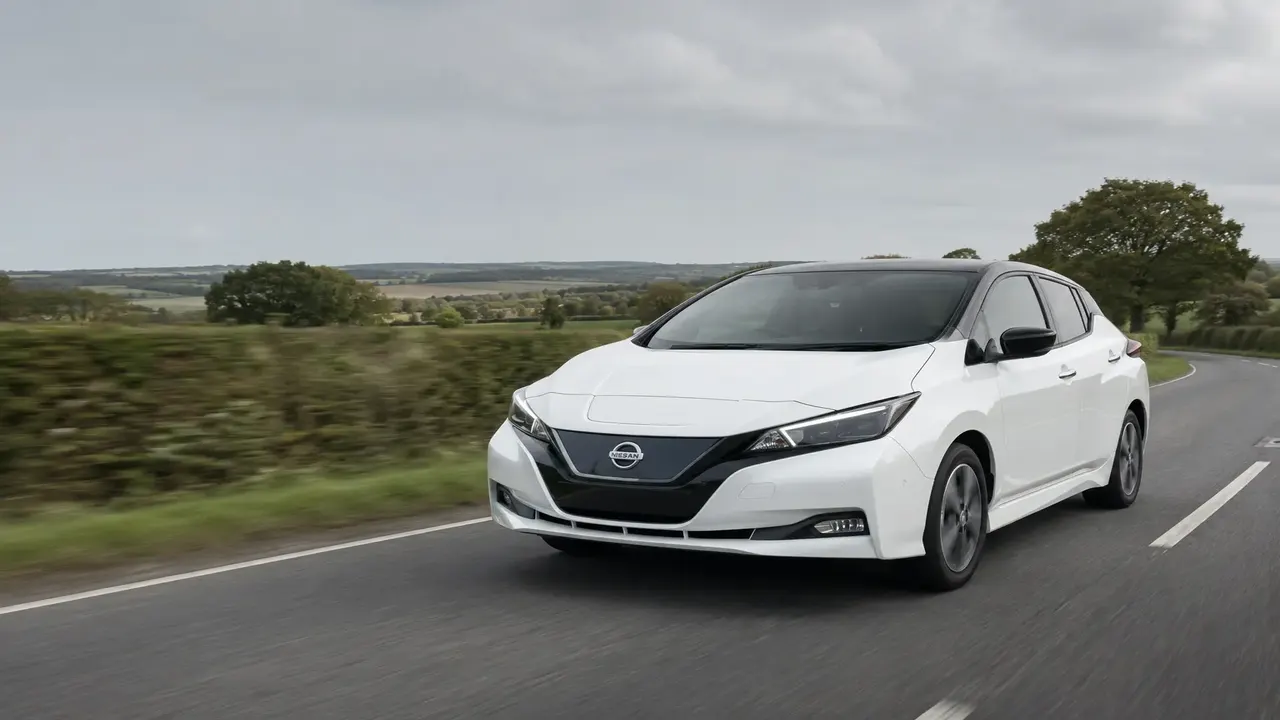
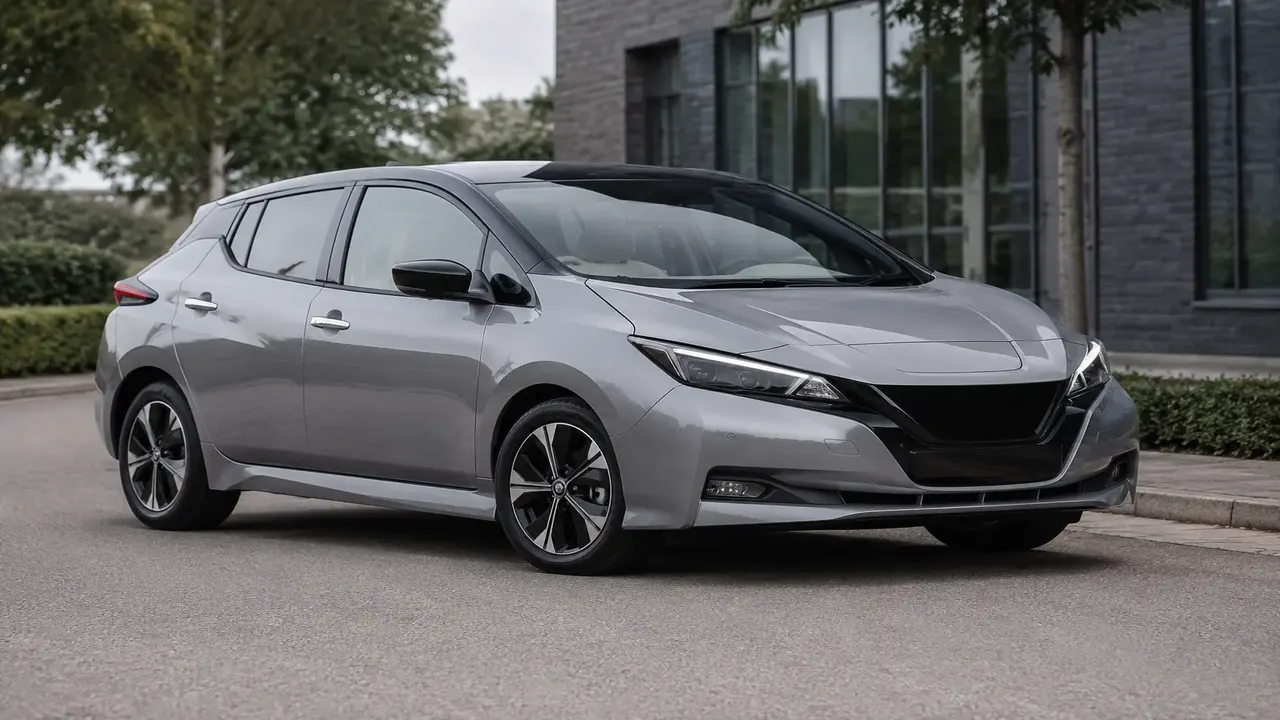
The 2025 Nissan Leaf retains its familiar hatchback profile, refreshed with a more aerodynamic and tech-forward appearance following its latest update.
Design highlights
Closed “V-motion” grille with blue accent trim
Full LED headlights and revised bumper design
Floating roof and sharp character lines
17-inch diamond-cut alloys (on e+)
Rear diffuser for improved efficiency
It’s clean, understated, and practical — not as flashy as newer EVs, but still instantly recognizable as the world’s best-selling electric car of its era.
4. Interior, Comfort & Materials
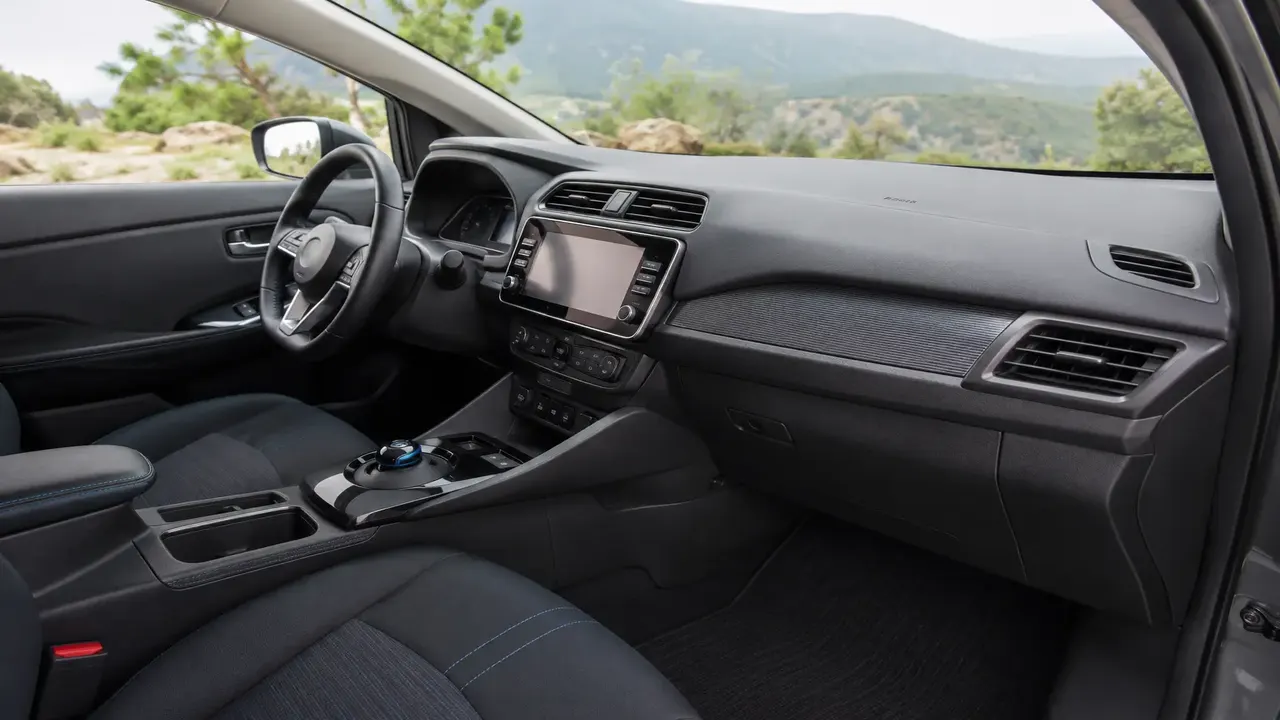
Inside, the Leaf emphasizes comfort and functionality over luxury. The cabin is spacious and ergonomically laid out, with recent updates improving material quality and technology.
Highlights include
8-inch NissanConnect infotainment touchscreen
7-inch digital driver display
Comfortable fabric or leather seats (depending on trim)
Heated front and rear seats and heated steering wheel
Dual-zone climate control
Ample legroom and high seating position for a hatchback
It’s quiet, comfortable, and easy to live with — ideal for commuting and family use.
5. Features & Infotainment
The 2025 Leaf comes with Nissan’s latest NissanConnect infotainment suite:
8-inch touchscreen with navigation and EV energy data
Apple CarPlay & Android Auto (wired)
Bluetooth and USB-C connectivity
Intelligent Around View Monitor (360° camera)
Voice control and smartphone app integration
e-Pedal mode for single-pedal driving
The interface is straightforward, though not as cutting-edge as newer EV systems — reliability and simplicity remain its strengths.
6. Safety & Ratings
Euro NCAP rated the second-generation Leaf five stars in April 2018, tested as a left-hand-drive Acenta. That rating expired on 1 January 2025, so it is a historical result rather than a current one (Euro NCAP, checked 2 October 2026).
Nissan ProPILOT driver assistance includes
Adaptive Cruise Control
Lane Keep Assist
Automatic Emergency Braking with Pedestrian Detection
Blind Spot Warning
Rear Cross-Traffic Alert
Driver Attention Alert
Traffic Sign Recognition
It remains one of the safest affordable EVs on the market, backed by Nissan’s long-standing EV experience.
7. Driving Performance
The Leaf delivers smooth, effortless driving typical of an EV — with instant torque and quiet operation.
The 39 kWh model offers brisk city acceleration and comfort-oriented suspension.
The Leaf e+ provides stronger highway performance, thanks to 217 hp and a 59 kWh battery that extends range and boosts responsiveness.
e-Pedal mode allows one-pedal driving, blending regenerative braking smoothly for relaxed urban use.
Ride comfort is soft and forgiving, though handling is more geared toward ease than sportiness.
8. Efficiency / EV Range
| Version | Range (WLTP) | Real-world Range | Charging (DC Fast) | AC Charging (Home) |
|---|---|---|---|---|
| Leaf (39 kWh) | 270 km | ~220 km | 10–80% in 50 min | 7.4 kW – 6 hrs |
| Leaf e+ (59 kWh) | 385 km | ~330 km | 10–80% in 60 min | 7.4 kW – 9 hrs |
Efficiency averages around 15–17 kWh/100 km, making it cost-effective for daily use. However, the Leaf still uses the CHAdeMO fast-charging standard, which is gradually being phased out in Europe.
9. Practicality & Everyday Usability
Practicality remains a Leaf hallmark
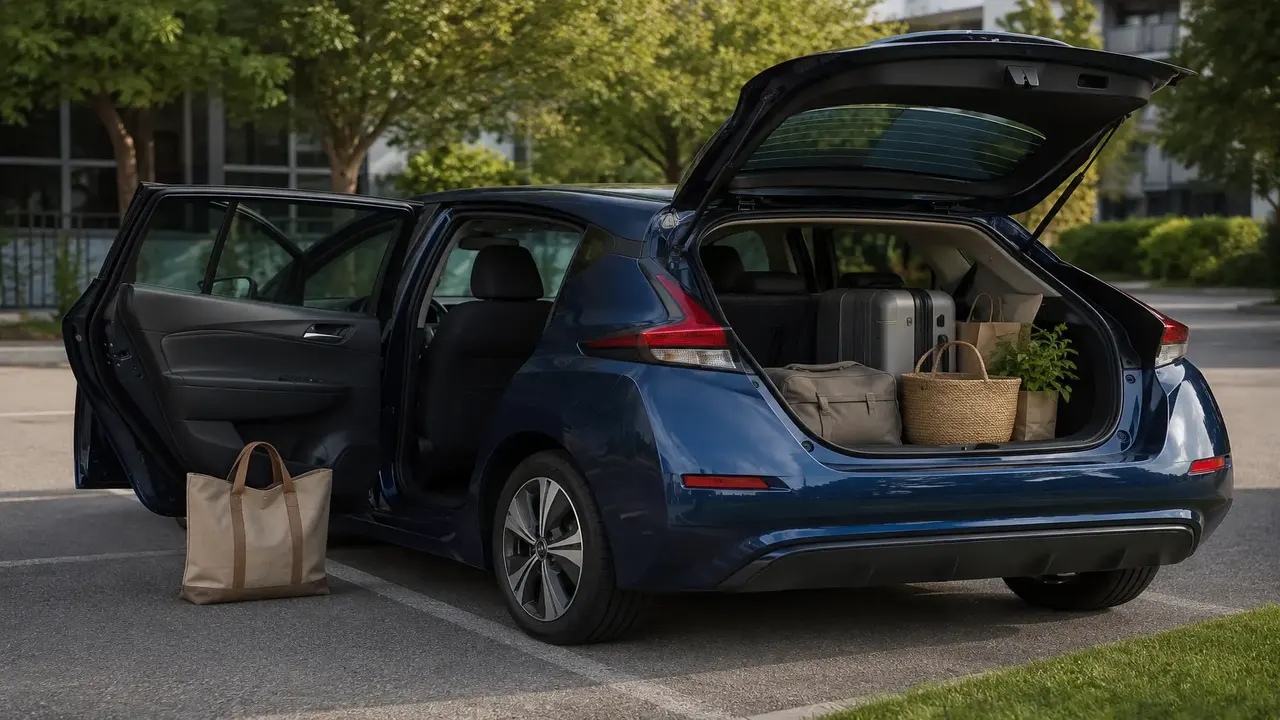
435 L boot – larger than most EV hatchbacks
Wide rear doors and comfortable rear bench
Flat floor and generous cabin width
Split-fold rear seats (60:40) for added flexibility
Heat pump system (on higher trims) for efficient cabin heating
Its combination of interior space and comfort make it an ideal electric family car, especially for urban and suburban use.
10. Warranty & Maintenance
| Vehicle warranty | 3 years / 100,000 km |
| Battery warranty | 8 years / 160,000 km (to 70% capacity) |
| Service intervals | Every 12 months or 15,000 km |
Low running costs, minimal maintenance (no oil or exhaust system)
Nissan’s long EV experience ensures strong reliability and wide service network support.
11. Price & Value for Money
Approximate pricing (UK & Europe, 2025)
| Model | Battery | Range | Price (approx.) |
|---|---|---|---|
| Nissan Leaf Acenta (39 kWh) | 270 km | £28,000 (€32,000) | |
| Nissan Leaf Tekna (39 kWh) | 270 km | £30,000 (€34,000) | |
| Nissan Leaf e+ Tekna (59 kWh) | 385 km | £33,500 (€38,000) |
Despite aging underpinnings, the Leaf continues to offer exceptional value, especially as an entry-level EV for commuters.
12. Comparison with Rivals
| Model | Powertrain | Range (WLTP) | Charging | Price (approx.) |
|---|---|---|---|---|
| Nissan Leaf e+ | 59 kWh EV | 385 km | 100 kW (CHAdeMO) | £33,500 |
| MG4 Long Range | 64 kWh EV | 435 km | 144 kW (CCS) | £28,500 |
| Renault Mégane E-Tech EV60 | 60 kWh EV | 450 km | 130 kW (CCS) | £37,000 |
| VW ID.3 Pro | 58 kWh EV | 425 km | 120 kW (CCS) | £36,000 |
| Hyundai Kona Electric (65 kWh) | 480 km | 100 kW (CCS) | £38,000 |
While newer rivals outperform it in range and charging, the Leaf’s affordability and proven dependability still make it a sensible EV choice.
13. Pros & Cons
Pros
Proven, reliable EV technology
Spacious interior and big boot
Smooth, quiet, and comfortable drive
Affordable entry price
Strong safety and driver-assist features
Cons
Outdated CHAdeMO charging system
Interior and infotainment feel dated
Range and efficiency now mid-pack
No heat pump on lower trims
14. Overall Rating
4.3 / 5
True Motion Auto has not independently road-tested this vehicle. Specifications, pricing and performance figures are compiled from manufacturer technical data and published independent tests, and are attributed where quoted. Our score reflects a structured research assessment of specifications, pricing, safety data and owner feedback for the segment — not an independent road test. Read how we review cars.
15. Final Verdict
The 2025 Nissan Leaf may no longer be the cutting-edge EV it once was, but it remains a solid, dependable, and practical electric car that’s ideal for city and suburban life.
It’s easy to drive, affordable to run, and built on over a decade of Nissan’s EV expertise — which means you can buy it with confidence. While rivals now offer longer range and faster charging, the Leaf still shines as a trusted, real-world electric hatchback that delivers exceptional value and comfort.
If you’re looking for a no-nonsense, proven electric car for daily use, the Nissan Leaf remains one of the most dependable options in 2025.
Buyer checkpoints
| Buyer checkpoint | True Motion Auto view |
|---|---|
| Best for | Drivers wanting quiet electric running and low local emissions. |
| Body style | Hatchback |
| Powertrain focus | Electric |
| UK ownership note | Check insurance group, VED, charging or fuel costs and service-plan pricing before buying. |
| Verdict | Worth shortlisting if its size, running costs and equipment match your daily use. |
Frequently asked questions
Is the Leaf good for UK roads?
Should I buy new or used?
What should I check before ordering?
Is it suitable for families?
Specifications, prices and equipment were current at publication and vary by model year, trim and market. Verify final details with a franchised dealer before ordering. Read how we review cars and our editorial policy.