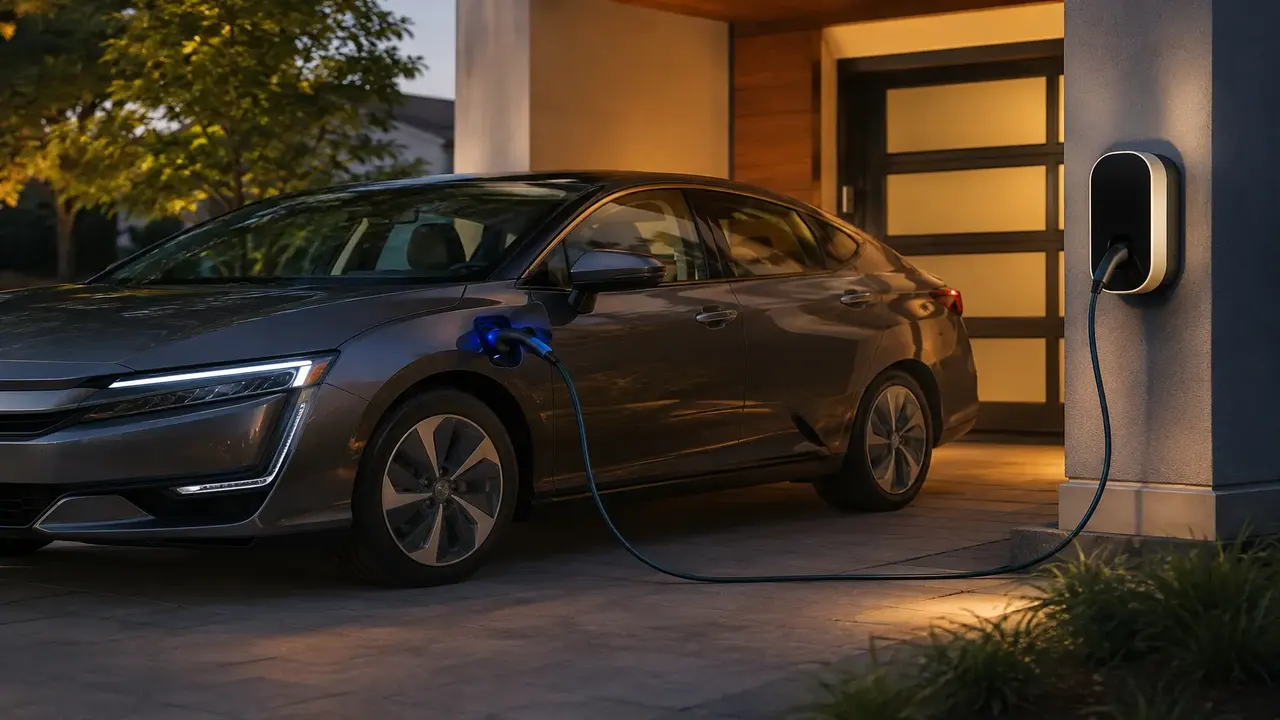
A Level 2 home charger installation needs a 240V circuit (US) or 32A single-phase supply (UK), ideally on an electrical panel with at least 100A of total service and spare capacity, installed by a licensed electrician. Hardware plus installation typically runs $500-$2,200 in the US and £800-£1,200 in the UK, with cost rising if the panel needs upgrading or the run from the panel to the parking spot is long. Always confirm local permit requirements before work starts — many jurisdictions require an electrical permit and inspection for a new dedicated circuit.
At a glance: charger installation basics
| Item | Typical spec |
|---|---|
| Charger type | Level 2 (240V US / 230V-240V UK-EU), 7-11 kW typical home output |
| Circuit needed | Dedicated 40-60A circuit (US) or 32A supply (UK), electrician-installed |
| Install cost (hardware + labor) | $500-$2,200 (US); £800-£1,200 (UK), before any panel upgrade |
| Typical home charge time (Level 2) | 4-10 hours for a full charge, depending on battery size and charger output |
| Permit needed? | Often yes for a new dedicated circuit — check with the local building department |
What this checklist covers
This is the page copy for our EV Home Charging Installation Checklist — a step-by-step list to work through with an electrician before, during and after a home Level 2 charger install. It's written for anyone buying their first EV or plug-in hybrid and wondering what actually has to happen between deciding to install a charger and plugging in for the first time.
Before you call an electrician
- Check your electrical panel's total service size (commonly 100A, 150A or 200A in US homes) and how much spare capacity it has
- Decide where the car will typically park and measure the cable run from the panel to that spot
- Check whether your utility offers a lower off-peak EV charging rate — some require a separate meter or enrollment
- Check local permit and inspection requirements for adding a new circuit
- If renting, get written permission from the landlord or building management before any work starts
The installation steps
- Licensed electrician assesses panel capacity and confirms whether an upgrade is needed.
- Circuit and charger location are finalized, and any permit is filed with the local authority.
- Dedicated circuit is run from the panel to the charging location (this is usually the largest cost variable).
- Charger unit is mounted, wired and grounded per code.
- Local inspector signs off, if a permit was required.
- Electrician tests the circuit under load and confirms the charger communicates correctly with the vehicle.
Panel capacity and cost drivers
| Factor | Why it changes cost | Typical impact |
|---|---|---|
| Panel needs upgrading | Old or full panels may need a new subpanel or full panel swap | Can add $800-$3,000+ |
| Long cable run | More conduit, trenching or wall penetrations | Can add $200-$1,000+ |
| Outdoor/detached garage install | May need trenching or weatherproof conduit | Adds labor and materials |
| Permit and inspection | Varies by city/county | Usually $50-$300 in fees |
The US federal EV purchase tax credit ended 30 September 2025, but that's separate from charger-installation incentives — some utilities and states/local programs still offer rebates specifically for home charger hardware or installation. Check current programs with your utility before assuming a rebate no longer applies.
After installation
- Confirm the charger app or vehicle correctly detects full charging speed, not a reduced rate.
- Set a charging schedule to take advantage of off-peak electricity rates if your utility offers them.
- Keep the electrician's invoice and permit sign-off — useful for insurance, resale, and any rebate paperwork.
- Test a full charge cycle once and confirm the time-to-full matches the charger's rated output.
Frequently asked questions
Do I need a permit to install a home EV charger?
Can I install a Level 2 charger myself?
How much does a home charger installation typically cost?
Is a Level 1 (standard outlet) charger enough?
Sources & further reading
Figures, prices and policy details were current at the last-updated date above. Automotive pricing, incentives and regulations change frequently — verify time-sensitive details with the linked primary sources. Read our editorial policy and fact-checking standards.