ICE (internal combustion engine) cars burn gasoline or diesel and refuel in under 5 minutes; battery-EVs run entirely on an electric motor and battery, charging in 20 minutes (DC fast) to 8-10 hours (home Level 2) with no tailpipe emissions; hybrids (HEV) combine a small engine and battery but never plug in, self-charging through regen and the engine; plug-in hybrids (PHEV) add a bigger battery good for roughly 20-40 miles of electric-only driving before switching to the engine. There's no universal 'best' — the right choice depends on charging access, typical daily distance, and whether long unplanned road trips are common.
At a glance: powertrain comparison
| Type | Refuels/charges via | Typical electric-only range | Best suited to |
|---|---|---|---|
| ICE (gas/diesel) | Fuel pump, under 5 minutes | None | Long-distance/rural drivers without reliable charging access |
| HEV (hybrid, no plug) | Gas station + self-charging | Usually under 1-2 miles | City/stop-start driving wanting better mpg with zero behavior change |
| PHEV (plug-in hybrid) | Wall outlet/charger + gas station | Roughly 20-40 miles | Short daily commutes with occasional long trips |
| BEV (battery-electric) | Home/public charger only | Full range, commonly 150-300+ miles | Drivers with home or reliable workplace/public charging access |
How each powertrain actually works
All three types move the wheels with an electric motor, a combustion engine, or both — the difference is where the energy comes from and how it's stored. Understanding the mechanics explains why each suits a different kind of driver.
ICE: internal combustion engine
A traditional gas or diesel engine burns fuel in cylinders to turn the wheels through a transmission. It's the most familiar and currently the most widely supported by fueling infrastructure everywhere, refueling in under five minutes at almost any fuel station.
HEV: hybrid, no plug-in
A hybrid pairs a smaller gas engine with a small battery and electric motor. The battery is never plugged in — it charges itself through regenerative braking and the engine, then the electric motor assists at low speeds and stop-start traffic, improving fuel economy without changing driver behavior at all.
PHEV: plug-in hybrid
A plug-in hybrid has a larger battery than a standard hybrid, chargeable from a wall outlet or charging station, typically providing roughly 20-40 miles of electric-only driving before the gas engine takes over seamlessly. It suits drivers whose daily commute fits inside the electric range but who still want a gas engine for longer trips.
BEV: battery-electric vehicle
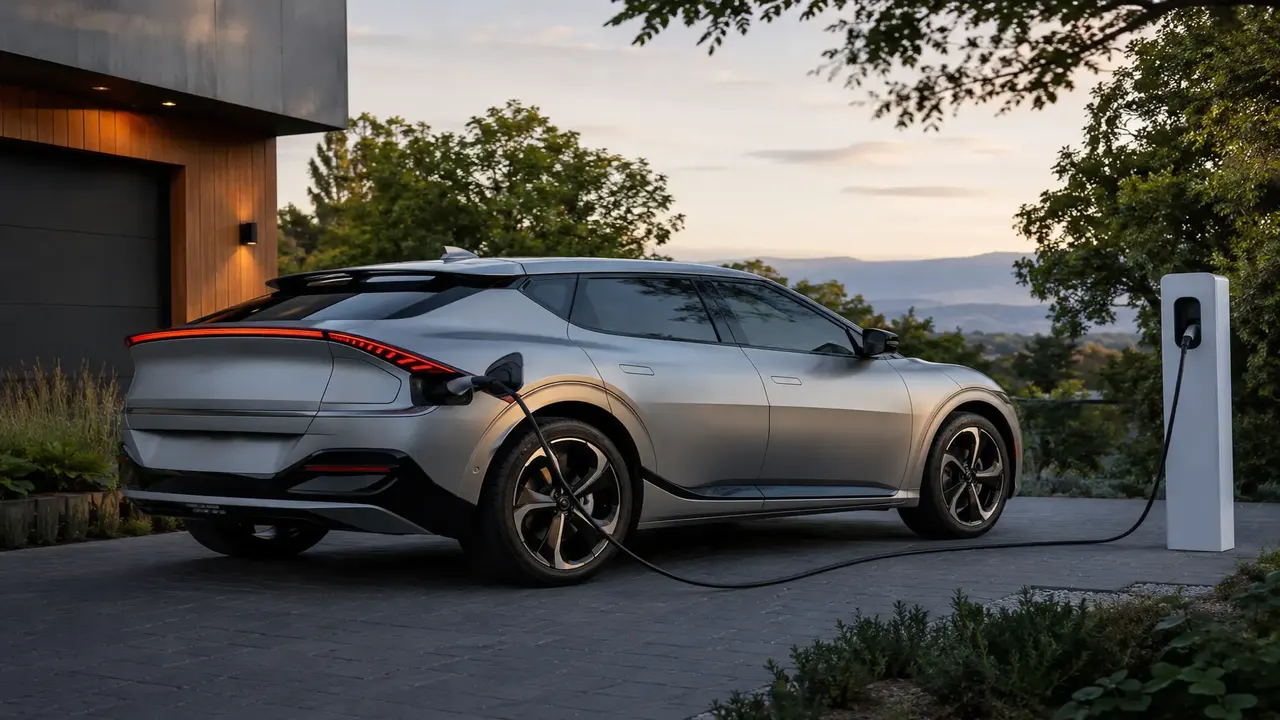
A full EV has no combustion engine at all — just a battery pack and one or more electric motors. It has to be charged (no gas backup), and depends entirely on charging access, but delivers instant torque, no tailpipe emissions, and typically lower running costs per mile once electricity is factored against fuel prices.
Where the trade-offs really show up
| Factor | ICE | HEV | PHEV | BEV |
|---|---|---|---|---|
| Refuel/charge time | Under 5 min | Under 5 min (gas only) | Gas: under 5 min / Electric: hours | 20 min (fast) to 8-10 hrs (home) |
| Running cost per mile | Highest (fuel-dependent) | Lower than ICE | Lowest on short trips, moderate on long ones | Typically lowest with home charging |
| Maintenance | Most moving parts (oil, exhaust, transmission) | Slightly less than ICE (brake wear reduced by regen) | Both engine and EV systems to maintain | Fewest moving parts, no oil changes |
| Upfront price | Lowest, typically | Moderate premium over ICE | Higher premium | Often highest, though gap is narrowing |
A plug-in hybrid only delivers its efficiency and emissions benefit if it's actually plugged in regularly — a PHEV driven like a regular hybrid (never charged) usually gets worse real-world fuel economy than a purpose-built standard hybrid, because it's hauling around a heavier, unused battery.
Who each option genuinely suits — and doesn't
- ICE suits drivers without reliable home/workplace charging, frequent long rural trips, or towing-heavy use cases where charging infrastructure is sparse
- HEV suits city and suburban drivers wanting better fuel economy with zero change in routine — no plugging in required, ever
- PHEV suits drivers with a short daily commute and home charging access, but occasional multi-hour road trips where an EV's charging stops would be inconvenient
- BEV suits drivers with consistent access to home or workplace charging whose daily and most weekly driving fits comfortably within the vehicle's range
Frequently asked questions
Is a hybrid or plug-in hybrid better for someone without a home charger?
Do EVs need less maintenance than gas cars?
Can a plug-in hybrid run entirely on gas if I never charge it?
Which powertrain has the lowest running cost per mile?
Sources & further reading
- US Department of Energy — Vehicles: Fuel Types
- US EPA — fueleconomy.gov, Hybrids, Plug-In Hybrids and EVs
Figures, prices and policy details were current at the last-updated date above. Automotive pricing, incentives and regulations change frequently — verify time-sensitive details with the linked primary sources. Read our editorial policy and fact-checking standards.