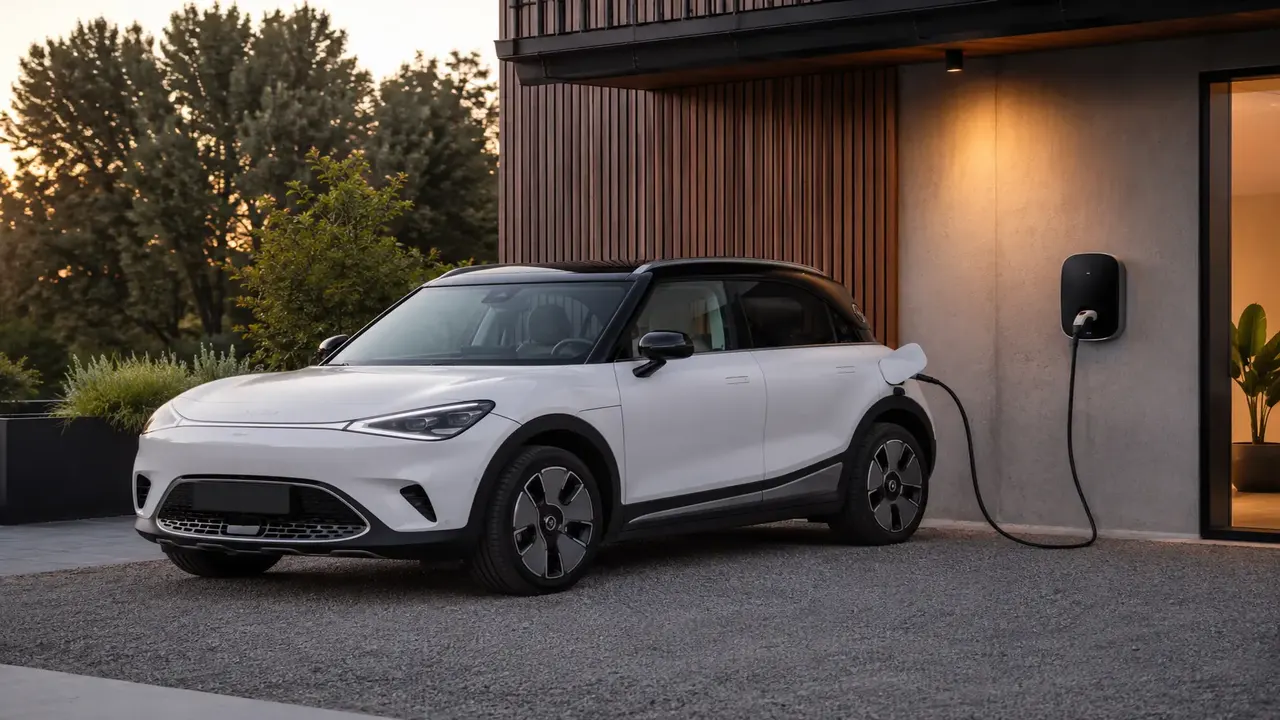
For a 300-mile road trip in an EV with roughly 250 miles of real-world range, planning one 25-35 minute fast-charging stop to top up from around 20% to 80% is typically more time-efficient than a single long stop to 100% — because charging speed slows significantly above 80%, often taking as long for that last 20% as it did for the previous 60%.
At a glance
| Planning input | Why it matters |
|---|---|
| Real-world range (not rated range) | Usually 10%-20% lower than rated figure |
| Charging curve (fastest 20%-80%) | Determines optimal stop-to-stop charge target |
| Charger network reliability/availability | Avoids detours to broken or occupied stalls |
| Weather and elevation change | Cold and mountain driving reduce range further |
What this planner does
The calculator on this page takes your journey distance, your EV's real-world range, the charge band you intend to use (10–80%, say), the minutes you expect each stop to take, and your average driving speed. It returns how many charging stops the journey needs, the usable range per leg, and the total journey time split into driving and charging. It works on distance and time, not on maps: it cannot know where the chargers are, so pair it with a charging app for the actual locations. That division of labour is deliberate, because the arithmetic is stable while charger locations and status change by the hour. What it is optimising for is total trip time rather than simply "charge to full every time."
The core principle: the charging curve
DC fast charging isn't linear — most EVs charge fastest between about 20% and 80% state of charge, then slow down substantially above 80% to protect the battery. In practical terms, the last 20% of a charge can take nearly as long as the middle 60% did. That's why experienced EV road-trippers plan multiple shorter stops to around 80%, rather than fewer, longer stops all the way to 100% — it's almost always faster overall.
Worked example: 300-mile trip, ~250-mile real-world range
| Strategy | Stops | Approx. total charging time |
|---|---|---|
| One stop to 100% | 1 stop | ~50-65 minutes |
| Two stops to ~80% each | 2 stops | ~45-55 minutes total |
The two-stop approach often finishes charging in similar or less total time while also building in a buffer against range anxiety, since you're never running the battery down as low before the next charge.
What to plan around
- Use real-world range, not rated range — rated figures are typically optimistic; plan stops around 80%-90% of the manufacturer's rated range to build in a margin.
- Check charger network status before departing — fast chargers do occasionally go offline or sit occupied; route around a station with multiple stalls and good reliability reviews when possible.
- Factor in weather and terrain — cold temperatures and mountainous or high-elevation routes reduce range meaningfully below flat, mild-weather conditions.
- Time stops around food/rest breaks — a 25-35 minute charging stop lines up naturally with a meal or restroom break, minimizing the trip-time cost of charging.
- Leave a reserve buffer — don't plan to arrive at a charging stop with less than roughly 10% charge remaining; unexpected detours or closed stations happen.
How to use the planner
- Enter your total trip distance and your EV's real-world range estimate (adjusted for season/terrain if relevant).
- Find candidate stop locations in a charging app or your car's own navigation, which know where the chargers are and, ideally, whether they are working.
- Set the charge target for each stop — commonly 80% — against the specific leg distance to the next charger or to your destination, rather than charging to a fixed number everywhere.
- Cross-check suggested stations for current uptime/availability before departure, since real-time conditions change.
Charging past 80% on a fast charger disproportionately extends stop time — only charge higher than 80% if the next leg genuinely requires it. Always keep a reserve buffer; relying on the theoretical maximum range between chargers leaves no margin for detours, traffic, or a station being temporarily unavailable.
Frequently asked questions
Should I always charge my EV to 100% on a road trip?
How much range should I plan to use between charging stops?
Does cold weather really reduce EV road trip range?
What if a planned charging station is out of service when I arrive?
How long does a typical fast-charging stop take?
Sources & further reading
- U.S. DOE Alternative Fuels Data Center — EV Charging Station Locator and planning
- U.S. Department of Energy — Charging at Home and on the Road
Figures, prices and policy details were current at the last-updated date above. Automotive pricing, incentives and regulations change frequently — verify time-sensitive details with the linked primary sources. Read our editorial policy and fact-checking standards.