Note: costs mentioned below are given in US dollars as a general point of reference — actual prices vary by country, currency, and local market.
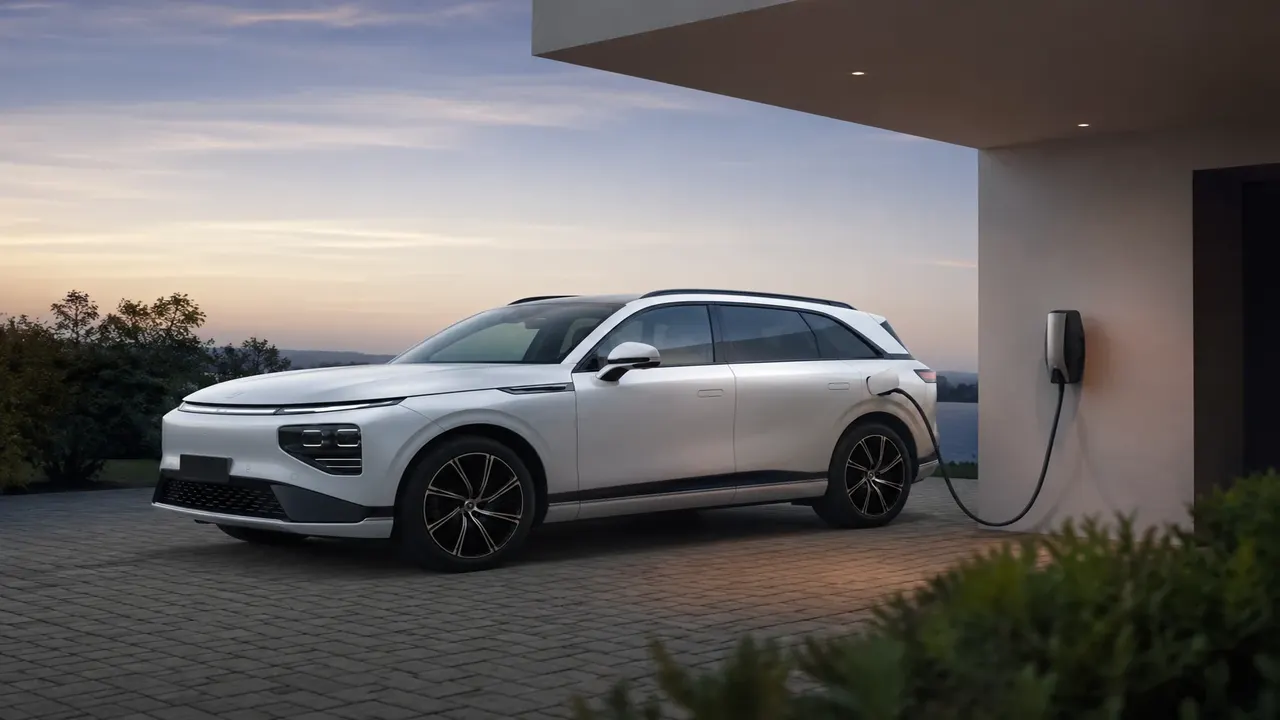
A Level 2 home charger with installation typically costs $800-$2,200 depending on electrical work needed. If it saves you $0.05-$0.15 per mile versus relying on public charging, and you drive 12,000 miles/year, the payback period is usually 1-3 years — often faster where local rebates for home charger installation are available.
At a glance
| Input | Typical range |
|---|---|
| Hardware cost | $400-$800 (Level 2 unit) |
| Installation cost | $400-$1,600 (varies by electrical panel work) |
| Cost-per-mile savings vs public charging | $0.05-$0.15/mile |
| Typical payback period | 1-3 years |
What this calculator does
This tool compares the total upfront cost of buying and installing a home Level 2 EV charger against the ongoing savings of charging at home (cheaper per kWh, especially on off-peak rates) versus relying primarily on public charging. It returns the annual and monthly saving, the payback period, and how much energy you shift from public rates to home rates each year.
What goes into the upfront cost
- Charger hardware — a Level 2 (240V) home charging unit typically costs a few hundred dollars, with pricing varying by amperage, smart features (scheduling, app connectivity), and brand.
- Electrical work — installing a dedicated 240V circuit, and any electrical panel upgrade if capacity is insufficient, is usually the larger and more variable part of total cost — a straightforward install near an existing panel costs far less than a run requiring trenching or a panel upgrade.
- Permits and inspection — many jurisdictions require an electrical permit for a dedicated circuit installation, adding a modest fee.
What goes into the ongoing savings
The core saving is the per-kWh price gap between home electricity (especially off-peak) and public charging (particularly DC fast charging, which carries a premium for speed). Every mile driven and charged at home instead of at a public charger banks that per-mile difference. A driver who currently relies heavily on public fast charging out of necessity sees the largest potential savings from switching most charging to home.
Worked example
| Scenario | Install cost | Annual mileage | Est. annual savings | Payback |
|---|---|---|---|---|
| Simple install, heavy public-charging reliance | $900 | 12,000 mi | ~$720 | ~1.3 years |
| Panel upgrade needed, moderate reliance | $2,000 | 10,000 mi | ~$450 | ~4.4 years |
| Simple install, light public-charging reliance | $800 | 8,000 mi | ~$280 | ~2.9 years |
What changes the payback period
- How much you currently rely on public fast charging — the more you currently pay premium public rates, the faster a home charger pays for itself.
- Local electrical work complexity — an existing panel with spare capacity near the parking spot makes install cheap; older panels needing an upgrade raise the upfront cost substantially.
- Available rebates or utility incentives — some utilities and local programs offer rebates for home charger installation or discounted EV charging rate plans, which can meaningfully shorten payback.
- Annual mileage — higher mileage means more charging events shifted from public to home rates, accelerating payback.
When it might not be worth it
If you already have free or low-cost workplace charging covering most of your needs, or you rarely drive enough to make the per-mile savings add up, a Level 2 home install may take many years to pay back — a simple Level 1 (standard outlet) setup, or continued reliance on existing free charging, may be more cost-effective in that specific situation.
Get a firm electrician quote before assuming the low end of the install-cost range applies — older homes and detached garages often need more extensive wiring work than expected. Check for a current utility or local rebate on home EV charger installation before calculating payback; these programs change and can meaningfully shift the math.
Frequently asked questions
How much does it cost to install a home EV charger?
How long does a home charger take to pay for itself?
Is a Level 1 (standard outlet) charger enough instead?
Do utility companies offer discounts for home EV charging?
Does installing a home charger increase home value?
Sources & further reading
- U.S. Department of Energy — Charging at Home
- U.S. DOE Alternative Fuels Data Center — Home charger installation
Figures, prices and policy details were current at the last-updated date above. Automotive pricing, incentives and regulations change frequently — verify time-sensitive details with the linked primary sources. Read our editorial policy and fact-checking standards.