🏆 THE RESULT
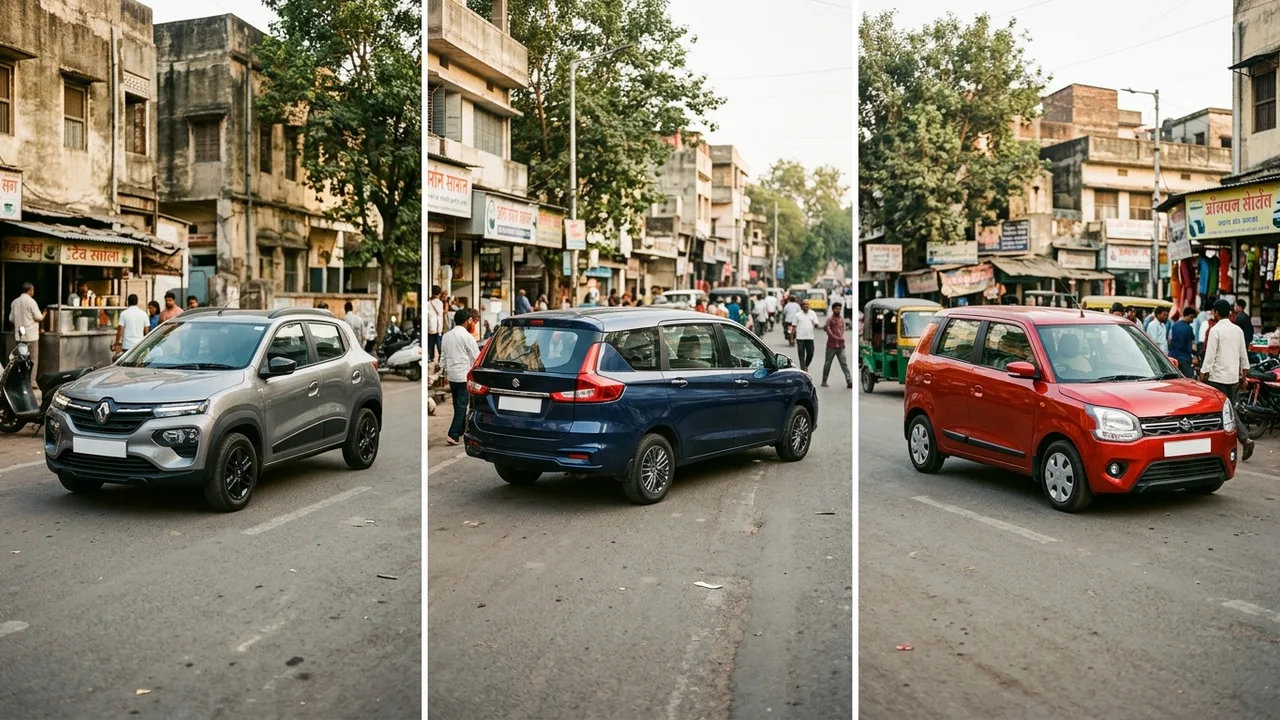
1st — Tata Nexon iCNG · twin-cylinder design preserves the boot, and turbo power fixes CNG's biggest weakness
2nd — Maruti Ertiga CNG · the only sensible seven-seat CNG option, and the family running-cost champion
3rd — Maruti WagonR CNG · the mileage king at 34 km/kg, and the cheapest to run by a distance
Three genuinely different answers. The ranking reflects overall execution, but this is a segment where the right choice depends almost entirely on what you carry.
CNG has stopped being a compromise
There's a persistent assumption that CNG cars are a grudging economy measure — slow, awkward, with no boot. That's substantially out of date. Modern factory-fitted CNG cars offer improved safety, better drivability and genuinely excellent economy, and for high-mileage Indian drivers they remain one of the most rational purchases available.
The payback maths is straightforward: if you cover more than 60 km a day, a factory-fitted CNG car's higher upfront cost typically pays for itself within two to three years. After that, you're simply saving money.
But the execution varies enormously, and one design decision matters more than any other.
The design difference that decides everything
Single-cylinder CNG installations occupy most of the boot. This is the traditional layout, and it's the source of CNG's practicality reputation. A large cylinder sits in the luggage compartment, leaving space for little more than a small bag.
Tata's twin-cylinder iCNG design places the cylinders under the floor, preserving near-full boot space. This is the single most consequential difference in this comparison, and it's why the Nexon wins.
For a family car, the difference between "usable boot" and "cylinder occupies the boot" is not a detail — it's the difference between a car that works for a weekend trip and one that doesn't.
Ertiga CNG vs. Nexon iCNG vs. WagonR CNG: the numbers
| Tata Nexon iCNG | Maruti Ertiga CNG | Maruti WagonR CNG | |
|---|---|---|---|
| Body | compact SUV | 7-seat MPV | tall hatchback |
| Price (ex-showroom) | ~₹12.44 lakh+ | ₹10.76 lakh | ~₹5.47 lakh+ |
| Engine | 1.2 turbo-petrol CNG | 1462cc | small petrol |
| Mileage (ARAI) | 17.44 km/kg | 26.11 km/kg | 34.05 km/kg |
| Cylinder design | twin-cylinder, under-floor | single | single |
| Boot with CNG | near-full | reduced | heavily reduced |
| Seats | 5 | 7 | 5 |
| Safety | strong Tata record | good | basic |
| Best for | families wanting space and CNG | large families | maximum economy |
A note on real-world figures: ARAI numbers are tested under controlled conditions. Expect roughly 80–85% in the real world — so a 34 km/kg car typically delivers around 28–29 km/kg in city traffic. A 60-litre (water capacity) tank holds roughly 9–10 kg of CNG, giving a single-fill range of 250–340 km depending on the model.
3rd place — Maruti WagonR CNG
The mileage champion and the cheapest to run — third place is about breadth, not economy.
What it does best:
- 34.05 km/kg ARAI is near class-leading (only the Celerio's 34.43 beats it), and in real terms that's roughly 28–29 km/kg in city driving. Nothing here comes close on running costs.
- Genuinely spacious for its footprint. The tall-boy design delivers excellent headroom and an airy cabin.
- The cheapest to buy by a wide margin, from around ₹5.47 lakh.
- Maruti's service network and resale — the largest and among the strongest in India.
- Perfect for its job: urban commuting, ride-hailing, and high-mileage city use where economy dominates.
Why it finishes third:
- The single-cylinder installation takes most of the boot, leaving very little luggage space — a genuine limitation for family use.
- Modest safety equipment compared to the Nexon particularly.
- Basic interior and equipment.
- Performance is adequate rather than good, especially loaded.
Buy the WagonR CNG if: maximum economy is your priority and you mostly carry people rather than luggage. For urban commuters and high-mileage city drivers, it's the cheapest car to run in India — and that's a genuinely powerful argument.
2nd place — Maruti Ertiga CNG
The only sensible seven-seat CNG option, and the family running-cost champion.
What it does best:
- It's a genuine seven-seater with CNG economy. This combination is rare — the Ertiga and Toyota Rumion are essentially the only factory-fitted seven-seat CNG MPVs available — and for a large Indian family covering serious annual mileage, the running-cost savings are substantial.
- 26.11 km/kg ARAI is excellent for a vehicle this size (roughly 21–22 km/kg real-world).
- Genuinely seats seven adequately, with the practicality that makes the Ertiga India's default family MPV.
- ₹10.76 lakh for a seven-seat CNG vehicle represents strong value.
- Maruti's network and resale.
Why it doesn't win:
- The single-cylinder installation compromises the boot, which for a seven-seater is particularly awkward — with all three rows in use, luggage space becomes very limited.
- Performance is adequate rather than strong, and CNG's power reduction is more noticeable in a fully-loaded seven-seater.
- The Nexon's twin-cylinder design solves a problem the Ertiga still has.
Buy the Ertiga CNG if: you need seven seats and the lowest possible running costs. For a large family covering high annual mileage, it's the most rational purchase in India — the boot compromise is real, but the savings are larger.
🏆 1st place — Tata Nexon iCNG
It wins on execution: twin-cylinder design solves CNG's biggest practical problem, and turbo power fixes its biggest dynamic one.
Why it takes the win:
1. The twin-cylinder iCNG layout preserves the boot. This is decisive. By placing two smaller cylinders under the floor rather than one large one in the luggage compartment, Tata delivers near-full boot space — meaning you get CNG economy without sacrificing the practicality that makes a car usable. No other manufacturer here solves this, and it transforms the ownership proposition.
2. Turbo-petrol power addresses CNG's other weakness. Running on CNG typically costs power, which is why CNG cars often feel strained. The Nexon's 1.2-litre turbo-petrol base gives it enough in reserve that the CNG conversion doesn't leave it underpowered — genuinely rare in this segment.
3. Strong safety credentials. Tata's excellent recent crash-safety record applies here, and as we argued in our micro-SUV comparison, safety shouldn't be traded away to save money.
4. SUV practicality and presence — the body style Indian buyers actually want, with genuine space and the high seating position.
5. Premium features for a CNG vehicle, in a segment where equipment is usually basic.
Where it's beatable:
- 17.44 km/kg ARAI is comfortably the lowest here — roughly half the WagonR's figure. You're paying for practicality and performance with economy, which for a pure economy buyer is the wrong trade.
- It's the most expensive of the three by a wide margin.
- No seven-seat option.
Living with CNG: what nobody tells you
Whichever you choose, CNG ownership has specific requirements worth knowing:
- Spark plugs wear faster because of higher combustion temperatures — change them every 15,000–20,000 km, more often than a petrol car
- Always start and finish your journey on petrol to keep the injectors healthy
- Cylinder hydro-testing is mandatory every three years — factor the cost and inconvenience
- Set rear tyre pressures slightly higher to compensate for the cylinder weight
- Queueing at CNG stations can be time-consuming, particularly in busy metros — this is the most under-discussed ownership cost
The bottom line
The Nexon iCNG wins because it solves the two problems that made CNG feel like a compromise: twin-cylinder under-floor packaging preserves the boot, and turbo-petrol power means it doesn't feel strained. You pay for that in economy and price, but you get a CNG car that doesn't ask you to give anything up practically.
The Ertiga CNG is second and remains the only sensible seven-seat CNG choice — for large families covering high mileage, the most rational purchase in India.
The WagonR CNG finishes third and is the cheapest to run by a distance, at roughly 28–29 km/kg real-world. If economy is everything and you carry people rather than luggage, buy it.
Choose on what you carry: luggage and space (Nexon), seven people (Ertiga), or purely the lowest cost per kilometre (WagonR). All three are rational; they answer different questions.
Key takeaways
- Winner: Tata Nexon iCNG — twin-cylinder under-floor packaging preserves near-full boot space, and turbo-petrol power avoids the usual CNG strain
- The cylinder layout is the decisive design difference: single-cylinder installations occupy most of the boot; Tata's twin-cylinder design doesn't
- Ertiga CNG (2nd) is the only sensible seven-seat CNG option at ₹10.76 lakh and 26.11 km/kg — the family running-cost champion
- WagonR CNG (3rd) is the economy king at 34.05 km/kg ARAI (~28–29 real-world) and cheapest to buy — ideal for urban commuting
- CNG ownership specifics: spark plugs every 15,000–20,000 km, start and finish on petrol, mandatory hydro-testing every three years
Sources & further reading
Figures, prices and policy details were current at the last-updated date above. Automotive pricing, incentives and regulations change frequently — verify time-sensitive details with the linked primary sources. Read our editorial policy and fact-checking standards.