Note: costs mentioned below are given in US dollars as a general point of reference — actual prices vary by country, currency, and local market.
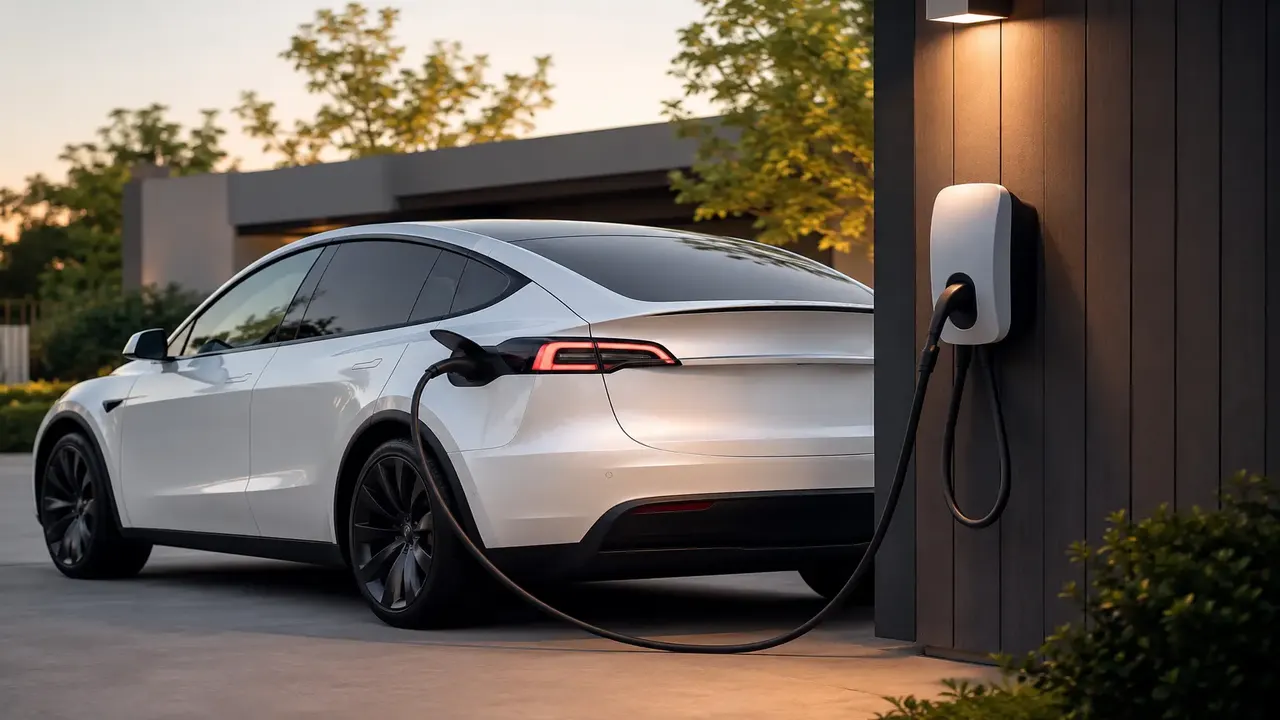
Home charging on a residential electricity rate is typically the cheapest way to charge an EV, often costing a fraction of public DC fast-charging rates per kWh, plus the convenience of starting every day at full charge. Public charging, especially DC fast charging, is essential for longer trips but usually costs 2-4x more per kWh than home charging in many markets, and pricing/network reliability still varies significantly by operator and region. A home Level 2 charger typically costs $400-$1,500 installed in the US (with wide variation by home electrical setup), which usually pays for itself within a year or two of avoided public charging costs for a typical daily driver.
At a glance
| Charging type | Typical relative cost | Best for |
|---|---|---|
| Home Level 1/2 | Lowest cost per kWh | Daily overnight charging for most trips |
| Public Level 2 | Moderate, varies by network | Workplace/destination top-ups |
| Public DC fast charging | Highest cost per kWh | Road trips, quick top-ups on the go |
Why home charging is usually cheapest
Charging at home uses your standard residential electricity rate, which in most markets is significantly cheaper per kWh than what public charging networks charge, since public networks also need to recoup hardware, installation, land/lease and network operating costs. For a typical driver who covers most daily mileage on home charging and only uses public fast charging occasionally for longer trips, the blended cost per mile ends up far closer to the home rate than the public rate.
The real cost of installing home charging
A Level 1 charger (standard household outlet) needs no special installation but charges slowly — often adding only a few miles of range per hour. A Level 2 home charger requires a dedicated circuit (240V in the US) and, depending on your home's existing electrical panel capacity, may need an electrician to run new wiring; total installed cost commonly falls in the $400-$1,500 range in the US, with UK and other markets varying by local labor and hardware costs. Some utilities and regional programs offer rebates that reduce this upfront cost — worth checking before installing.
When public charging is unavoidable — and what it costs
Public charging remains essential for apartment/street-parking dwellers without home charging access, and for any trip beyond the car's comfortable single-charge range. DC fast charging is the most expensive per-kWh option on most networks, reflecting the cost of high-power hardware and grid connections, but it delivers a substantial charge in a fraction of the time of Level 2 charging — often 15-40 minutes for a meaningful top-up depending on the car and charger.
| Scenario | Recommended approach |
|---|---|
| Own a home with off-street parking | Install Level 2 home charger, use public fast charging only for trips |
| Apartment/street parking, no home charging | Rely on workplace/public Level 2 + occasional DC fast charging |
| Frequent long road trips | Plan routes around reliable DC fast-charging networks |
Compare your blended cost per mile across home and public charging against an equivalent gas car's cost per mile — for most home-charging-dominant drivers, EVs remain cheaper to 'fuel', but the gap narrows significantly for those relying mostly on public fast charging.
Practical tips either way
- Charge to the manufacturer-recommended daily limit (often 80-90%) rather than 100% for battery longevity on home charging.
- Use charging network apps to check real-time charger availability and reliability before a road trip.
- Look into time-of-use electricity rates — many utilities offer cheaper overnight rates that suit EV charging schedules well.
- Factor in any available home-charger installation rebates or tax credits in your area before budgeting.
Frequently asked questions
Is it cheaper to charge an EV at home or in public?
How much does it cost to install a home EV charger?
Can I charge an EV with a normal home outlet?
Do I need a home charger if public charging is nearby?
Sources & further reading
- U.S. Department of Energy — Alternative Fuels Data Center (EV Charging)
- UK Office for Zero Emission Vehicles — EV Charging Guidance
Figures, prices and policy details were current at the last-updated date above. Automotive pricing, incentives and regulations change frequently — verify time-sensitive details with the linked primary sources. Read our editorial policy and fact-checking standards.