Same idea, different religions
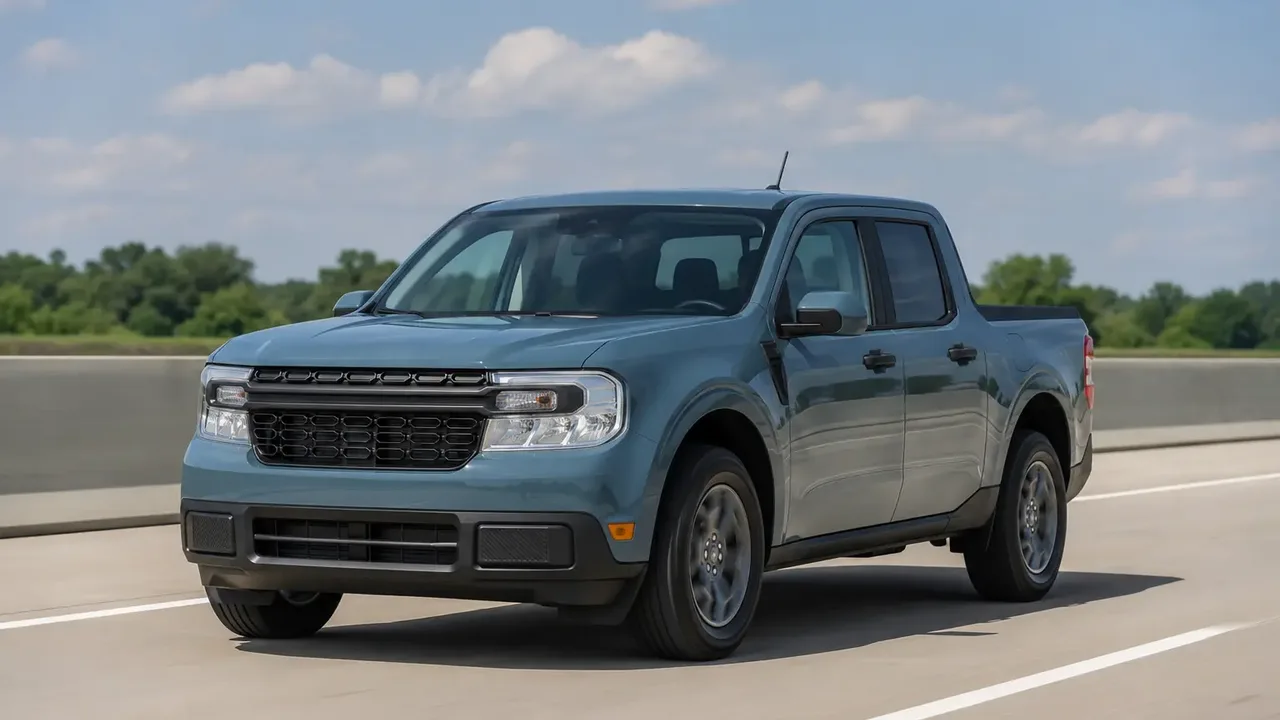
The compact-pickup revival produced exactly two mainstream answers, built on opposite philosophies. The Ford Maverick is a truck first: honest bed, work-grade cabin, hybrid economy, price leadership. The Hyundai Santa Cruz is a lifestyle crossover with a bed: sharper to drive, plusher inside, less pickup in its bones. Neither is wrong. They're aimed at different owners who happen to shop the same segment.
The case for the Maverick
Price and the hybrid. The Maverick's headline act remains its standard hybrid at a base price that undercuts most compact SUVs. Real-world city economy in the 40s (mpg) makes it the cheapest genuine truck to run in America, and the 2025-cycle update added the option of pairing the hybrid with all-wheel drive — removing the old front-drive-only asterisk.
Truck honesty. The 4.5-foot FLEXBED is shallow-walled but usefully square, with clever slots for DIY dividers, available power outlets, and a tailgate that props mid-height to carry 4x8 sheets flat over the wheel wells. Payload of roughly 1,500 lbs and towing of 2,000 lbs standard — 4,000 lbs with the EcoBoost and tow package — cover the trailer, mulch and dump-run life convincingly.
The trade-offs. Cabin plastics are proudly cheap, the hybrid's brake feel is merely okay, road noise is present, and popular trims have carried waits and dealer markups for much of the model's life — a demand problem, which is its own review.
The case for the Santa Cruz
It drives like the crossover it is. Built on Tucson bones, the Santa Cruz rides quieter and more settled than the Maverick, corners flatter, and its available 2.5-liter turbo (around 281 hp) with dual-clutch auto is genuinely quick. Its 5,000-lb max tow rating (turbo AWD) beats the Maverick's best on paper — with the usual mid-size-crossover caveats about tongue weight and real-world margins.
The nicer place to sit. Materials, seat comfort, infotainment polish and available features read a class above the Ford. As a daily commuter that occasionally hauls bikes, soil or a dirt bike, it's the more pleasant machine.
The trade-offs. The bed is shorter (about 4.3 feet), shallower and less tool-like — the composite floor and hidden trunk-well are clever, but sheet goods and pallet-shaped loads fit worse. No hybrid option means economy in the mid-20s combined; the base engine is unremarkable; and pricing walks quickly into mid-size-truck territory at the top trims. Rear-seat space trails the Ford's, and the tailgate isn't as usable a workbench.
The spec-sheet skirmish, called honestly
- Economy: Maverick hybrid, by a landslide. Nothing in the class touches it.
- Bed usability: Maverick — squarer, deeper, more configurable.
- Towing: Santa Cruz turbo on the number; Maverick EcoBoost close enough for most real trailers.
- Ride, cabin, refinement: Santa Cruz, clearly.
- Price for equivalent equipment: Maverick, usually by thousands.
- Long-term cover: Hyundai's 10-year/100k powertrain warranty is a real differentiator the Ford can't match.
Buy this one if…
- Buy the Maverick if the bed will work for a living — even a light one — or if running costs rule: the hybrid is the value story of the segment. It's the truck.
- Buy the Santa Cruz if 90% of your miles are commuting and the bed is for weekends: it's the better car, and the warranty sweetens keeping it a decade.
- Third option honesty: if you tow heavy regularly or need four full-size doors and a real bed, neither is your truck — a used mid-size (Tacoma, Ranger, Colorado) remains the adult answer.
The questions shoppers actually ask
Can either replace a midsize truck for towing? For a light boat, a pair of bikes or a small utility trailer, comfortably. For a 6,000-lb travel trailer, neither — payload and wheelbase math, not marketing, sets that line. Be honest about tongue weight: a loaded family plus a heavy hitch eats these payload budgets fast.
How's the Maverick hybrid on the highway? Strong around town (where hybrids shine) and merely good at 75 mph, where the gas engine does the work — expect high-30s rather than the city 40s. The EcoBoost flips that profile; match the engine to where your miles actually happen.
Which holds value better? Early data favors the Maverick — persistent demand against constrained supply has kept used prices unusually firm. The Santa Cruz depreciates more conventionally, which cuts both ways: worse to sell, better to buy used.
Ford Maverick vs Hyundai Santa Cruz: key takeaways
- Maverick = truck-first: cheapest to buy and run (hybrid), squarer and more usable bed, plasticky cabin
- Santa Cruz = crossover-first: better ride, nicer interior, quickest engine, 5,000-lb headline tow, weaker bed
- No hybrid Santa Cruz is the decisive running-cost gap; Hyundai's warranty is the decisive ownership gap
- Price for price, the Ford consistently undercuts equivalent Hyundai trims
- Choose by the bed's job description, not the styling — they're different tools wearing the same silhouette
Sources & further reading
- Ford and Hyundai 2026 specification and pricing sheets
- EPA economy figures
- manufacturer tow-rating documentation
- True Motion Auto comparison-test methodology
Figures, prices and policy details were current at the last-updated date above. Automotive pricing, incentives and regulations change frequently — verify time-sensitive details with the linked primary sources. Read our editorial policy and fact-checking standards.