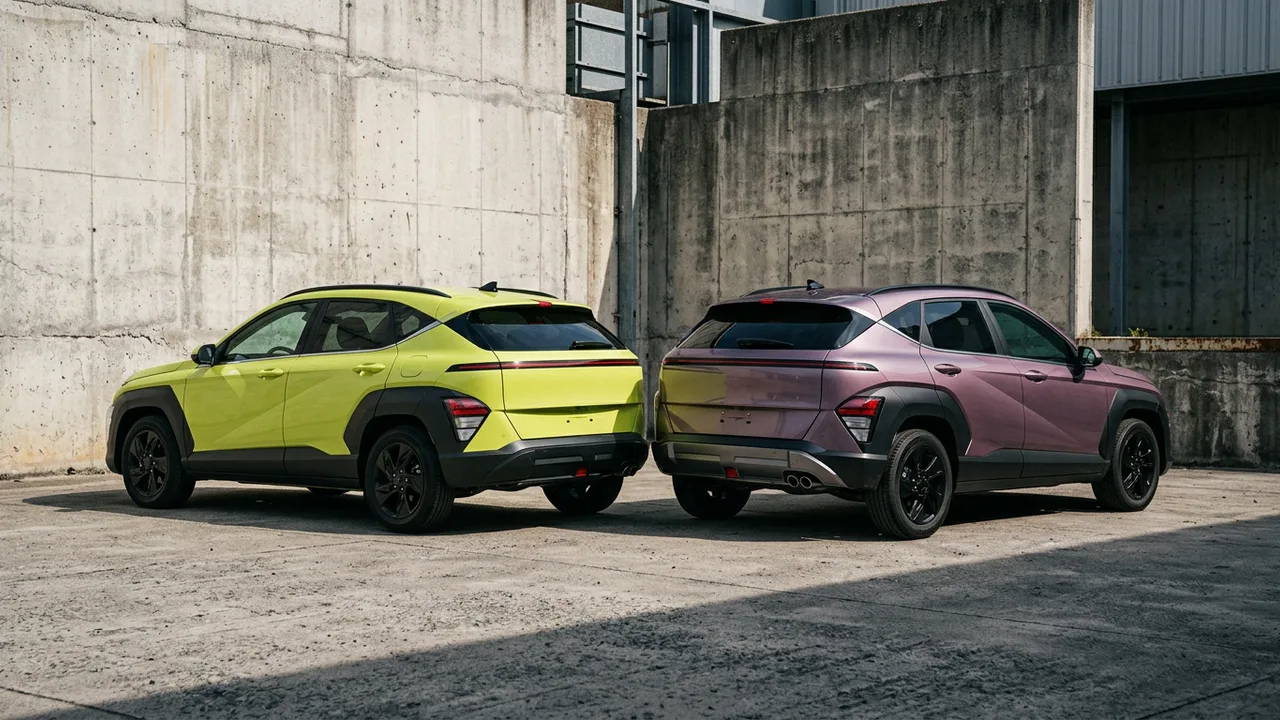
Twins with distinct wardrobes
Hyundai and Kia share a group, platforms, engines and the industry's best-value 800-volt EV hardware — which makes choosing between them delightfully low-risk and genuinely confusing. The differences are real, just not where badge rivalries usually live.
What's actually shared
Underneath, a Tucson and Sportage, an Ioniq 5 and EV6, a Creta and Seltos are siblings: same bones, same powertrains, same batteries, similar crash structures. Reliability records track together; both carry long warranties (Kia's 7-year UK cover and the group's 10-year US powertrain promise lead their markets). Whatever you choose, the engineering risk is identical — low.
Where they diverge
Design language. Kia post-2020 is the bolder stylist — the EV6, EV9 and Sportage take risks Hyundai's equivalents don't; Hyundai answers with parametric-pixel identity on Ioniqs and softer family faces elsewhere. This is the biggest genuine difference: which design school you'd rather live with.
Trim and price logic. Kia typically stacks sportier trims (GT-Line) and edges premium on kit; Hyundai often undercuts slightly at entry and spreads hybrid options wider (India's Creta vs Seltos illustrates both habits). Driving flavour: near-identical hardware, marginally sportier Kia tuning in several segments — think percentage points, not personalities. N vs GT: Hyundai's N division is the group's enthusiast crown (i20 N, Ioniq 5 N); Kia's GT models are quick but less track-bred.
Market snapshots
US: Telluride vs Palisade is the group's family flagship duel — the Kia styled harder, the Hyundai plusher-nosed; both redesigned, both excellent. UK: Sportage vs Tucson splits households; Kia's warranty tips fleets. India: Creta remains the segment king; Seltos counters with feature aggression and diesel breadth.
Hyundai vs Kia: the honest verdict
Pick by design taste, trim fit and the deal on the table — then sleep well either way. If a tiebreaker's needed: enthusiasts lean Hyundai for N; warranty-maximisers in Britain lean Kia; everyone else should let the showrooms fight for the order.
The questions buyers actually ask
Is one more reliable? No meaningful gap — shared hardware, shared records.
Why do prices differ for near-identical cars? Trim packaging and positioning; compare specs line-by-line, not stickers.
EV6 or Ioniq 5? Ergonomics and look: the Kia is the coupe-ish drive, the Hyundai the lounge. Hardware ties.
Key takeaways
- Platforms, engines, batteries, reliability: effectively identical
- Kia styles bolder and stacks sportier trims; Hyundai spreads hybrids wider
- Hyundai N leads the group for enthusiasts; Kia's UK 7-year warranty leads for fleets
- Telluride/Palisade, Sportage/Tucson, Seltos/Creta: pick by design and deal
- The twins' real rival is everyone else — cross-shop outward, not just inward
Sources & further reading
- Group platform documentation
- market lineups (US/UK/India)
- True Motion Auto reviews of both ranges
Figures, prices and policy details were current at the last-updated date above. Automotive pricing, incentives and regulations change frequently — verify time-sensitive details against the primary sources listed below. Read our editorial policy and fact-checking standards.