Note: costs mentioned below are given in US dollars as a general point of reference — actual prices vary by country, currency, and local market.
Electric cars cost more upfront in most markets — new EV transaction prices still run above the overall new-car average — but typically cost far less to 'refuel' at home, since electricity per mile is generally cheaper than gasoline per mile, especially where off-peak home electricity rates apply. In the US, the federal EV tax credit that had offered up to $7,500 ended on September 30, 2025, removing a major purchase incentive and shifting more of the total-cost-of-ownership math back toward petrol for buyers who can't rely on state/local incentives or cheap home charging. Petrol cars still win on refueling speed and road-trip convenience almost everywhere, since public charging networks, while growing, remain less dense and slower than a gas station fill-up.
At a glance: petrol vs electric cars
| Factor | Petrol | Electric |
|---|---|---|
| Upfront price | Generally lower | Generally higher, though gap has narrowed |
| 'Fuel' cost per mile | Higher, tracks gas prices | Lower with home charging; less advantage on public DC fast charging |
| Refueling time | Minutes | 20-40 min (DC fast) to several hours (home/Level 2) |
| Maintenance | Oil changes, more moving parts | No oil changes, fewer moving parts, but tires/brakes still needed |
| US federal incentive | Not applicable | Ended September 30, 2025 — check current state/local incentives |
| Best suited to | Road-trip-heavy driving, no home charging access | Daily commuting with home/workplace charging access |
Upfront price and incentives
Electric vehicles have historically carried a purchase price premium over comparable petrol cars, driven largely by battery cost, though that gap has narrowed as EV production has scaled and battery prices have fallen. In the US, the federal EV tax credit — which had offered up to $7,500 for qualifying new EVs and up to $4,000 for used ones — ended on September 30, 2025, removing a significant purchase incentive; some state and local incentives remain, so it's worth checking what's currently available in your specific location before assuming the old federal numbers still apply.
Running costs: the EV's strongest case
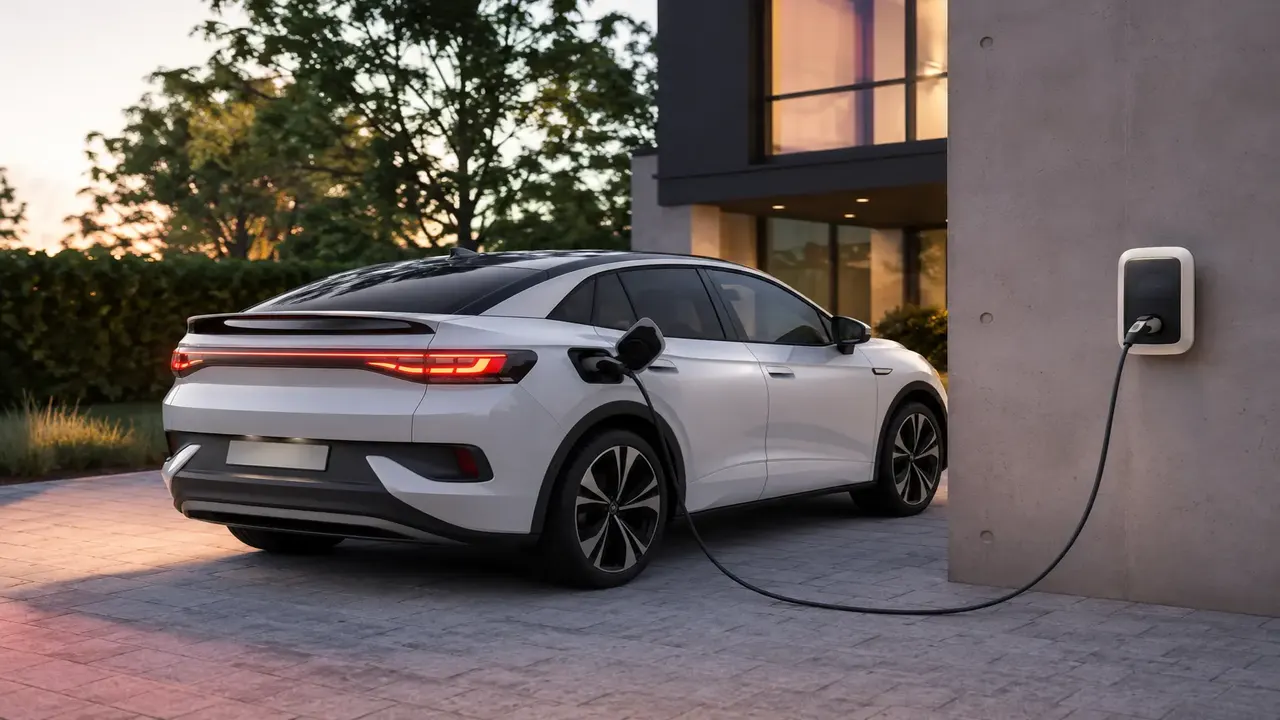
Where an EV owner can charge at home, especially overnight on a lower-cost electricity plan, the cost per mile is typically well below the cost of gasoline per mile for a comparable petrol car — often less than half, depending on local electricity and fuel prices. That advantage shrinks significantly for owners who rely mainly on public DC fast charging, which is priced at a premium compared to home electricity and can, in some cases, approach or exceed the cost of gasoline per mile.
Maintenance differences
EVs eliminate oil changes, spark plugs, and many other routine petrol-engine maintenance items, and regenerative braking often extends brake pad life. They still need tires, cabin air filters, and eventually suspension and other wear items like any car — and EV-specific costs (12-volt battery, occasional software-related service visits) exist too. Overall, most studies and owner-reported data point to EVs costing somewhat less to maintain over time than equivalent petrol cars, though the gap varies by model and driving pattern.
Charging and refueling convenience
A petrol car can be refueled to full range in a few minutes at any of a huge number of gas stations. Public DC fast charging can add significant range in roughly 20-40 minutes depending on the vehicle and charger, but charging networks are still less dense than fuel stations in most countries, and charger reliability/availability varies by region and network. Home charging overnight solves this for most daily driving, but road trips still require more planning for an EV than a petrol car in most parts of the world today.
Mistakes to avoid
- Assuming the old $7,500 US federal EV credit still applies — it ended September 30, 2025; verify current state/local incentives instead.
- Buying an EV without reliable home or workplace charging access and expecting petrol-car-like convenience.
- Ignoring electricity rate plans — charging at peak hours can erode much of the EV cost-per-mile advantage.
- Overlooking that a petrol car's total cost includes ongoing fuel-price volatility, which an EV largely avoids if charged at home.
Which fits which driver
An EV makes the strongest financial and convenience case for drivers with reliable home or workplace charging, a daily commute well within typical EV range (commonly 200-300+ miles on a full charge for many current models), and access to remaining state/local incentives. A petrol car remains the simpler, currently often cheaper-upfront choice for drivers without home charging access, frequent long-distance/road-trip needs, or those in areas with sparse public charging infrastructure.
Frequently asked questions
Is the federal EV tax credit still available in 2026?
Are electric cars actually cheaper to run than petrol cars?
How long does it take to charge an EV compared to filling a petrol tank?
Do electric cars cost more to insure than petrol cars?
Is an EV a good choice if I don't have home charging?
Sources & further reading
Figures, prices and policy details were current at the last-updated date above. Automotive pricing, incentives and regulations change frequently — verify time-sensitive details with the linked primary sources. Read our editorial policy and fact-checking standards.