Note: costs mentioned below are given in US dollars as a general point of reference — actual prices vary by country, currency, and local market.
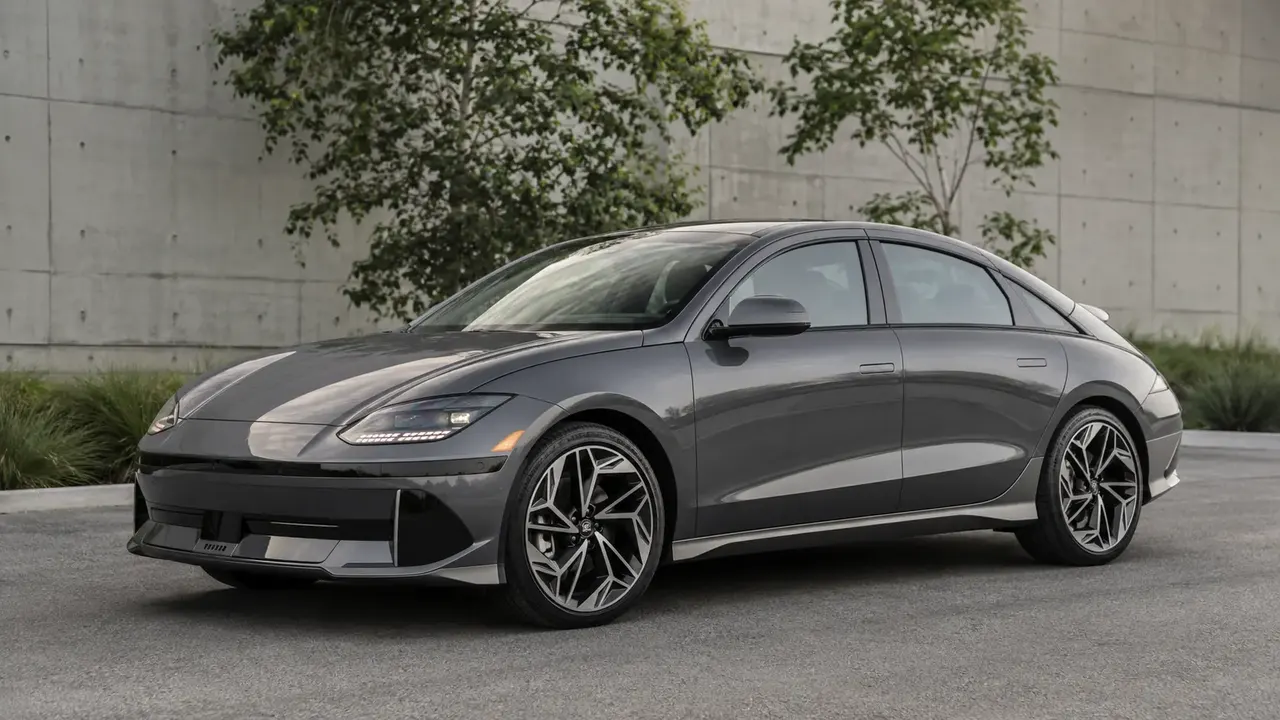
The Tesla Model 3 leads on charging network access via Tesla's Supercharger network and its own efficiency-focused engineering, plus a minimalist interior built around its central touchscreen. The BMW i4 leans into traditional driving-dynamics strengths — sharper steering and body control that reflect BMW's sedan heritage — in a more conventional luxury-sedan cabin layout. The Hyundai Ioniq 6's aerodynamic, streamlined shape targets strong efficiency and range for the price, paired with fast-charging capability from its 800-volt architecture on many trims. All three sit in the same broad premium-to-near-premium electric sedan price bracket, generally starting in the $40,000-$55,000 range before options.
At a glance: Tesla Model 3 vs BMW i4 vs Hyundai Ioniq 6
| Factor | Tesla Model 3 | BMW i4 | Hyundai Ioniq 6 |
|---|---|---|---|
| Signature strength | Charging network access, software/OTA updates | Driving dynamics, traditional sedan feel | Aerodynamic efficiency, fast-charging architecture |
| Interior style | Minimalist, screen-centric | More traditional luxury-sedan layout | Modern, dual-screen, distinctive design |
| Charging | Supercharger network access | CCS fast-charging network dependent | 800V architecture enables very fast DC charging on many trims |
| Typical starting price | Mid $40,000s-ish before options | Higher starting point, luxury-brand pricing | Competitive, often below the other two |
Charging network and ownership experience
Tesla's biggest practical advantage remains its charging network: Model 3 owners get direct access to the extensive, generally reliable Supercharger network, which has historically made road-tripping easier than for many rival EVs dependent on third-party charging networks. BMW i4 and Hyundai Ioniq 6 owners rely on the broader CCS charging ecosystem, which has expanded significantly but historically varied more in reliability and availability by region and network operator — though access to Tesla's network has been opening up to non-Tesla vehicles in some markets, so check current compatibility for your region.
Driving dynamics
The BMW i4 is generally regarded as the most engaging to drive of the three, carrying forward BMW's traditional sedan strengths — precise steering, well-controlled body movements, and a driving position that feels sportier than most electric sedans. The Model 3 offers strong acceleration, especially in Performance trim, with a lower center of gravity that gives it confident, flat cornering, though its steering feel is tuned more for effortless daily use than outright engagement. The Ioniq 6 prioritizes a smooth, comfort-oriented ride and its aerodynamic shape more than outright cornering sharpness.
Efficiency and range
The Ioniq 6's aerodynamic teardrop-inspired shape is specifically engineered to minimize drag, translating into strong real-world efficiency and range for its battery size, and its 800-volt architecture on many trims allows for notably fast DC charging when using a compatible high-power charger. The Model 3 has long been recognized as one of the more efficient EVs on the market thanks to Tesla's powertrain engineering. The i4 is competitive but generally trails the other two slightly on outright efficiency, reflecting its more conventional sedan proportions and BMW's dynamics-first tuning priorities.
Interior and technology philosophy
Tesla's cabin is famously minimalist, centering almost all functions through its large central touchscreen with few physical buttons — a layout owners either love for its simplicity or find requires a learning curve for basic functions. BMW's i4 interior follows a more traditional luxury-sedan approach with a curved digital display combining instrument cluster and infotainment, alongside more conventional physical controls. Hyundai's Ioniq 6 uses a modern dual-screen layout with distinctive interior design details that lean into a more futuristic, tech-forward aesthetic than either rival.
Mistakes to avoid when comparing
- Comparing headline range figures without checking wheel size and trim, which significantly affect real-world efficiency on all three.
- Assuming Supercharger access is identical everywhere — network expansion to non-Tesla vehicles varies by region and is still rolling out.
- Overlooking software update philosophy differences — over-the-air update frequency and scope vary meaningfully between the three brands.
- Ignoring current incentive eligibility, which changes based on price caps, battery sourcing rules, and your specific location.
Which one fits which buyer
Choose the Model 3 if charging network convenience and software-driven features matter most. Choose the i4 if traditional sedan driving dynamics and a more conventional luxury cabin layout are the priority. Choose the Ioniq 6 if maximizing efficiency, range, and fast-charging speed for the price is your main goal, paired with distinctive styling.
Frequently asked questions
Which of these three EVs has the longest range?
Can I charge a BMW i4 or Hyundai Ioniq 6 at Tesla Superchargers?
Which is the most fun to drive, Model 3, i4, or Ioniq 6?
Does the Hyundai Ioniq 6 charge faster than the Model 3?
Are any of these three still eligible for EV purchase incentives?
Sources & further reading
- EPA fueleconomy.gov — official EV range and efficiency ratings
- US Department of Energy — Alternative Fuels Data Center
Figures, prices and policy details were current at the last-updated date above. Automotive pricing, incentives and regulations change frequently — verify time-sensitive details with the linked primary sources. Read our editorial policy and fact-checking standards.