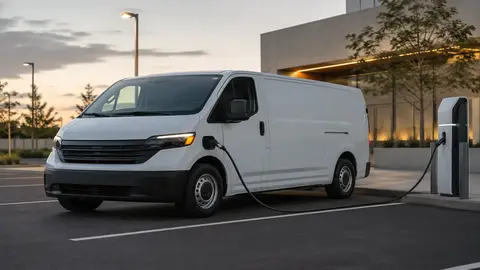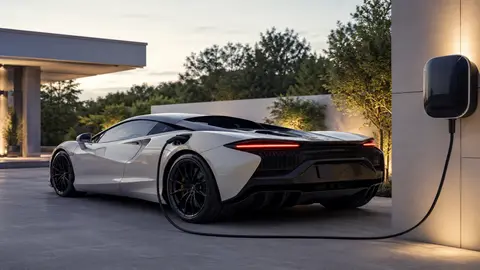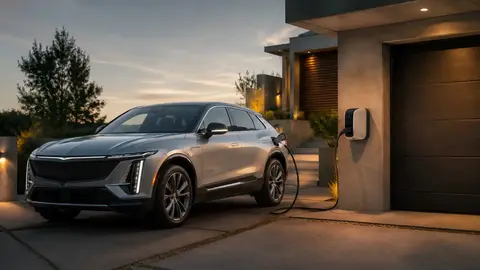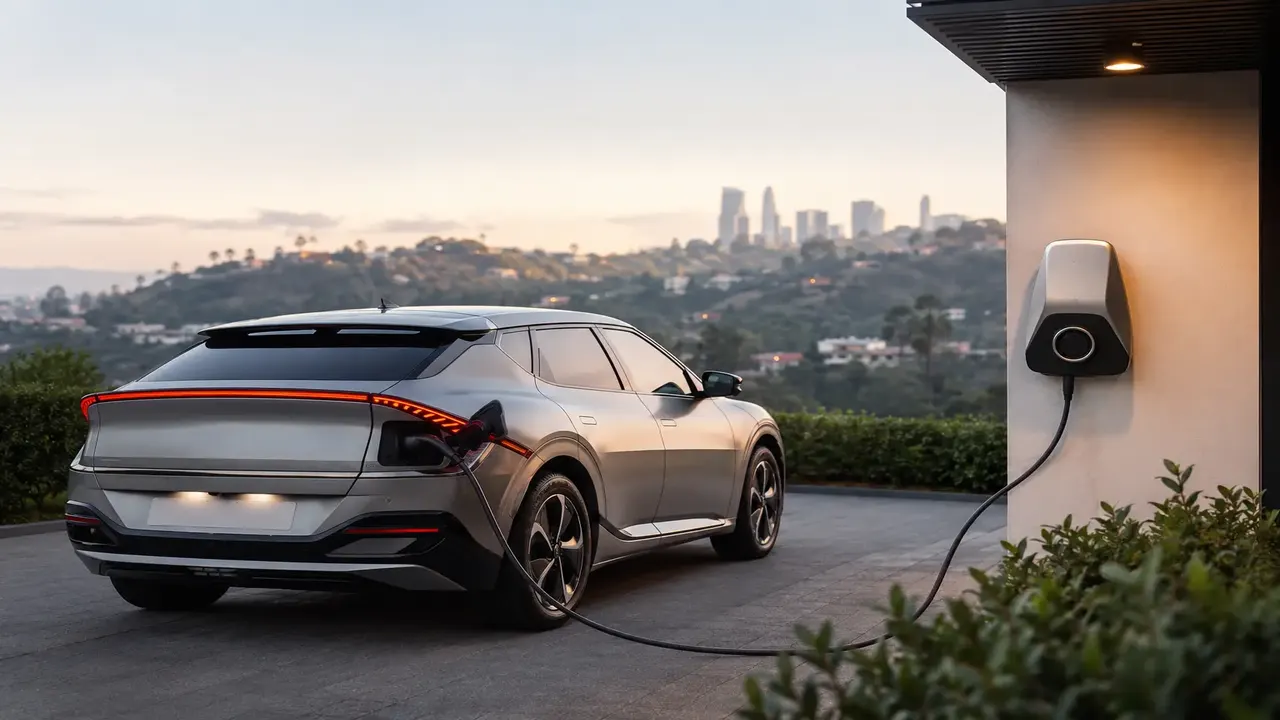
A BEV (battery-electric) runs purely on electricity — best if you can charge reliably and want the lowest running costs and zero tailpipe emissions. A PHEV (plug-in hybrid) gives 10–40 miles of electric range then runs as a hybrid — best for those who can charge but also need long-distance flexibility. A regular hybrid (HEV) never plugs in and just sips less fuel — best where charging is impractical. A mild hybrid (MHEV) can't drive on electricity at all and only slightly improves efficiency — essentially a petrol car with a small assist. Choose by your charging access and driving pattern, not the badge.
BEV vs PHEV vs HEV vs MHEV
| Type | Plugs in? | Electric-only driving | Best for |
|---|---|---|---|
| BEV | Yes | Always (full range) | Charging access + lowest running cost |
| PHEV | Yes | ~10–40 miles | Short EV commutes + long trips |
| HEV (hybrid) | No | Brief, low-speed only | No charging access; fuel savings |
| MHEV (mild) | No | None | Slight efficiency on a petrol car |
The four powertrains, plainly
BEV — battery electric
A BEV has no engine at all: a large battery and one or more electric motors. It produces no tailpipe emissions, has the lowest running and maintenance costs, and delivers smooth, quiet, instant performance. Its one requirement is charging — it shines when you can plug in at home or work, and asks more planning when you can't.
PHEV — plug-in hybrid
A PHEV pairs a usable battery (typically giving 10–40 miles of electric range) with a petrol engine and tank. You charge it like an EV and drive on electricity for short trips, then it behaves like a conventional hybrid for longer journeys. Done right — charged regularly — it covers most daily driving on electricity while removing range anxiety for long trips.
HEV — regular (self-charging) hybrid
An HEV has an engine and a small electric motor but never plugs in; the battery is charged by the engine and regenerative braking. It can't drive far on electricity alone — just brief, low-speed assistance — but it meaningfully improves fuel economy, especially in town. It's the no-charging-required option.
MHEV — mild hybrid
An MHEV uses a small (usually 48V) battery and motor to assist the engine — smoothing stop-start and recovering a little braking energy — but it cannot drive on electricity at all. The efficiency gain is modest. Think of it as a slightly more economical petrol or diesel car, not a true electrified one.
How to choose: start with charging
The decision flows from two questions — can you charge, and how do you drive?
- Reliable home/work charging + mostly local or planned long trips → BEV. You get the lowest running cost and zero emissions, and charging is a non-issue.
- Some charging access + frequent long, unpredictable trips → PHEV. Electric for the commute, petrol for the motorway — provided you actually plug it in.
- No practical charging at all → HEV. You still cut fuel use without ever needing a plug.
- You want a normal petrol car with a small efficiency bump → MHEV. Cheapest to buy, smallest benefit.
The PHEV honesty test
PHEVs only deliver their promised savings if you plug them in. Real-world fuel economy falls far below lab figures when owners rarely charge or drive mostly on the motorway — at which point you're hauling a heavy battery you don't use and burning fuel to carry it. Before choosing a PHEV, be honest: will you charge it most days? If not, an HEV may be cheaper and simpler, and a BEV better still if you can charge.
| If you... | Best choice | Why |
|---|---|---|
| Charge at home, drive locally | BEV | Lowest cost, zero emissions, simple |
| Charge sometimes, tow/road-trip often | PHEV | EV commute + petrol flexibility |
| Can't charge, want lower fuel bills | HEV | Savings with no plug needed |
| Want a cheap, familiar petrol car | MHEV | Small efficiency gain, lowest price |
BEVs have the lowest running costs and, in the UK, the lowest company-car tax (4% BiK in 2026/27) — PHEVs sit higher and HEV/MHEVs higher still. The US federal EV purchase credits ended on 30 September 2025, so that's no longer a reason to favour a BEV there; running costs and charging access are. In India, BEVs enjoy 5% GST versus 28%+ for conventional cars, a meaningful structural saving.
Common mistakes
- Buying a PHEV and never charging it — the worst of both worlds.
- Dismissing a BEV over range anxiety when home charging would solve it.
- Assuming a mild hybrid is 'a hybrid' — it can't drive on electricity at all.
- Choosing by badge or trend instead of your charging access and driving pattern.
Frequently asked questions
What's the difference between a hybrid and a mild hybrid?
Is a PHEV better than a BEV?
How far can a plug-in hybrid go on electricity?
Which is cheapest to run?
How do I choose between them?
Sources & further reading
Figures, prices and policy details were current at the last-updated date above. Automotive pricing, incentives and regulations change frequently — verify time-sensitive details with the linked primary sources. Read our editorial policy and fact-checking standards.