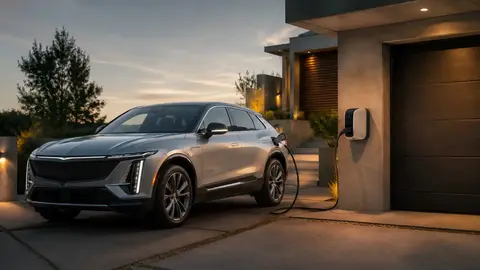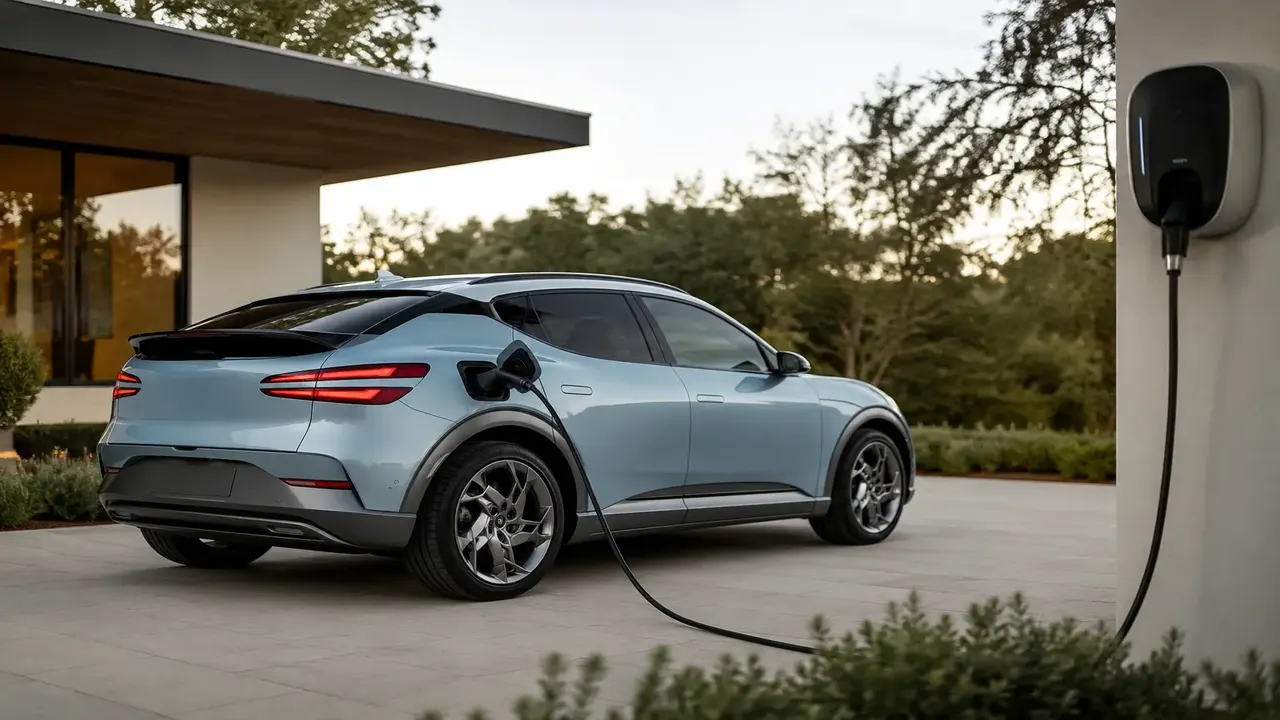
Choose an EV in five steps: (1) nail down charging — where the car will plug in is the biggest factor; (2) right-size the range — 200–250 miles suits most drivers; (3) pick the body style that fits your real cargo and passengers; (4) set a budget on real price (the US federal $7,500 credit ended 30 September 2025); and (5) check the practical specs — charging speed, connector fit, battery warranty and efficiency. Match the car to how you actually drive, not to the longest-range or flashiest option.
The five-step EV choice framework
| Step | Decide | Quick guide |
|---|---|---|
| 1. Charging | Where will it plug in? | Home/work charging is ideal |
| 2. Range | How far daily / on trips? | 200–250 mi covers most |
| 3. Body style | What do you carry? | City car, crossover or 3-row |
| 4. Budget | Real out-the-door price | No federal credit after Sep 2025 |
| 5. Specs | Charging, warranty, efficiency | Check curve, connector, heat pump |
Step 1: Start with charging, always
Where and how you'll charge shapes every other decision, so settle it first. A home wallbox means you start most days effectively full and rarely touch public charging — the EV ideal. Workplace charging is nearly as good. If you depend on public charging, an EV still works but you'll plan around it and pay more per mile, which nudges you toward efficient cars with fast charging. Be honest about your situation before falling for a particular model.
Step 2: Right-size the range
More range isn't automatically better — it adds weight, cost and (often) price. The average driver covers under 40 miles a day, so a 200–250-mile EV charged a couple of times a week is plenty, with headroom for cold weather. Buy a long-range model only if you regularly drive far or can't charge at home. Plan on real highway range being about 85–90% of the EPA/WLTP figure.
Step 3: Match the body style to your life
- City car / compact: cheapest to buy and run, easy to park — ideal for commuting and short trips.
- Crossover / SUV: the mainstream choice; room for families and cargo with reasonable efficiency.
- Three-row SUV: for larger families or those who carry extra passengers — but check boot space with the third row up.
- Pickup / large SUV: for towing and hauling, at the cost of efficiency and price.
Buy the size you actually need most days, not the biggest option for the rare occasion you could rent for instead.
Step 4: Budget on real, current prices
Set your budget on the genuine out-the-door figure. In the US, the federal $7,500 new-EV and $4,000 used-EV credits ended on 30 September 2025 — don't plan around them. Look instead to state, local and utility rebates, the home-charger credit (until 1 July 2026) and the loan-interest deduction (2025–2028). In the UK, check the £1,500–£3,750 Electric Car Grant (models under £37,000) and weigh salary sacrifice. In India, factor 5% GST and state subsidies. And remember the used market — ex-lease EVs offer strong value.
Step 5: Check the specs that actually matter
| Spec | Why it matters | What to look for |
|---|---|---|
| Onboard AC charger | Home/public Level 2 speed | 11 kW fills faster than 7 kW |
| DC fast-charge rate & curve | Road-trip stop length | High peak + flat curve |
| Connector / network | Usable charging near you | NACS/CCS fit; good network coverage |
| Efficiency (mi/kWh) | Lower running cost, less charging | Higher is better, esp. without home charging |
| Heat pump | Cold-weather range | Preserves range in winter |
| Battery warranty | Long-term reassurance | 8 yr/100k mi to ~70–75% typical |
A spec sheet can't tell you whether a car fits your parking space, whether the seats suit you, or how the ride feels on your commute. Test-drive the shortlist the way you actually drive — your route, your passengers, your car seats — before deciding. For families, confirm child-seat fit; for renters, confirm the charging plan is realistic.
Putting it together
- Confirm your charging situation (home, work or public).
- Set a realistic daily and trip range target.
- Choose the smallest body style that meets your real needs.
- Fix a budget on current, real prices and available incentives.
- Shortlist on charging speed, efficiency, connector fit and warranty.
- Test-drive your shortlist the way you'll actually use it.
Frequently asked questions
What's the most important factor in choosing an EV?
How much range should I look for?
Should I buy the longest-range EV I can afford?
Do EV incentives still affect my choice?
What specs should I compare between EVs?
Sources & further reading
Figures, prices and policy details were current at the last-updated date above. Automotive pricing, incentives and regulations change frequently — verify time-sensitive details with the linked primary sources. Read our editorial policy and fact-checking standards.