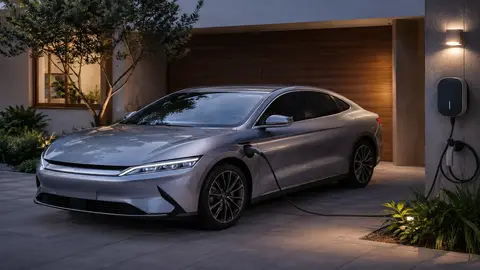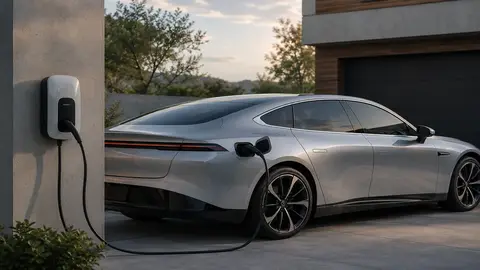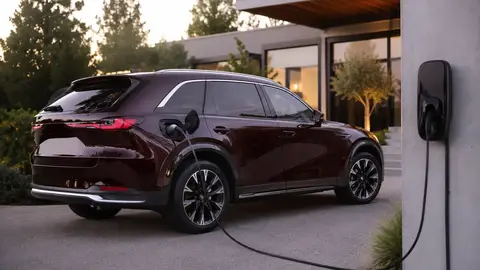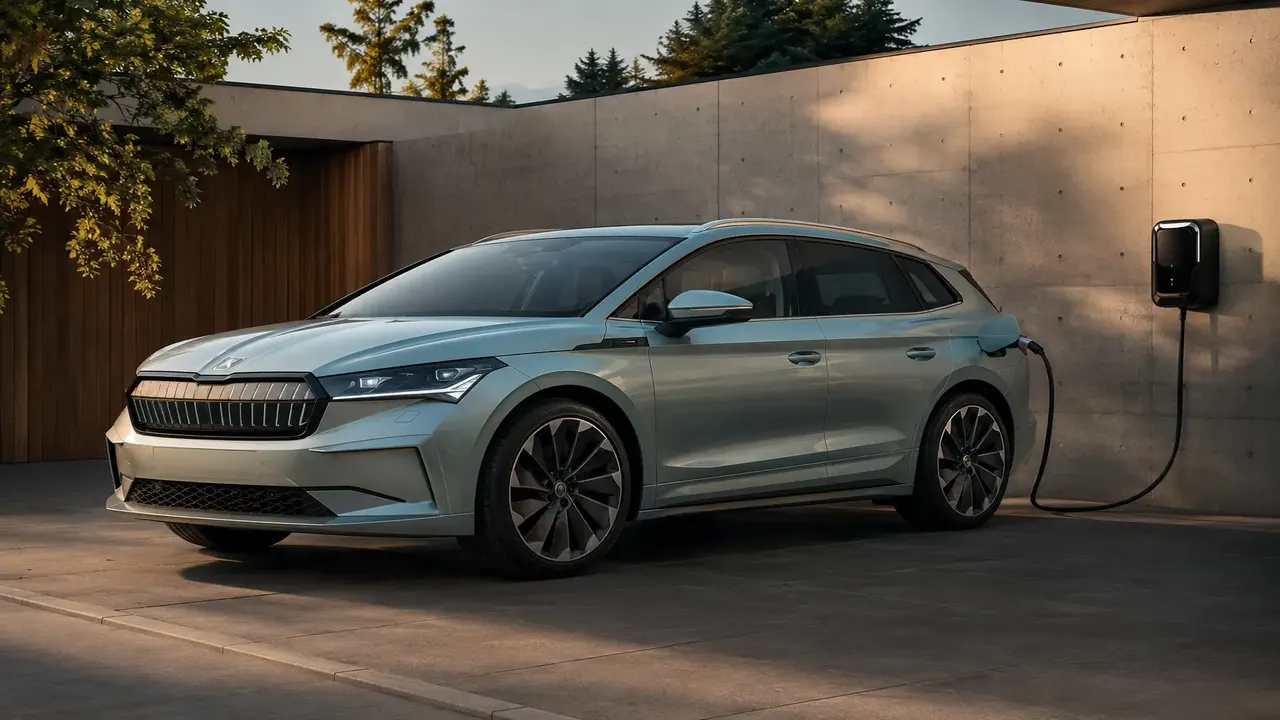
An EV has far fewer moving parts — as few as ~20 versus 2,000+ in a combustion car — so a lot of routine maintenance simply disappears: no oil changes, spark plugs, fuel filters, timing belts or exhaust. Studies put EV maintenance roughly 30–50% cheaper than an equivalent ICE car. But maintenance does not vanish. You still service tyres, brakes (rust and calipers more than wear), brake fluid, cabin filter, suspension, wipers, the 12V battery, and the coolant/thermal system, plus software updates. The mix shifts from engine upkeep to tyres, brakes, fluids and electronics.
EV vs ICE maintenance at a glance
| Task | ICE car | EV |
|---|---|---|
| Oil & filter changes | Every 8,000–16,000 km | None |
| Spark plugs / fuel filter | Periodic replacement | None |
| Timing belt / exhaust | Major periodic cost | None |
| Brakes | Regular pad/rotor wear | Last 2–3x longer; rust is the risk |
| Coolant | Engine coolant changes | Battery/thermal coolant (long intervals) |
Why EVs need less maintenance
The core difference is mechanical simplicity. A combustion drivetrain has thousands of moving and wearing parts — pistons, valves, a multi-speed gearbox, a fuel system, an exhaust, a cooling system for a hot engine. An electric drivetrain can have as few as around 20 moving parts: a motor, a single-speed reduction gear, and the power electronics. Fewer parts means fewer things to wear out, leak or fail, which is why EV maintenance typically runs 30–50% cheaper than an equivalent petrol or diesel car.
What disappears entirely
- Oil and filter changes — there is no engine oil system, so this routine cost is gone.
- Spark plugs, ignition parts and fuel filters — no combustion, no ignition system to service.
- Timing belts/chains — a periodic, sometimes expensive ICE repair that simply does not exist on an EV.
- Exhaust system — no exhaust, catalytic converter, particulate filter or emissions plumbing.
- Gearbox servicing — most EVs use a sealed single-speed reduction gear with no fluid changes.
What stays — and sometimes changes character
An EV is still a car. Several maintenance items remain, and a few behave differently than you might expect:
| Item | Still needed? | How it differs on an EV |
|---|---|---|
| Tyres | Yes — often more attention | Heavier car + torque can wear them faster |
| Brakes | Yes | Pads last 2–3x longer; rust and calipers are the issue |
| Brake fluid | Yes | Time-based change; brakes rarely heated |
| Cabin air filter | Yes | Same as ICE; replace on schedule |
| Coolant | Yes (battery/thermal) | Very long intervals; sealed system |
| 12V battery | Yes | Common failure point; powers the car's logic |
| Suspension, wipers, lights | Yes | Same wear as any car |
Tyres get harder use
Because EVs are heavier (the battery) and deliver instant torque, tyres can wear faster than on a petrol car. Regular rotation, correct pressures and EV-rated tyres matter more, not less — see our tyre guide.
Brakes wear less but rust more
Regenerative braking means the friction brakes are barely used, so pads can last 100,000–200,000 km. The trade-off is that little-used rotors and calipers corrode and seize, so EV brake servicing shifts from replacing worn pads to preventing rust and freeing sticky hardware.
What is genuinely new
- Software updates. EVs receive over-the-air updates that fix bugs and add features; staying current is part of ownership and can even be tied to warranty (see our software guide).
- The 12V battery as a weak point. It powers the car's computers and charging logic, and is a leading cause of no-start and no-charge problems.
- Battery thermal/coolant system. A sealed liquid-cooling circuit keeps the pack healthy; coolant intervals are long but real.
- Battery health monitoring. Tracking State of Health replaces some of the old engine-condition checks.
A realistic EV maintenance routine
Typical guidance from manufacturers looks like an annual inspection plus a handful of long-interval items. As an illustration:
- Every ~10,000–16,000 km / annually: rotate and inspect tyres, multi-point inspection, brake inspection, check coolant level.
- Every ~2–3 years: brake fluid change (time-based).
- Every ~2–3 years / 30,000–60,000 km: cabin air filter (varies by model).
- Long intervals (per maker): drive-unit fluid and battery coolant — sometimes 100,000+ miles or effectively lifetime.
- Ongoing: install software updates; keep the 12V battery healthy; monitor battery State of Health.
The biggest mistake new EV owners make is assuming there is nothing to do. Tyres, brakes (rust and calipers), brake fluid, the 12V battery and software all still need attention. EVs save you money — they don't exempt you from servicing.
The bottom line
What it means for your budget
In practice the savings are real but uneven across the year. There are no recurring oil-change visits and no surprise timing-belt or exhaust bills, so the predictable engine costs of a petrol car largely vanish. Most of an EV owner's spend lands on tyres, which wear faster under the weight and torque, with occasional brake-caliper servicing and fluid changes on top. Set against that, the 12V battery is a modest but real cost over the years, and you should budget for the odd software-related dealer visit on brands that require it. Net of everything, independent studies still put EV upkeep around 30-50% below an equivalent combustion car.
Moving from ICE to EV removes the engine-centric chores that make combustion cars expensive to maintain and replaces them with a lighter, electronics-focused routine. Expect lower bills overall, but plan for tyres, brake servicing, fluids, the 12V battery and software as the new core of EV upkeep.
Frequently asked questions
Do electric cars need oil changes?
Is EV maintenance really cheaper?
What maintenance does an EV still need?
Why do EV brakes last so long but still need servicing?
Is the 12V battery really a maintenance concern on an EV?
Sources & further reading
Figures, prices and policy details were current at the last-updated date above. Automotive pricing, incentives and regulations change frequently — verify time-sensitive details with the linked primary sources. Read our editorial policy and fact-checking standards.