> [reporting] This feature requires original interviews with builders and owners. The legal analysis and framing below are complete; the human material must be reported. > > ⚠️ Editorial note: this article must not encourage or facilitate illegal modification. The framing is deliberately built around what is legal, why the restrictions exist, and the genuine craft happening within them.
A scene shaped by law
India has a vibrant, genuinely skilled car modification culture — restorers, fabricators, tuners and builders producing work that ranges from tasteful restoration to extraordinary custom fabrication.
It also operates under some of the tighter regulatory constraints of any major market, and understanding that framework is essential to understanding the scene.
This piece is about what's legal, why, and the craft happening within those limits — not a guide to circumventing them.
What the law actually says
Indian vehicle regulation is built around a principle that is stricter than many enthusiasts realise: a vehicle must substantially conform to the specification in which it was type-approved and registered.
In broad terms:
Generally not permitted:
- Alterations to the vehicle's fundamental structure or specification as registered
- Changes to engine type or capacity without proper approval and re-registration
- Modifications compromising safety systems
- Bodywork changes that alter the vehicle from its registered configuration
- Lighting modifications that don't meet regulations
- Exhaust changes exceeding permitted noise limits
- Window tinting beyond legally specified limits
Generally permitted:
- Cosmetic changes that don't alter registered specification
- Approved accessories and fitments
- Wheels and tyres within specified parameters
- Interior work — upholstery, trim, audio (within noise rules)
- Restoration to original specification — which is entirely legal and where much of the finest Indian work happens
- Modifications with proper RTO approval and endorsement, where a pathway exists
The critical point: where an alteration is permitted, it generally requires approval and endorsement on the registration certificate. Undocumented modification is where legal problems begin.
Why the restrictions exist
It's worth stating the case fairly, because it's stronger than enthusiasts often acknowledge:
1. Road safety. As our Indian road safety investigation documented, India loses roughly 172,890 people a year to road crashes. Modifications that compromise braking, lighting, structural integrity or crash performance make a severe problem worse.
2. Emissions. Air quality in Indian cities is a serious public health issue, and emissions-defeating modifications have real consequences.
3. Noise. Exhaust noise limits exist for genuine public amenity reasons.
4. Insurance and liability. Undeclared modifications can invalidate insurance — leaving an owner personally liable after a crash, which is a risk many modifiers underestimate.
5. Type approval integrity. A vehicle certified to meet safety standards in one configuration may not meet them in another.
Where the real craft is
This is the story worth telling, and it's more interesting than the illegal fringe.
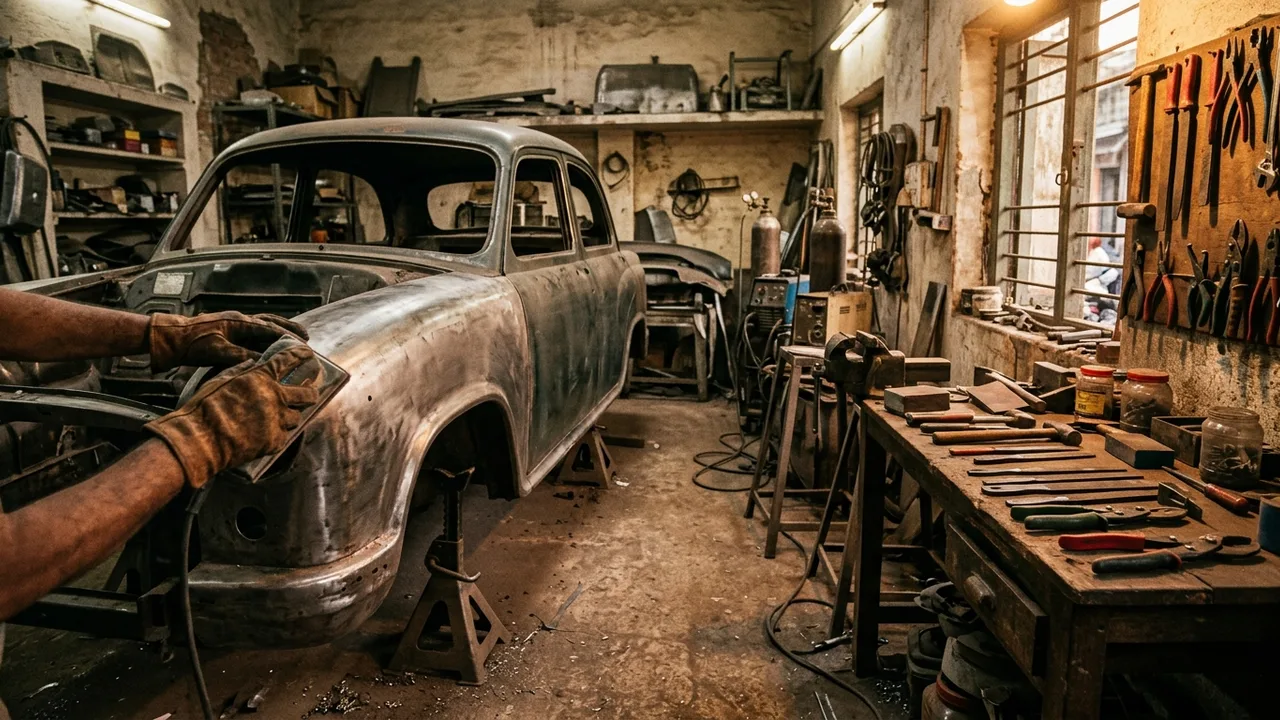
Restoration. India has genuinely exceptional restorers working on Ambassadors, Premier Padminis, Fiats, Jeeps, classic Royal Enfields and imported classics. Restoration to original specification is entirely legal and involves the highest skill in the scene — fabrication, upholstery, mechanical rebuilding, and sourcing parts for vehicles decades out of production.
Our Ambassador retrospective noted that any mechanic in any town could once fix one. The restorers keeping them alive are working with that same repairability, and it's why the cars survive.
Interior and trim work. Indian upholstery and trim craftsmanship is genuinely world-class and entirely legal.
Commercial and utility fabrication. Body-building on commercial chassis is a large, skilled, legitimate industry.
Off-road preparation within legal parameters — a growing scene, particularly around Thar and Gurkha ownership.
Motorsport preparation, where different rules apply within sanctioned competition.
[reporting] The builders
This section requires original interviews. Suggested subjects:
- A restorer working on Ambassadors or Padminis — the skill, the parts problem, why they do it
- An interior and trim specialist — where Indian craftsmanship genuinely leads
- A legitimate off-road preparer working within approval frameworks
- Someone who navigated RTO approval successfully — the process, the frustrations, whether it's workable
- A motorsport preparer — where creativity is legally unconstrained
Ask each: what's the most misunderstood thing about the rules? What would you change? Where is the best work in India happening?
The reform conversation
There is a legitimate policy discussion here, and it's worth reporting fairly.
The enthusiast argument: the framework offers limited pathways for safe, well-engineered modification. Countries with structured approval systems — engineering certificates, independent inspection, documented compliance — permit modification while maintaining safety standards. India's system is comparatively binary.
The counter-argument: with 172,890 annual road deaths and serious urban air quality problems, a permissive framework requires enforcement capacity that may not exist. A stricter default may be the appropriate trade.
Both positions are reasonable. The productive conversation is about whether a workable approval pathway could permit good engineering while excluding dangerous work — not about whether rules should exist.
The bottom line
India's modification culture is skilled, creative and legally constrained, and the constraints exist for reasons that our own road safety reporting makes hard to dismiss.
The best work in the Indian scene is legal work — restoration to original specification, world-class interior craftsmanship, commercial fabrication, legitimate off-road preparation and motorsport building.
For owners: understand that undeclared modification can invalidate insurance, leaving you personally liable — and that where approval pathways exist, using them protects you.
And the policy conversation worth having isn't whether rules should exist. It's whether a structured approval pathway could permit genuinely good engineering while continuing to exclude the dangerous work the rules were written to stop.
- Indian regulation requires a vehicle to substantially conform to its registered, type-approved specification — stricter than many enthusiasts realise
- Permitted work includes cosmetic changes, approved accessories, interior work and restoration to original specification — where much of the finest Indian craft happens
- Undeclared modification can invalidate insurance, leaving an owner personally liable after a crash — an underestimated risk
- The restrictions exist against a backdrop of ~172,890 annual road deaths and serious urban air quality problems
- The productive policy question isn't whether rules should exist, but whether a structured approval pathway could permit good engineering while excluding dangerous work
Key takeaways
- Indian regulation requires a vehicle to substantially conform to its registered, type-approved specification — stricter than many enthusiasts realise
- Permitted work includes cosmetic changes, approved accessories, interior work and restoration to original specification — where much of the finest Indian craft happens
- Undeclared modification can invalidate insurance, leaving an owner personally liable after a crash — an underestimated risk
- The restrictions exist against a backdrop of ~172,890 annual road deaths and serious urban air quality problems
- The productive policy question isn't whether rules should exist, but whether a structured approval pathway could permit good engineering while excluding dangerous work
Sources & further reading
- Indian motor vehicle regulation framework
- True Motion Auto India road safety investigation (this batch) and Ambassador retrospective (Batch 21). *Original interviews required before publication. Verified July 2026.*
Figures, prices and policy details were current at the last-updated date above. Automotive pricing, incentives and regulations change frequently — verify time-sensitive details with the linked primary sources. Read our editorial policy and fact-checking standards.