> 🚗 ROAD TRIP FEATURE. Route research and analysis below are complete. Narrative sections marked [narrative] must be written from the actual journey.
The farewell that keeps not happening
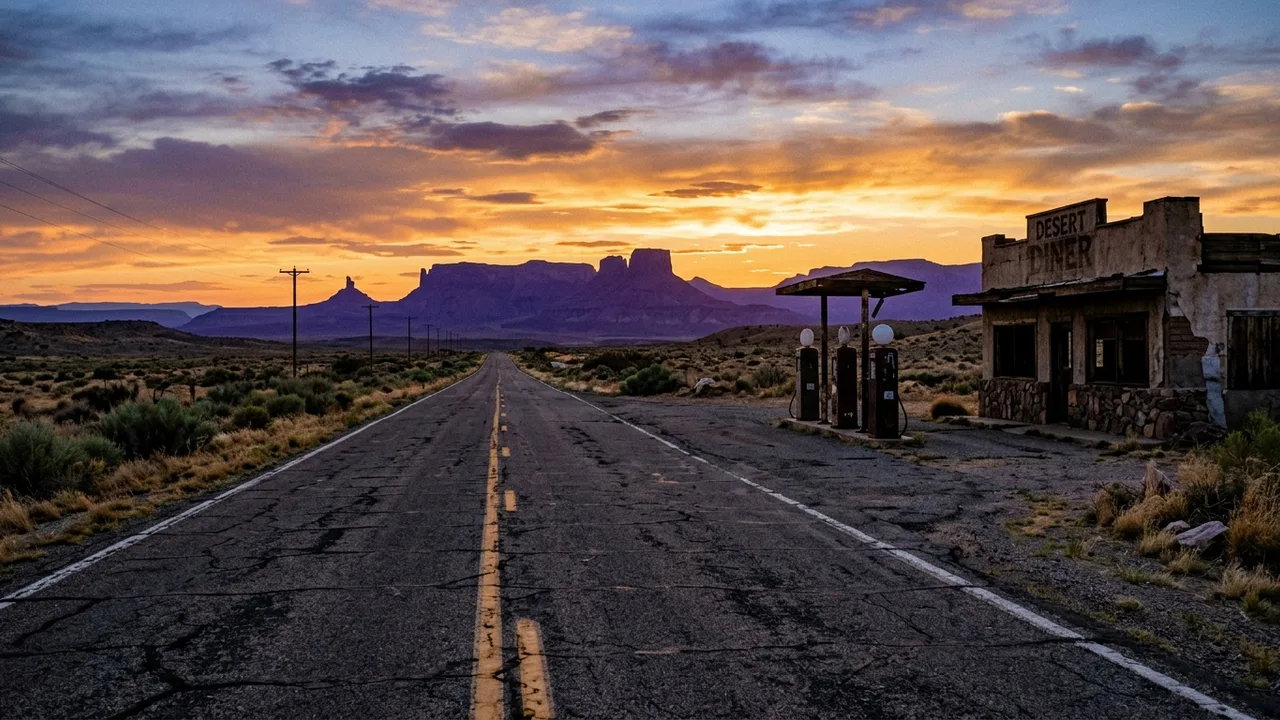
Route 66 ran roughly 2,450 miles from Chicago to Santa Monica, and though it was decommissioned in 1985, substantial sections survive as historic highway — a genuine American pilgrimage.
The premise of this trip is a farewell tour for the V8. The complication is that the V8 keeps refusing to leave.
As our archive analysis found, the motoring press has confidently declared the V8 dead several times. It hasn't been. Our Silverado prototype drive found the reasons for its persistence are practical rather than sentimental: uncompromised towing over distance, universal refuelling infrastructure, proven durability, lower purchase cost — and genuine buyer demand for the character itself.
So this is less a farewell than an honest assessment of something the industry has repeatedly buried and which keeps outliving its obituaries.
The cars
Confirm final selection. The brief: American V8s that represent the format's current state.
Candidates worth considering:
- Ford F-150 with a V8 — the volume American vehicle, and the segment where the V8 is most durable
- Chevrolet Silverado V8 — GM's conventional-truck bet, which our prototype drive found is aging well
- Ford Mustang GT — the accessible V8 sports car, and the last of a genuinely endangered species
- Chevrolet Corvette — America's sports car, now mid-engined but still V8
- A muscle saloon, if one remains available in current form
The interesting selection question: whether to include a hybrid V8 (the F-150 PowerBoost, which our truck comparison placed first) — because it demonstrates that the V8's future may be electrified rather than extinct.
The route
| Stage | Approximate distance | |---|---| | Chicago → St. Louis | ~300 miles | | St. Louis → Oklahoma City | ~500 miles | | Oklahoma City → Amarillo | ~260 miles | | Amarillo → Albuquerque | ~290 miles | | Albuquerque → Flagstaff | ~320 miles | | Flagstaff → Barstow | ~400 miles | | Barstow → Santa Monica | ~130 miles | | TOTAL | ~2,200–2,450 miles |
Route 66 is not a continuous drivable highway. Sections were absorbed into the Interstate system; others survive as historic alignments. Planning requires deciding, stage by stage, whether to follow the historic route or the faster Interstate — and the historic sections are the point.
What we'll log
| Metric | Result | |---|---| | Total distance | [to be logged] | | Fuel consumed and cost | [to be logged] | | Measured mpg vs EPA | [to be logged] | | Cost per mile | [to be logged] | | Fuel stops | [to be logged] | | Comparison: same trip in an EV | [to be calculated] |
The honest comparison worth making: what this journey would cost, and how long it would take, in an equivalent EV. Our public-charging diary found time is the cost people don't anticipate — a 2,400-mile trip is exactly where a five-minute fuel stop shows its advantage most clearly.
The argument for the V8, honestly stated
1. Character is a legitimate product attribute. As our GTI and Mini retrospectives argued, enthusiast priorities aren't most buyers' priorities — but they're not illegitimate either. The sound and delivery of a V8 are part of what people are buying, and dismissing that as irrational misunderstands what a car is for.
2. The practical case is genuine. Towing without range collapse, refuelling anywhere in five minutes, proven durability, lower purchase cost.
3. The market has spoken repeatedly. Pure-electric pickup demand undershot forecasts. Ram cancelled its all-electric truck for the Ramcharger EREV. GM's conventional-V8 hedge is looking increasingly well-judged.
The argument against, equally honestly
1. Efficiency is genuinely poor, and fuel costs are a real ownership burden.
2. Emissions matter, and regulatory pressure is real and ongoing.
3. The electrified alternatives are frequently better. Our truck comparison placed the F-150 PowerBoost hybrid first — partly on economy, and partly because its Pro Power Onboard generator adds capability no conventional V8 offers.
4. "The V8 lives" isn't "the V8 lives forever." The honest framing from our Silverado drive: combustion has a longer runway than the 2021 consensus assumed — not that electrification has been defeated.
[narrative] The journey
To be written from the actual trip:
- Chicago and the start — the ritual, and the first miles
- The historic alignments — where Route 66 survives, and what's been lost
- The small towns — the road's real subject, and what happened to them when the Interstate bypassed them
- The desert stretches — where an American V8 makes the most sense it ever will
- People met — Route 66 attracts pilgrims, and their reasons are the story
- Santa Monica — the pier, the end, and what 2,400 miles taught us
The bottom line
Route 66 in a V8 is a pilgrimage twice over — for the road, which is largely gone, and for the engine, which keeps being declared gone and isn't.
The honest position is that the V8's practical case remains real — towing, refuelling, durability, cost — and its character is a legitimate reason to want one, even if enthusiast priorities aren't most buyers'.
Equally honestly, the electrified alternatives are frequently better, and our own truck comparison placed a hybrid first.
The most likely future isn't extinction — it's electrification. The F-150 PowerBoost suggests the V8's next chapter is assisted rather than replaced, and that's a considerably more interesting story than a farewell.
So we'll drive it as a celebration rather than a eulogy — because on current evidence, the obituaries were premature again.
- The premise is a V8 farewell tour, complicated by the fact that the V8 keeps refusing to die — and the press has buried it several times already
- The practical case is genuine: uncompromised towing, five-minute refuelling anywhere, proven durability, lower cost — and character is a legitimate product attribute
- The honest counter-case: poor efficiency, real regulatory pressure, and electrified alternatives that our own truck comparison placed first
- Ram cancelled its all-electric truck and GM's conventional-V8 hedge is aging well — pure-electric pickup demand undershot forecasts
- The likely future is electrification rather than extinction — the F-150 PowerBoost suggests the V8's next chapter is assisted, not replaced
Key takeaways
- The premise is a V8 farewell tour, complicated by the fact that the V8 keeps refusing to die — and the press has buried it several times already
- The practical case is genuine: uncompromised towing, five-minute refuelling anywhere, proven durability, lower cost — and character is a legitimate product attribute
- The honest counter-case: poor efficiency, real regulatory pressure, and electrified alternatives that our own truck comparison placed first
- Ram cancelled its all-electric truck and GM's conventional-V8 hedge is aging well — pure-electric pickup demand undershot forecasts
- The likely future is electrification rather than extinction — the F-150 PowerBoost suggests the V8's next chapter is assisted, not replaced
Sources & further reading
- Route 66 historical records
- True Motion Auto truck comparison (Batch 17) and Silverado prototype drive (Batch 13). *Route research complete
- narrative to be written from the actual journey. Verified July 2026.*
Figures, prices and policy details were current at the last-updated date above. Automotive pricing, incentives and regulations change frequently — verify time-sensitive details with the linked primary sources. Read our editorial policy and fact-checking standards.