⚠️ This article concerns fatal injury and bereavement. It is written to be useful rather than distressing — the intent is to explain what kills people on Indian roads and what demonstrably prevents it.
The scale, stated plainly
According to the Ministry of Road Transport and Highways' Road Accidents in India 2023 report, India recorded 480,583 road accidents, killing 172,890 people and injuring 462,825.
That is 20 deaths and 55 accidents every hour, every day, for a year.
The trend is the worst part. In 2005, India recorded 94,968 road fatalities. By 2022 it was 168,491 — a 177% increase over 17 years, at a time when road deaths were falling across most of the developed world.
And for the fourth consecutive year, victims were overwhelmingly aged 18–45 — more than two-thirds of all fatalities. India is losing its most economically productive people at a rate no other major country accepts.
The economic cost is estimated at 1.3% to 5% of GDP annually, with MoRTH's own estimate around 3%.
What actually kills people
The data is unusually clear about causes, and it points overwhelmingly in one direction.
Speed is the dominant factor by an enormous margin.
| Cause | Share of deaths |
|---|---|
| Overspeeding | 68% |
| Wrong-side driving | 5.5% |
| Other causes | remainder |
Who dies:
| Road user | Share of deaths (2022) |
|---|---|
| Two-wheeler riders | 44.5% |
| Pedestrians | 19.5% |
| Light motor vehicles | 12.5% |
| Heavy vehicles | 6.3% |
| Autorickshaws | 3.9% |
| Bicycles | 2.9% |
| Buses | 2.4% |
Nearly two-thirds of those killed are two-wheeler riders and pedestrians — the most vulnerable road users, with the least protection.
Where they die:
National highways and expressways account for roughly 39% of accidents and 36% of deaths — despite national highways comprising, by IIT Delhi's analysis, around 2% of India's total road length. State highways account for a further 23% of crashes and 24% of fatalities.
And a detail that overturns intuition: the report finds that straight stretches of road, not sharp bends, see the majority of crashes. People don't die where the road looks dangerous. They die where it looks safe and they go fast.
The seat belt figure
16,025 people died in 2023 for not wearing a seat belt — including 8,441 drivers.
That is a number where the intervention is free, instant, and entirely within the individual's control. It is also, as our micro-SUV comparison argued about buying decisions, the clearest illustration of why safety shouldn't be traded away — the Tata Punch's 5-star Global NCAP rating means nothing if the occupant isn't belted.
The honest caveat about the data
These figures are almost certainly undercounts, and any responsible treatment should say so.
MoRTH's data comes from police records, and reporting is inconsistent across states. Independent analysis — including work drawing on the Sample Registration System's cause-of-death surveys and World Bank estimates — suggests the true figure is higher than official reporting captures.
The direction of the problem is not in doubt. The precise magnitude is, and it's probably worse than 172,890.
What's finally changing — and the evidence is genuinely encouraging
Here is the part of this story that deserves far more attention than it gets.
On one expressway, average-speed enforcement cut fatalities by roughly 70% in a single year.
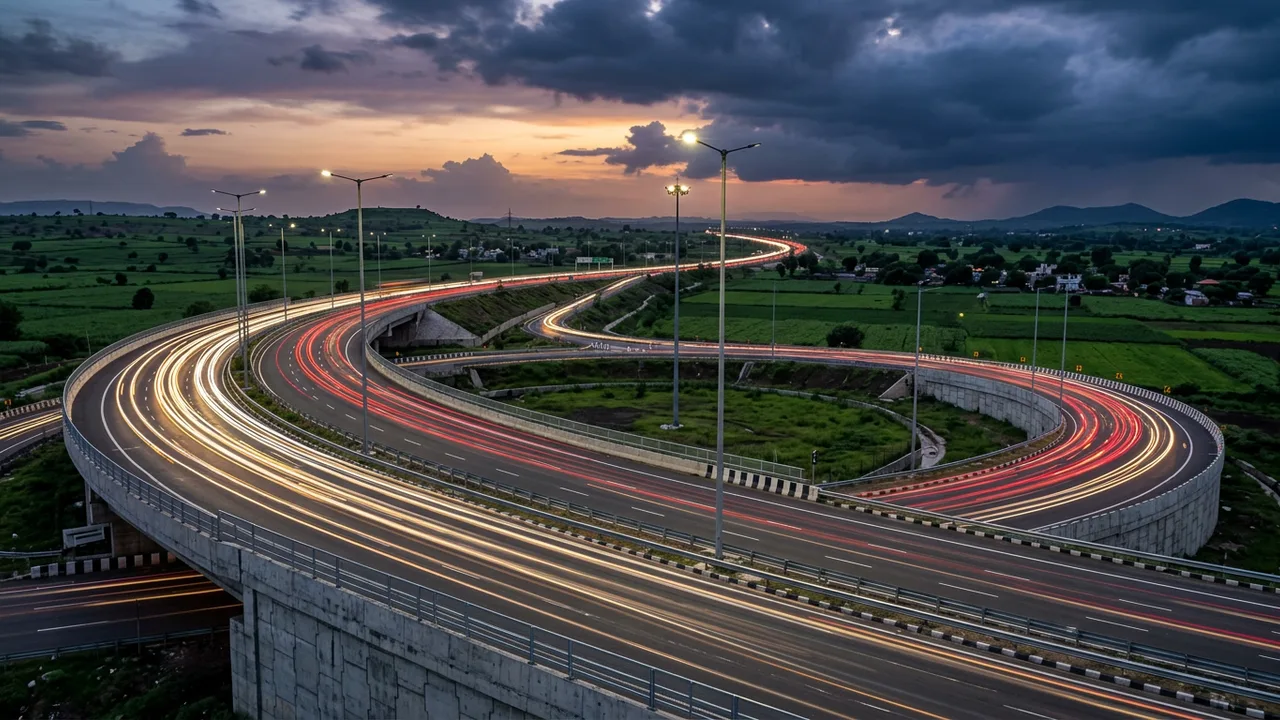
Following years of high crash rates after conversion to expressway standard, authorities improved the infrastructure and — crucially — introduced average-speed (distance-based) enforcement, which measures a vehicle's speed over a stretch of road rather than at a single point.
The results:
| Year | Fatalities |
|---|---|
| 2023 | 188 |
| 2024 | 56 |
| 2025 | 57 |
A ~70% reduction, sustained into a second year.
This matters enormously, because it demonstrates something the "human behaviour" framing obscures: infrastructure and consistent enforcement change outcomes far more reliably than appeals to individual responsibility.
Point-speed cameras produce braking at the camera and acceleration afterwards. Average-speed enforcement makes speeding pointless across the whole stretch — and drivers respond rationally.
The framing problem
India's Road Transport Minister has been direct about the scale, noting the death toll and that around two-thirds of victims are young. His diagnosis — "the problem is human behaviour" — is understandable and incomplete.
Human behaviour is the proximate cause of almost every crash everywhere. What distinguishes countries with falling road deaths from those with rising ones isn't better people. It's systems that make dangerous behaviour harder, less rewarding, and more likely to be caught.
The expressway result is the proof. The drivers didn't become better people in 2024. The enforcement changed.
What demonstrably works
Based on the Indian evidence and international experience:
1. Average-speed enforcement. The single most striking result in India's recent road safety data. Distance-based rather than point-based, so speeding is pointless throughout.
2. Infrastructure that matches its speed. Highways designed for high speed need the safety engineering to match — median barriers, controlled access, proper junction design. As the data shows, highways carry a hugely disproportionate share of deaths relative to their length.
3. Protecting vulnerable users specifically. Two-wheeler riders and pedestrians are nearly two-thirds of deaths. Segregated infrastructure, helmet enforcement and pedestrian crossings target the actual victims rather than the average road user.
4. Vehicle safety standards. Bharat NCAP has genuinely changed the Indian market — as our comparisons repeatedly note, cars like the Tata Punch achieving 5-star ratings at accessible prices proves crash protection needn't be a premium feature. This is real, measurable progress.
5. Seat belt and helmet enforcement. 16,025 deaths from unbelted occupants is a number that consistent enforcement directly attacks.
6. Post-crash care. Rapid trauma response converts survivable crashes into survivals.
What individuals can do
Not a substitute for systemic change, but genuine:
- Wear the seat belt — every occupant, every journey, including rear seats. 16,025 deaths say this plainly.
- Slow down. 68% of deaths involve overspeeding. Speed is the single biggest thing within your control.
- Buy on safety. As our Indian comparisons argue consistently: don't trade crash protection for savings. Bharat NCAP ratings are published and free to check.
- Helmets, properly fastened, for every two-wheeler journey.
- Assume you are invisible to larger vehicles.
The bottom line
India loses roughly 172,890 people a year to road crashes — 20 every hour — with two-thirds aged 18 to 45, and the figure has risen 177% since 2005 while most of the world's fell. The true number is probably higher still.
Speed causes 68% of deaths. Two-wheeler riders and pedestrians are nearly two-thirds of the victims. Highways carry a wildly disproportionate share relative to their length. And most crashes happen on straight roads, not bends.
But the most important finding in this data is hopeful: on one expressway, average-speed enforcement plus infrastructure improvement cut fatalities from 188 to 56 in a single year, and held at 57 the next.
That is a roughly 70% reduction, achieved without changing anyone's character. It is the clearest available evidence that India's road death toll is not an immovable cultural fact — it's a policy outcome, and policy can change it.
Key takeaways
- India recorded 172,890 road deaths in 2023 — 20 every hour — with two-thirds of victims aged 18–45 and a 177% rise since 2005
- Overspeeding causes 68% of deaths. Two-wheeler riders (44.5%) and pedestrians (19.5%) are nearly two-thirds of those killed
- Highways carry ~36% of deaths despite national highways being roughly 2% of road length — and most crashes happen on straight stretches, not bends
- 16,025 people died from not wearing seat belts, including 8,441 drivers — an intervention that is free and instant
- The hopeful finding: average-speed enforcement plus infrastructure cut one expressway's fatalities from 188 (2023) to 56 (2024) to 57 (2025) — proof this is a policy outcome, not a cultural inevitability
Sources & further reading
- MoRTH, Road Accidents in India 2023
- MoRTH Annual Report 2023-24
- IIT Delhi highway analysis
- Data For India
- Business Standard
- ORF
- The Policy Edge. Figures are official police-reported data and are likely undercounts. Verified July 2026.
Figures, prices and policy details were current at the last-updated date above. Automotive pricing, incentives and regulations change frequently — verify time-sensitive details against the primary sources listed below. Read our editorial policy and fact-checking standards.