The transfer nobody planned
Depreciation is the largest cost of car ownership, as our fleet cost analysis established — routinely exceeding fuel by a wide margin, and almost always omitted from comparisons that claim to measure running costs.
For electric cars, it has been unusually severe — and the result is a substantial, largely unplanned transfer of value from early adopters to used buyers.
Somebody lost that money. Somebody else is getting a genuine bargain. This is who, and why.
Why EV residuals fell so hard
Five forces, compounding:
1. Rapid technological improvement. This is the biggest factor. A three-year-old EV competes against new models that are substantially better — and the gap is widening faster than in combustion.
Our own coverage illustrates it starkly. The BMW i3 Neue Klasse offers up to 559 miles WLTP and 400 kW charging — 249 miles added in 10 minutes. The Zeekr 7X charges 10–80% in 13–16 minutes. A 2022 EV with 220 miles and 50 kW charging isn't merely older; it's from a different technological generation, and used buyers price it accordingly.
2. New-car price cuts hit used values instantly. When a manufacturer cuts new prices, every used example is immediately worth less — because the used car competes against the new one's current price, not the price its owner paid.
3. Battery-health uncertainty suppresses demand. As our used-EV guidance stressed, a battery health report is non-negotiable when buying used. The fact that buyers need one at all creates caution, and caution suppresses prices.
4. Incentives lower the competing price. Grants and tax credits on new cars reduce what a used one can command. The UK's Electric Car Grant, US federal credits and India's 5% EV GST all work this way.
5. Supply arrived faster than demand. Fleet and lease returns hit the used market in volume, and EV demand growth has been slower than the industry forecast.
Who lost money
Early private buyers, most acutely. Anyone who bought a full-price EV in the first wave and sold within three years absorbed the steepest depreciation in modern motoring.
Leasing companies and fleets, who set residual value forecasts that reality undercut. Those losses eventually surface in higher lease rates — meaning new EV lessees are partly paying for earlier residual misjudgements.
Manufacturers, through residual value guarantees and the reputational cost of a market that watched values fall.
Who's cashing in
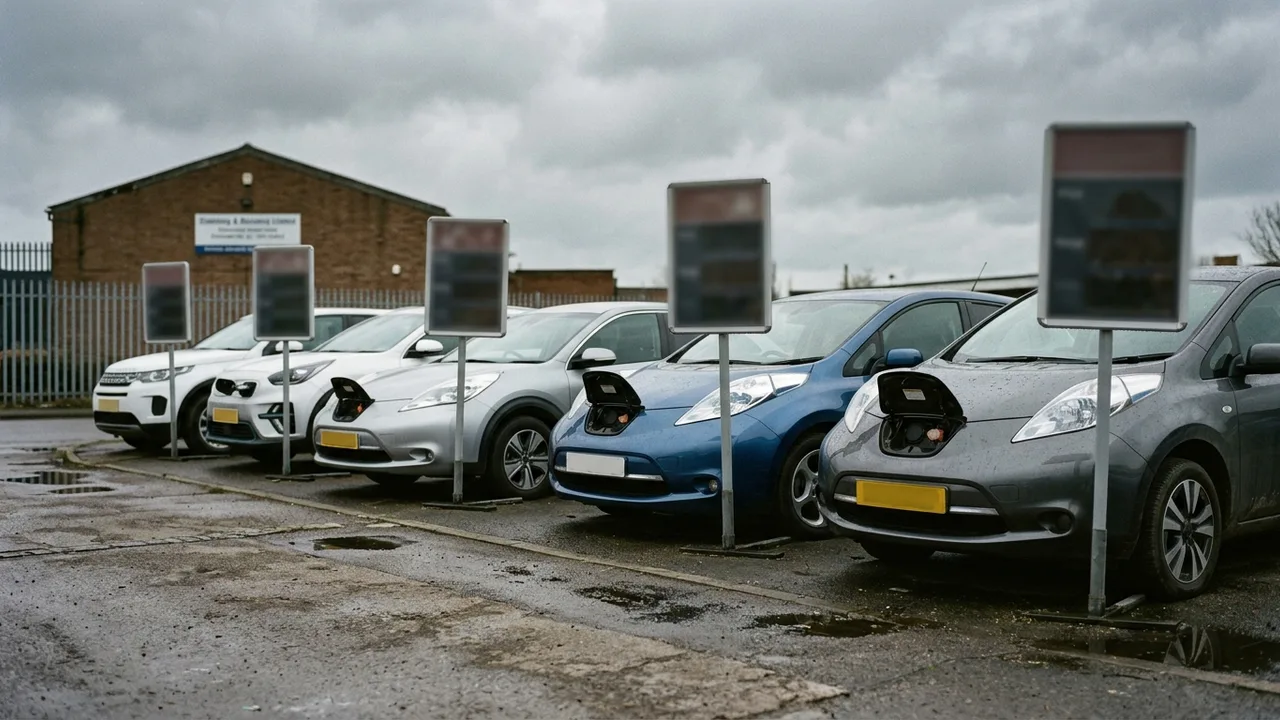
Used EV buyers, and the value on offer is genuinely exceptional.
The arithmetic is compelling. A used EV offers:
- Dramatically lower running costs than an equivalent petrol car, provided you can charge at home
- Far lower servicing costs — no oil, no filters, no exhaust, minimal brake wear
- The steepest depreciation already absorbed by someone else
- Technology that is genuinely adequate for most driving, even if superseded
As our Bolt-versus-used-Model-3 comparison found, a used EV can be the better car — the question is whether you can absorb the risk.
The buying guidance
If you're buying a used EV, this is the checklist:
1. Get a battery health report. Non-negotiable. Degradation is the single largest financial variable, and it's the one thing a test drive won't reveal.
2. Check the charging history where available. Heavy DC fast charging accelerates degradation.
3. Confirm exactly what warranty remains — particularly on the battery and drive unit. Battery warranties are typically long (8 years is common) and transfer to subsequent owners, which is a substantial protection.
4. Assess the charging speed honestly. As our charging-curve testing established, peak kW is misleading — ask for the 10–80% time. An older EV charging at 50 kW is a fundamentally different ownership experience from one at 150 kW.
5. Confirm you can charge at home. As our testing repeatedly finds, this is the decisive variable. Without home charging, the running-cost advantage narrows substantially.
6. Check for account-linked features that may not transfer.
The counter-argument
Is the used EV market a value opportunity or a warning?
The bearish case: if residuals keep falling, today's used bargain is tomorrow's larger loss. Technology continues improving rapidly. Battery replacement outside warranty is expensive.
The bullish case: the steepest depreciation has already happened. The market is maturing, battery-health assessment is becoming standardised, and the technology is now genuinely good enough — a 250-mile EV with adequate charging meets most needs regardless of what the newest cars offer.
Our honest view: for a buyer who can charge at home, keeps cars for several years and gets a battery health report, the used EV market currently offers the best value in motoring. For someone planning to sell within two years, the risk remains real.
What this means for new EV buyers
Factor depreciation into your purchase, not just running costs. As our cost-per-mile analysis found, an EV that's cheapest to run can still be the most expensive to own once residuals are included.
If you keep cars a long time, this matters far less — running-cost savings accumulate and depreciation per year falls.
If you change cars every two to three years, consider leasing rather than buying, or buy used and let someone else absorb the curve.
The bottom line
EV depreciation has been unusually severe, driven by rapid technological improvement, new-car price cuts, battery-health caution, incentives and supply outpacing demand.
The losses were real, and they fell mostly on early private buyers and residual-setting fleets.
The corresponding gain is equally real, and it's sitting in the used market right now. For a buyer who can charge at home, plans to keep the car, and insists on a battery health report, a used EV currently offers the strongest value proposition in motoring — genuinely low running costs, with the worst of the depreciation already paid by somebody else.
The uncomfortable truth is that early adopters funded that bargain. They usually do.
Key takeaways
- EV depreciation has been unusually severe — driven by rapid technological improvement, new-car price cuts, battery-health caution, incentives and oversupply
- The pace of improvement is the biggest factor: a 2022 EV with 220 miles and 50 kW charging competes against cars offering 559 miles and 400 kW
- Losses fell mostly on early private buyers and on fleets whose residual forecasts reality undercut — costs that resurface in lease rates
- For buyers who charge at home and keep cars for years, used EVs currently offer the best value in motoring
- A battery health report is non-negotiable — and check the 10–80% charging time, not the peak kW figure
Sources & further reading
- Used EV market data
- True Motion Auto depreciation report, cost-per-mile analysis and charging-curve testing
- manufacturer specifications. Verified July 2026.
Figures, prices and policy details were current at the last-updated date above. Automotive pricing, incentives and regulations change frequently — verify time-sensitive details against the primary sources listed below. Read our editorial policy and fact-checking standards.