> 🚗 ROAD TRIP FEATURE. Route research and safety guidance below are complete. Narrative sections marked [narrative] must be written from the actual journey. > > ⚠️ Winter Highland driving carries genuine risk. The safety section is essential.
The road, and the season nobody recommends
The North Coast 500 is a 516-mile circular route around the northern Scottish Highlands, starting and finishing at Inverness. It is, by broad consensus, one of the great driving roads in the world — single-track sections, dramatic coastline, mountain passes, and scenery that genuinely justifies the reputation.
It is overwhelmingly driven in summer, which is precisely the problem: the NC500's popularity has created real congestion, resentment in some communities, and an experience that can feel crowded.
Winter is different. Emptier, wilder, more dramatic — and genuinely more dangerous. This trip asks whether that trade is worth making.
The route
| Stage | Approximate distance | |---|---| | Inverness → Applecross (west) | ~130 miles | | Applecross → Ullapool | ~110 miles | | Ullapool → Durness (north-west) | ~70 miles | | Durness → Thurso (north coast) | ~100 miles | | Thurso → Inverness (east) | ~110 miles | | TOTAL | ~516 miles |
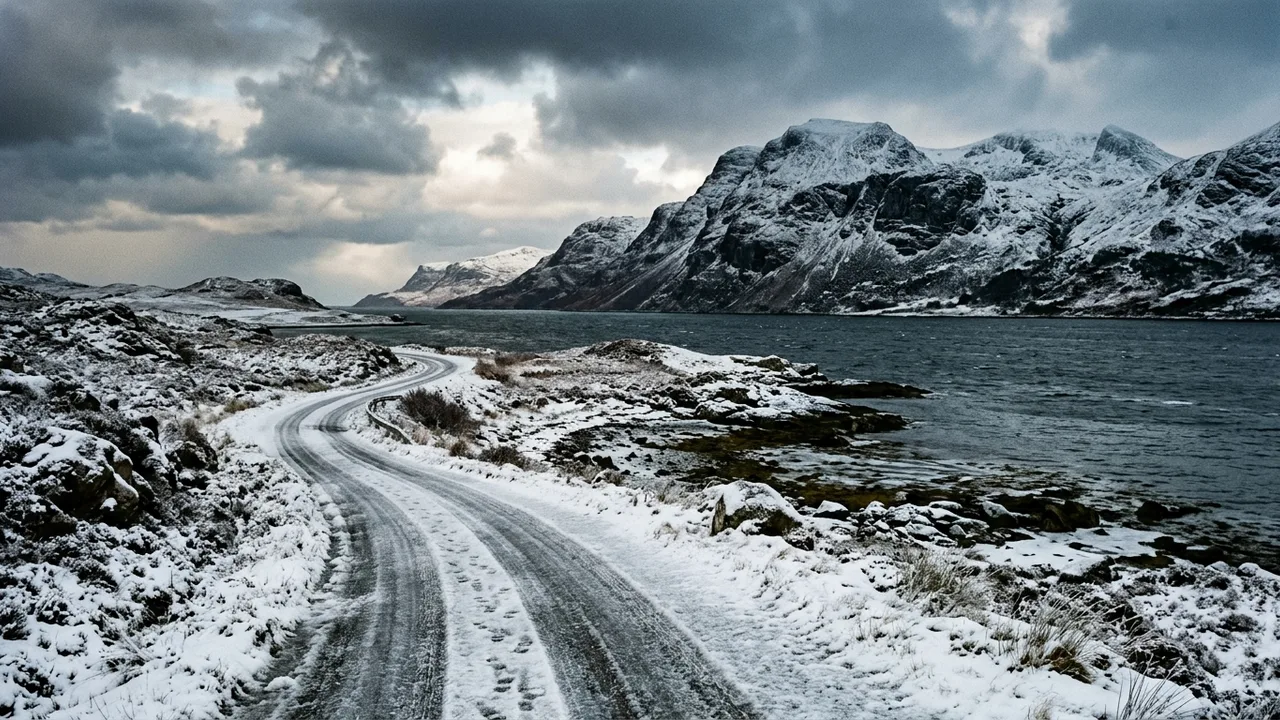
The route is not uniform. The west coast includes the Bealach na Bà — a single-track mountain pass with hairpins and severe gradients, and genuinely unsuitable in winter conditions or for larger vehicles. The north coast is exposed and weather-beaten. The east is the gentlest section.
The genuine winter risks
This section is not optional reading.
1. Ice and snow. Highland roads at altitude ice readily, and single-track sections may be untreated. Black ice on a single-track road with a drop is a serious hazard.
2. Very short daylight. Northern Scotland in midwinter has roughly 6–7 hours of usable daylight. Plan distances accordingly — much of the scenery is simply invisible after 15:30, and driving unfamiliar single-track roads in darkness is considerably harder.
3. Weather closes roads. The Bealach na Bà closes in snow and ice, as do other high sections. Check conditions daily and have alternative routing planned.
4. Services are limited and often seasonal. Fuel, food and accommodation availability drops substantially out of season. Many businesses close entirely for winter.
5. Mobile coverage is patchy to absent across substantial stretches.
6. Recovery may be many hours away.
Winter preparation
Essential:
- Winter or all-season tyres — genuinely, not optionally. This is the single most important preparation, and as our braking testing established, tyres dominate stopping distance more than any other factor
- Full fuel or charge before remote sections — don't assume the next opportunity
- Warm clothing, food, water and a blanket in the car — enough to wait several hours
- A charged phone plus a power bank, and awareness of coverage gaps
- Tell someone your route and expected timings
- A torch, ice scraper, de-icer and jump pack
For EVs specifically: as our winter range testing found, expect 20–30% range reduction, and note that preconditioning while plugged in is the single most effective habit. Charging infrastructure on the NC500 has improved but remains thin in places — plan around confirmed chargers, and never arrive below 20%.
Driving the single-track roads properly
This deserves its own section, because it's where visitors most often cause problems:
1. Passing places are for passing AND letting people overtake. If a local vehicle is behind you, pull in and let them past. They live and work here; you're sightseeing.
2. Never park in a passing place. They're not viewpoints.
3. Anticipate. Look ahead for oncoming vehicles and plan which passing place you'll use.
4. Reverse if you're closer to one. It's expected, and refusing to is the commonest visitor failing.
5. Slow down. Sheep, deer, ice, blind crests. The road is not a challenge to be beaten.
6. Respect the communities. The NC500's popularity has caused genuine friction — congestion, litter, inconsiderate parking and camping. Winter visitors have an opportunity to be the good ones.
[narrative] The journey
To be written from the actual trip:
- Inverness in December — the start, the light, the plan
- The west coast — Applecross, the Bealach if open, and the drama
- The north — exposure, weather, and the emptiest roads in Britain
- The moment it gets serious (there usually is one) — weather, ice, or a road closure
- The compensations — winter light, empty roads, and scenery without crowds
- Back to Inverness — and whether we'd recommend it
The bottom line
The North Coast 500 in winter is emptier, wilder, more dramatic and genuinely more dangerous than the summer version, and whether that trade is worth making depends entirely on preparation.
The case for it is real. Summer congestion has become a genuine problem, and winter offers the road as it should be experienced — empty, elemental, and with light that summer never produces.
The case against is equally real. Ice, 6–7 hours of daylight, closed roads, limited services and hours from recovery.
Winter tyres are non-negotiable, daylight must dictate your distances, and conditions must be checked daily. Prepare properly and it's one of the great drives. Prepare casually and it's genuinely dangerous.
And whatever the season: use the passing places properly, and remember people live there.
- The NC500 in winter is emptier, wilder and more dramatic than the crowded summer version — and genuinely more dangerous
- The critical constraint is 6–7 hours of usable daylight in midwinter; plan distances around it, not around ambition
- Winter or all-season tyres are non-negotiable — our braking testing found tyres dominate stopping distance more than any other factor
- The Bealach na Bà closes in snow and ice — check conditions daily and have alternative routing ready
- Single-track etiquette matters: passing places are for letting locals past, never park in them, and reverse if you're closer to one
Key takeaways
- The NC500 in winter is emptier, wilder and more dramatic than the crowded summer version — and genuinely more dangerous
- The critical constraint is 6–7 hours of usable daylight in midwinter; plan distances around it, not around ambition
- Winter or all-season tyres are non-negotiable — our braking testing found tyres dominate stopping distance more than any other factor
- The Bealach na Bà closes in snow and ice — check conditions daily and have alternative routing ready
- Single-track etiquette matters: passing places are for letting locals past, never park in them, and reverse if you're closer to one
Sources & further reading
- NC500 route data
- Scottish Highland winter driving guidance
- True Motion Auto winter range and braking testing (Sections 6, 8). *Route research complete
- narrative to be written from the actual journey. Verified July 2026.*
Figures, prices and policy details were current at the last-updated date above. Automotive pricing, incentives and regulations change frequently — verify time-sensitive details with the linked primary sources. Read our editorial policy and fact-checking standards.