True Motion Auto has not independently road-tested this vehicle. Specifications, pricing and performance figures are compiled from manufacturer technical data and published independent tests, and are attributed where quoted. Read how we review cars.
India's best-seller, examined
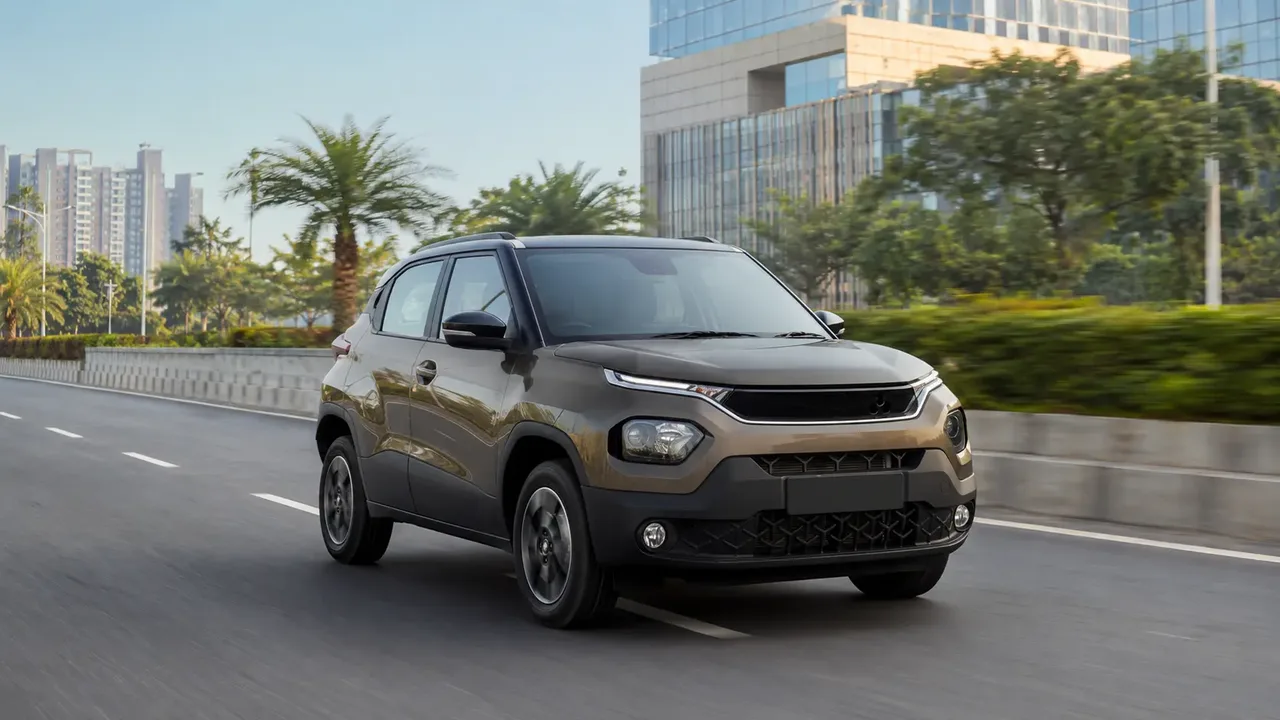
In June 2026, the Tata Punch became India's best-selling car — a genuine milestone for a domestic manufacturer, and a signal of how completely the micro-SUV has reshaped the market.
Our micro-SUV comparison placed it first, on the strength of 5-star Global NCAP safety at an accessible price, genuine SUV toughness and unbeatable value. But sales charts and comparison podiums measure appeal, not ownership. What is it actually like to live with — and does CNG's promised economy survive contact with reality?
True Motion Auto has not driven this car and does not run a test fleet, so what follows is not a twelve-month verdict. It is an analysis of the ownership questions that matter for a Punch iCNG buyer, drawn from Tata's published data, the ARAI certification and the well-documented realities of CNG ownership in India.
Why the CNG version matters
The iCNG deserves separate treatment from the petrol car, for three reasons:
1. It represents how a huge number of Indians actually buy. CNG is one of the most rational choices in the Indian market, and it is systematically under-covered by enthusiast journalism.
2. Tata's twin-cylinder iCNG design addresses CNG's biggest drawback. As our CNG comparison established, single-cylinder installations occupy most of the boot, while Tata's twin-cylinder under-floor layout is claimed to preserve near-full luggage space. This is a real engineering difference rather than a marketing one, though the practical benefit is best judged by sitting in the car with your own luggage.
3. The running-cost promise is substantial. At a claimed 26.99 km/kg ARAI, the payback arithmetic suggests the CNG premium repays itself within roughly two to three years for anyone covering 60+ km daily — a calculation any buyer can run for their own mileage and local CNG price.
The car
| Spec | Tata Punch iCNG |
|---|---|
| Powertrain | twin-cylinder iCNG |
| Mileage (ARAI) | 26.99 km/kg |
| Cylinder design | twin-cylinder, under-floor — claimed to preserve boot |
| Safety | 5-star Global NCAP (original) |
| Segment | micro-SUV |
| Status | India's best-selling car (June 2026) |
All figures are Tata's published specifications and the ARAI certified rating.
The questions that decide it
1. Does the twin-cylinder design genuinely preserve the boot? This is the Punch iCNG's key advantage over rivals, and it is the one thing a buyer can verify completely for free: take your largest suitcase to a dealer and put it in the boot. Litres on a spec sheet are a poor guide to whether a specific bag fits a specific space.
2. What is the real CNG economy? ARAI certifies 26.99 km/kg. Certified figures are obtained under standardised test conditions and real-world consumption is routinely lower, as it is for every certification cycle worldwide. The practical approach is to calculate cost per kilometre at your local CNG price against the petrol equivalent, using a conservative real-world assumption rather than the certified number.
3. What is CNG ownership actually like day to day? The under-discussed realities, which are consistent across CNG owner reporting in India:
- Queueing at CNG stations — genuinely time-consuming in busy metros, and the most under-reported ownership cost
- Station availability on longer trips, which requires route planning that petrol does not
- Petrol/CNG switching, which most owners report becomes routine quickly
- Shorter range per fill — a fill holds substantially less energy than a tank of petrol, so refuelling is more frequent
Anyone considering a CNG car should visit their nearest CNG station at a peak hour before buying. That single trip answers the biggest ownership question more reliably than any review.
4. What are the specific CNG maintenance costs? CNG carries obligations petrol does not: more frequent spark plug replacement, mandatory cylinder hydro-testing every three years, and the discipline of starting and finishing journeys on petrol. None is expensive individually, but they belong in the running-cost calculation alongside the fuel saving.
5. Is performance adequate when loaded? Running on CNG reduces power output relative to petrol — this is inherent to the fuel, not a Tata shortcoming. With a family and luggage aboard, on a gradient, the difference is noticeable. A test drive loaded to something like your real-world use, on a road with a gradient, is the only way to settle this for yourself.
6. Does the toughness hold up on Indian roads? The Punch's appeal is rugged honesty, and its Global NCAP result supports the structural claim. Long-term durability on poor surfaces is best judged from owner reporting, which accumulates as the car ages in the market.
Why this car deserves coverage
Enthusiast journalism systematically under-covers cars like this. The Punch iCNG is closer to how India actually buys cars than any premium EV or performance SUV — accessible, rational, economy-focused, bought by families making careful financial decisions.
Those buyers deserve the same rigour applied to a £2 million hypercar, and arguably more, because the purchase matters more to them. Detailed, honest analysis of running costs, practicality and ownership annoyances is worth considerably more to that reader than any 0–100 figure.
The bottom line
The Tata Punch became India's best-selling car by being tough, safe, practical and affordable — and the iCNG version adds running costs that few things can match.
The case for it is strong on paper, and the twin-cylinder layout is a genuine engineering answer to CNG's worst compromise. What a buyer should settle personally, before committing, is the boot with their own luggage, the loaded performance on a gradient, and the queue at their local CNG station. Those three checks cost an afternoon and decide the ownership experience more than any specification does.
Key takeaways
- True Motion Auto has not driven this car; this sets out the ownership questions rather than a twelve-month verdict
- The Tata Punch became India's best-selling car in June 2026, with 5-star Global NCAP safety at an accessible price
- The twin-cylinder under-floor design is claimed to preserve near-full boot space where single-cylinder CNG installations do not — verify with your own luggage at a dealer
- Treat the 26.99 km/kg ARAI figure as a certified rating, not a real-world one, and calculate cost per kilometre at your local CNG price
- Budget for CNG's specific obligations — more frequent spark plugs and mandatory 3-yearly hydro-testing — and visit your local CNG station at a peak hour before buying
Sources & further reading
- Tata Motors Punch iCNG specifications and ARAI certified mileage rating
- Global NCAP crash test results
- Indian passenger vehicle sales data (June 2026)
- True Motion Auto review methodology. Verified July 2026.
Figures, prices and policy details were current at the last-updated date above. Automotive pricing, incentives and regulations change frequently — verify time-sensitive details with the linked primary sources. Read our editorial policy and fact-checking standards.