Numbers that mean something
A score is only useful if you know what it means. "8/10" is meaningless unless it's applied consistently and you understand the scale behind it. This page explains exactly what each score on the True Motion Auto 10-point scale represents — so when you read our verdicts, the number tells you something real.
Our scores are relative to class and price. A 9/10 supermini and a 9/10 hypercar are both excellent at what they are and for what they cost — the score measures how well a car achieves its mission and delivers value in its segment, not how it compares in absolute terms to a car from a different class. A ₹8 lakh hatchback and a £2 million hypercar can both earn a 9; they're being judged against completely different briefs.
The scale, explained
Here's what each band means:
10/10 — Perfection (essentially unattainable). A flawless car with no meaningful weaknesses that redefines its class. We reserve 10/10 for the truly exceptional — a car so complete, so accomplished, so free of genuine flaws that it sets a new benchmark. In practice, almost no car earns a perfect 10, because almost every car involves some compromise. A 10 isn't "very good" — it's "we cannot find a meaningful fault, and it changes the game." That's a very high bar, deliberately.
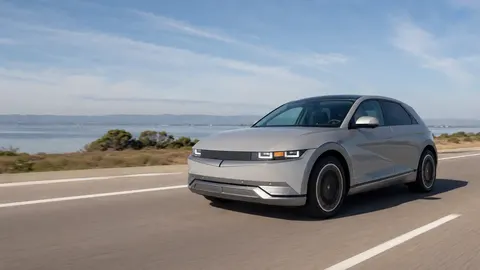
9/10 — Outstanding. A genuinely exceptional car with only minor, forgivable flaws. A 9 is a class leader — something we'd recommend enthusiastically and with few caveats. The flaws that exist are minor and easily lived with. (In our coverage, the Hyundai Ioniq 9, Renault 5, and Porsche Cayenne Electric earned 9s — each exceptional in its class with only small quibbles.)
8/10 — Excellent. A very good car with some real but non-fatal flaws. An 8 (including 8.5) is a strong recommendation — a car that does most things very well, with weaknesses that are genuine but don't undermine the whole. Most genuinely good cars land here. The difference between 8 and 8.5 reflects how minor the flaws are.
7/10 — Good. A solid, competent car with notable weaknesses or compromises. A 7 (including 7.5) is a good car worth considering, but with flaws significant enough to matter — a real trade-off you should weigh. It might be very good in some areas and clearly weaker in others.
6/10 — Fair / compromised. A car with real merits but significant weaknesses that hold it back. A 6 (including 6.5) means "there's genuine appeal here, but the compromises are serious enough that you should think carefully and cross-shop hard." (In our coverage, the Omoda 5 Hybrid earned 6.5 — real value, but outclassed on substance by better rivals.)
5/10 and below — Flawed to poor. Cars with weaknesses serious enough to make them hard to recommend over better rivals. The lower the score, the more fundamental the problems. We'll explain exactly why, and what to buy instead.
Why we score relative to class and price
This is the most important thing to understand about our scores. A high score doesn't mean a car is objectively "better" than a lower-scoring car in a different class. It means the car excels at its own mission and price point.
An 8.5/10 affordable hatchback isn't "better" than a 7.5/10 supercar in any absolute sense — they're utterly different things serving different buyers. The hatchback earns its 8.5 by being an outstanding affordable hatchback; the supercar earns its 7.5 by being a good-but-flawed example of an extraordinarily demanding class. The scores tell you how well each delivers for what it is.
This is why you should read the score alongside the review, not instead of it. The number is a summary; the review explains what the car is, who it's for, and what its strengths and flaws actually are. A 7/10 car might be exactly right for you if its flaws don't matter to your needs, and a 9/10 car might be wrong for you if its mission doesn't match yours.
What moves a score up or down
Scores rise with: genuine excellence in the core areas (driving, practicality, refinement, efficiency, safety), strong value for money, few and minor flaws, and a car that genuinely delivers on its mission.
Scores fall with: significant weaknesses (poor ride, bad infotainment, weak value, safety concerns), compromises that undermine the car's purpose, poor value relative to rivals, and flaws that a buyer would genuinely notice and mind.
Value is always part of the equation. A car that's excellent but massively overpriced scores lower than one that's very good and keenly priced. What you pay matters as much as what you get.
Scores can change
Our scores aren't necessarily permanent. As we explain in our companion piece on re-testing, a car's score can change — for example, after a significant software update materially improves (or worsens) it. We update scores when the car genuinely changes, and we tell you when and why. A score reflects the car as it is at the time of review.
The bottom line
The True Motion Auto 10-point scale measures how well a car delivers on its mission and value, relative to its class and price. A 10 is essentially unattainable perfection; a 9 is outstanding; an 8 is excellent; a 7 is good-with-real-flaws; a 6 is compromised-but-appealing; and below that, increasingly hard to recommend. Crucially, scores are relative to class — an affordable car and a hypercar can earn the same number by excelling at completely different briefs. Read the score alongside the review, because the number summarises and the words explain. That's what our ratings mean, and why they're consistent enough to trust.
Key takeaways
- The True Motion Auto 10-point scale measures how well a car delivers on its mission and value, relative to its class and price
- 10 = essentially unattainable perfection; 9 = outstanding; 8 = excellent; 7 = good with real flaws; 6 = compromised but appealing; below = hard to recommend
- Scores are relative to class: an affordable hatchback and a hypercar can both earn a 9 by excelling at completely different briefs
- Value is always part of the equation — an excellent but overpriced car scores lower than a very good, keenly-priced one
- Read the score alongside the review: the number summarises, the words explain what the car is and who it's for
Sources & further reading
- True Motion Auto editorial rating standards. Verified July 2026.
Figures, prices and policy details were current at the last-updated date above. Automotive pricing, incentives and regulations change frequently — verify time-sensitive details against the primary sources listed below. Read our editorial policy and fact-checking standards.