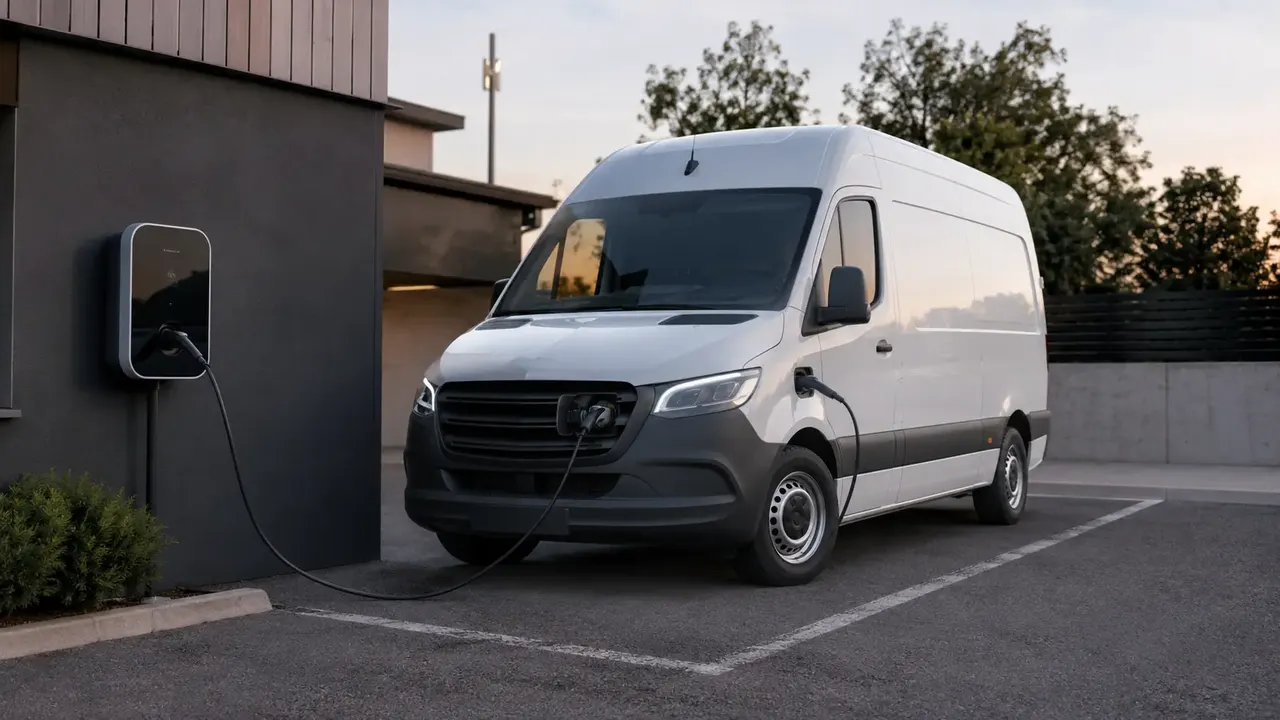
A portable EV charging cable lets you plug into a standard 120V household outlet (Level 1, roughly 3-5 miles of range per hour) or a 240V outlet (Level 2, roughly 15-30 miles per hour) without a fixed wallbox. Basic 120V-only cords run $150-$300; dual-voltage portable units that step up to 240V typically run $300-$700. Most new EVs no longer include a full-speed charger in the box, which is why aftermarket portable units have become a near-essential accessory.
At a glance
| Type | Typical range added/hour | Typical price band |
|---|---|---|
| Level 1 (120V) cord | 3-5 miles | $150-$300 |
| Dual-voltage portable (120V/240V) | 15-30 miles on 240V | $300-$700 |
| Adapter-only (NACS/J1772/CCS) | n/a (connector conversion) | $25-$200 |
Level 1 vs. Level 2 portable cables
Every EV ships with some form of charge cord, but many automakers now bundle only a basic Level 1 cable, or none at all, and sell the faster dual-voltage unit as an accessory. A Level 1 cable plugs into any grounded household outlet and trickles in 3-5 miles of range per hour — fine for overnight top-ups on a short commute, too slow for daily high-mileage driving. A dual-voltage portable cable adds a plug adapter for a 240V outlet (the kind a clothes dryer or welder uses) and can deliver 15-30 miles per hour, closing most of the gap with a home wallbox.
Amperage matters more than the marketing name
Two products both labeled "Level 2 portable" can behave very differently depending on their maximum amperage — commonly 16A, 32A or 40A. Higher amperage charges faster but requires a correspondingly rated circuit and outlet (a 40A cable is wasted on a 20A circuit, and will simply throttle itself down). Check your home's electrical panel capacity and existing outlet type before choosing a cable, and where possible have an electrician confirm the circuit is rated for continuous EV charging loads.
Connector types: NACS, J1772, CCS
In North America, most new EVs from 2025 onward ship with a NACS (North American Charging Standard) inlet, while older EVs and many public networks still use J1772 for AC charging. A portable cable needs to match your vehicle's inlet, or you'll need an adapter. Buyers switching between an older J1772 car and a newer NACS car in the same household should budget for an adapter rather than assuming universal compatibility.
What drives the price
- Cable length: 18-25 ft cables cost more than 10-15 ft but reach more parking configurations.
- Amperage rating: 40A units cost noticeably more than 16A/24A units.
- Weatherproofing rating (IP65/IP66) for outdoor storage or use.
- Smart features: app connectivity, scheduled charging, load-sharing with other appliances.
- Bundled adapters (NEMA 14-50, 6-50, 10-30) for different outlet types.
Common mistakes to avoid
- Buying a high-amperage cable without confirming the home circuit can actually supply that current.
- Using a cheap, ungrounded extension cord or adapter with any Level 2 cable — this is a fire and shock risk.
- Assuming a bundled OEM cord is dual-voltage when many are Level 1 only.
- Leaving a portable cable outdoors long-term without checking its weatherproof rating.
- Ignoring UL/ETL safety certification — look for it on the cord and plug housing.
Never plug a Level 2 portable cable into a standard 15A/20A wall outlet using a step-up adapter — overheating outlets are one of the most common home-charging safety complaints reported to fire departments.
Who needs one
A portable dual-voltage cable suits drivers who split time between home and a second location (a relative's house, a cabin, a work site) with different outlet types, or who want charging flexibility without installing a fixed wallbox. Drivers who charge exclusively at one location with a dedicated Level 2 wallbox already installed generally don't need a separate portable unit, though keeping a basic Level 1 cord in the trunk as a backup is still a low-cost safety net.
Frequently asked questions
Is a portable EV charger as fast as a home wallbox?
Can I use a portable EV charging cable in the rain?
Do I need an electrician to use a portable Level 2 cable?
Will a portable charging cable work on any EV?
Sources & further reading
- U.S. Department of Energy — Alternative Fuels Data Center, EV charging basics
- UL Solutions — EV charging equipment safety standards
Figures, prices and policy details were current at the last-updated date above. Automotive pricing, incentives and regulations change frequently — verify time-sensitive details with the linked primary sources. Read our editorial policy and fact-checking standards.