Note: costs mentioned below are given in US dollars as a general point of reference — actual prices vary by country, currency, and local market.
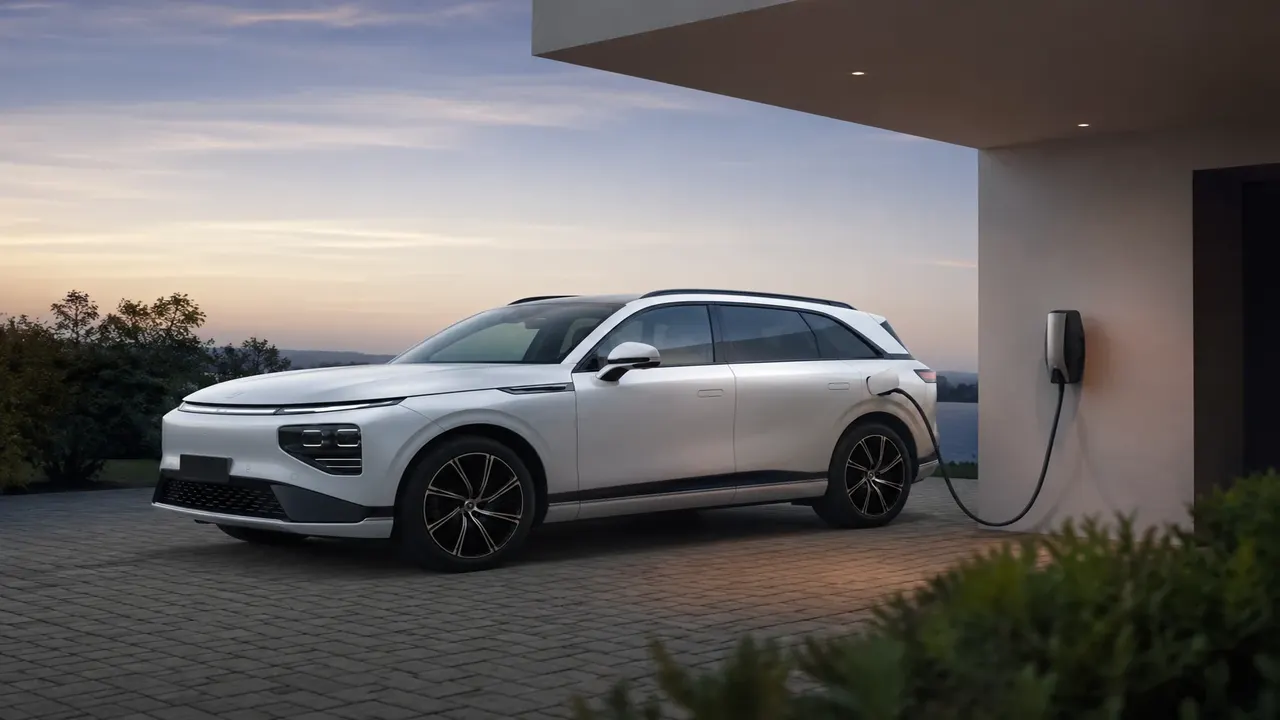
A Level 2 home charger runs on a 240V circuit and typically adds 15-40 miles of range per hour, compared to 3-5 miles on a standard outlet — most owners fully recover a night's driving in a few hours instead of overnight-plus. Units range from 16A ($300-$400) to 48A ($500-$800), plus $300-$1,500 for professional installation depending on panel capacity and wiring distance. Note: the US federal 30C tax credit covering 30% of home charger costs (up to $1,000) expired June 30, 2026, so budget the full cost going forward unless a state or utility rebate applies.
At a glance
| Amperage | Range added per hour | Price band (unit only) | Notes |
|---|---|---|---|
| 16A | ~10-12 mi/hr | $250-$400 | Budget option, slower charging |
| 32A | ~20-25 mi/hr | $350-$600 | Good middle ground for most EVs |
| 40-48A | ~30-40 mi/hr | $500-$800 | Fastest home charging, needs a larger circuit |
Hardwired vs. plug-in units
Plug-in chargers connect to a NEMA 14-50 (or similar) outlet, making them portable between homes or easy to have serviced by unplugging. Hardwired units are wired directly into the electrical panel through a dedicated circuit, generally considered more permanent and slightly more resistant to outdoor weather exposure since there's no exposed plug connection. Many owners choose plug-in units specifically for the flexibility of taking the charger along if they move.
Picking the right amperage
Higher amperage charges faster but requires a correspondingly larger dedicated circuit and breaker, which affects installation cost and whether your electrical panel has spare capacity. Most EVs also have an onboard charger limit — some vehicles can't accept more than roughly 32-40A regardless of what the wall unit can deliver — so check your vehicle's maximum AC charging rate before paying extra for a 48A unit that your car can't fully use.
Smart features worth having
App-based scheduling lets you charge during off-peak utility hours to save money on time-of-use electricity rates. Load management features throttle charging automatically if your home's total electrical draw gets close to panel capacity, which can avoid an expensive panel upgrade in older homes. Solar integration, where offered, prioritizes charging from excess solar production.
The 30C tax credit situation
The federal Alternative Fuel Vehicle Refueling Property Credit (Section 30C), which covered 30% of qualifying home EV charger hardware and installation costs up to $1,000 for individual taxpayers, expired on June 30, 2026 under recent federal legislation. Anyone budgeting for a new install now should plan on the full cost, though some state programs and utility rebates remain separately available and are worth checking before installing.
Certifications and installation basics
- UL or ETL Listed — confirms the unit meets recognized electrical safety testing.
- ENERGY STAR certified — indicates efficient standby power use.
- Licensed electrician install — required in most jurisdictions for new 240V circuits, and typically needed to keep any manufacturer warranty valid.
- Panel capacity check — an electrician should confirm your panel has room for the new circuit before you commit to a unit.
Mistakes to avoid
Sizing the circuit only for your current car's charging limit can mean re-wiring later if you upgrade to a vehicle with a higher onboard charging capacity — many electricians recommend running a slightly larger circuit than strictly necessary today. Also, skipping a licensed electrician to save money on a DIY 240V install risks code violations, insurance issues, and safety hazards; this is not a job for most DIYers.
Frequently asked questions
What amperage charger do I need?
Hardwired or plug-in — which is better?
Is the 30C federal tax credit for home chargers still available?
How long does it take to charge with a Level 2 charger?
Can I install a Level 2 charger myself?
Sources & further reading
- IRS — Alternative Fuel Vehicle Refueling Property Credit (Section 30C)
- U.S. Department of Energy — Alternative Fuels Data Center: Home Charging
Figures, prices and policy details were current at the last-updated date above. Automotive pricing, incentives and regulations change frequently — verify time-sensitive details with the linked primary sources. Read our editorial policy and fact-checking standards.