Note: costs mentioned below are given in US dollars as a general point of reference — actual prices vary by country, currency, and local market.
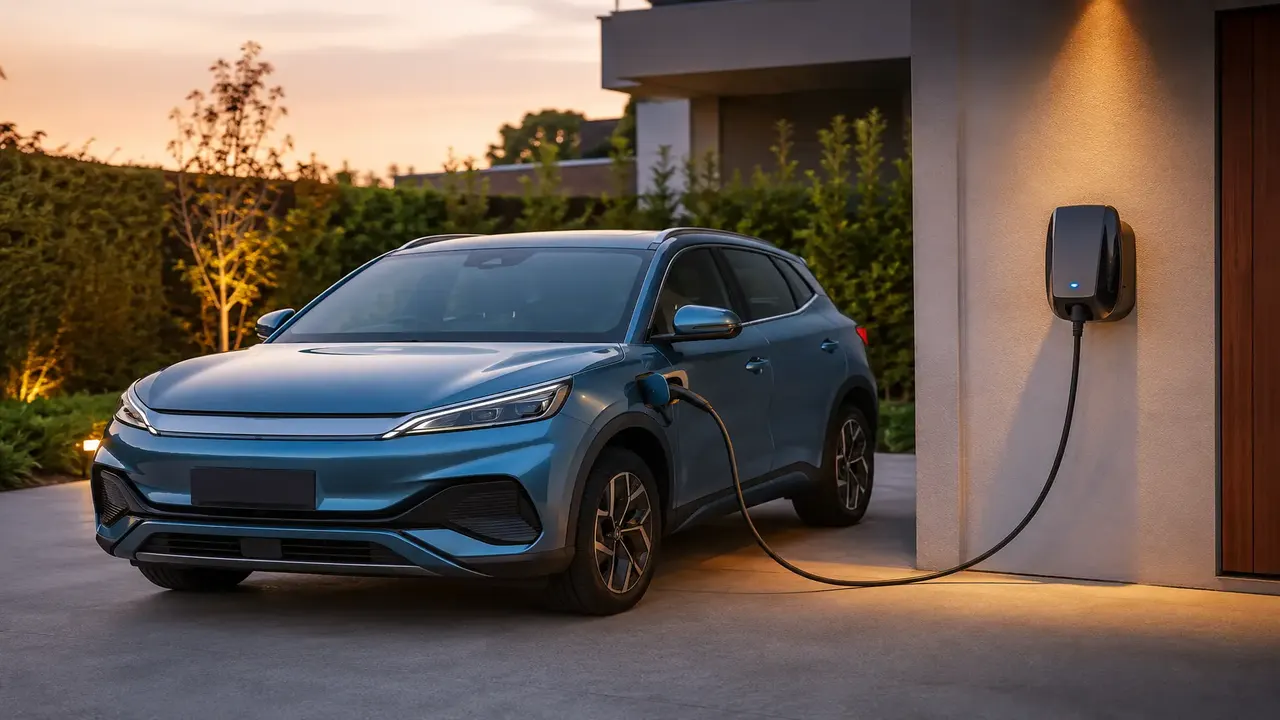
Most home Level 2 EV charging runs on a dedicated 40-50 amp, 240V circuit, commonly using a NEMA 14-50 or 6-50 outlet. Outlet, box and breaker hardware typically costs $50-$200, while a licensed electrician's labor to run a new circuit adds $500-$2,000+ depending on distance from the panel and whether a panel upgrade is needed. Outdoor or garage installs generally require GFCI protection and weatherproof covers under current electrical code.
At a glance
| Outlet type | Typical amperage | Common use |
|---|---|---|
| NEMA 14-50 | 40-50A | Most common for EV charging, also RV/range use |
| NEMA 6-50 | 40-50A | Welder-style circuit, works well for EV charging |
| NEMA 6-20 | 16-20A | Lower-power 240V option for portable EVSE units |
Why outlet type matters before you buy a charger
Many portable EVSE units and some hardwired chargers are designed around a specific plug type, so the outlet installed in your garage effectively decides your charger options later. NEMA 14-50 has become something of a default because it's also used for RVs and electric ranges, making compatible plugs and adapters widely available; NEMA 6-50 is a close alternative common in older welder-circuit installs.
What's actually involved in adding the circuit
A licensed electrician runs a dedicated circuit from the panel to the garage location, sized to the amperage the outlet or hardwired charger will draw, and installs a breaker matched to that circuit. If the existing panel doesn't have spare capacity, either a panel upgrade or a load management device (which shares capacity intelligently with other high-draw circuits) may be needed instead.
Permits and code requirements
Nearly all jurisdictions require an electrical permit and inspection for new 240V circuits, and current electrical code (NEC Article 625 in the US) has specific requirements for EV charging equipment circuits, including GFCI protection for many installations and weatherproof, in-use covers for any outlet exposed to the elements. Skipping the permit can create insurance and resale issues even if the work itself is done safely.
Reusing an existing 240V outlet
Some homeowners consider plugging an EV charger into an existing dryer or range outlet. This can work if the circuit's amperage is compatible and it isn't already in regular use for its original appliance, but running two high-draw devices off one shared circuit isn't advisable, and adapters between outlet types need to match the circuit's actual amperage rating, not just the physical plug shape.
Features and accessories worth having
- Weatherproof in-use outlet cover — required for any outdoor-exposed outlet and keeps the connection dry even with a plug inserted.
- GFCI breaker — increasingly required by code for garage and outdoor circuits; protects against ground faults.
- Load management device — lets you add EV charging without a full panel upgrade by sharing capacity with other circuits.
- Properly sized conduit — sizing generously the first time avoids redoing the job for a future higher-amperage charger.
Mistakes to avoid
DIY wiring of a new 240V circuit is not a beginner project and, beyond the shock and fire risk, unpermitted electrical work can void homeowner's insurance claims and complicate a future home sale. Always use a licensed electrician for the circuit itself, even if you plan to mount the charger or outlet cover yourself.
Frequently asked questions
Do I need a licensed electrician to add a 240V outlet for EV charging?
What outlet type is best for a Level 2 charger?
Is GFCI protection required for garage EV outlets?
Can I use my existing dryer outlet for EV charging?
Do I need a permit for a new EV charging circuit?
Sources & further reading
- National Fire Protection Association — NEC Article 625 (Electric Vehicle Charging Systems)
- U.S. Department of Energy — Alternative Fuels Data Center: Home Charging Installation
Figures, prices and policy details were current at the last-updated date above. Automotive pricing, incentives and regulations change frequently — verify time-sensitive details with the linked primary sources. Read our editorial policy and fact-checking standards.