Note: costs mentioned below are given in US dollars as a general point of reference — actual prices vary by country, currency, and local market.
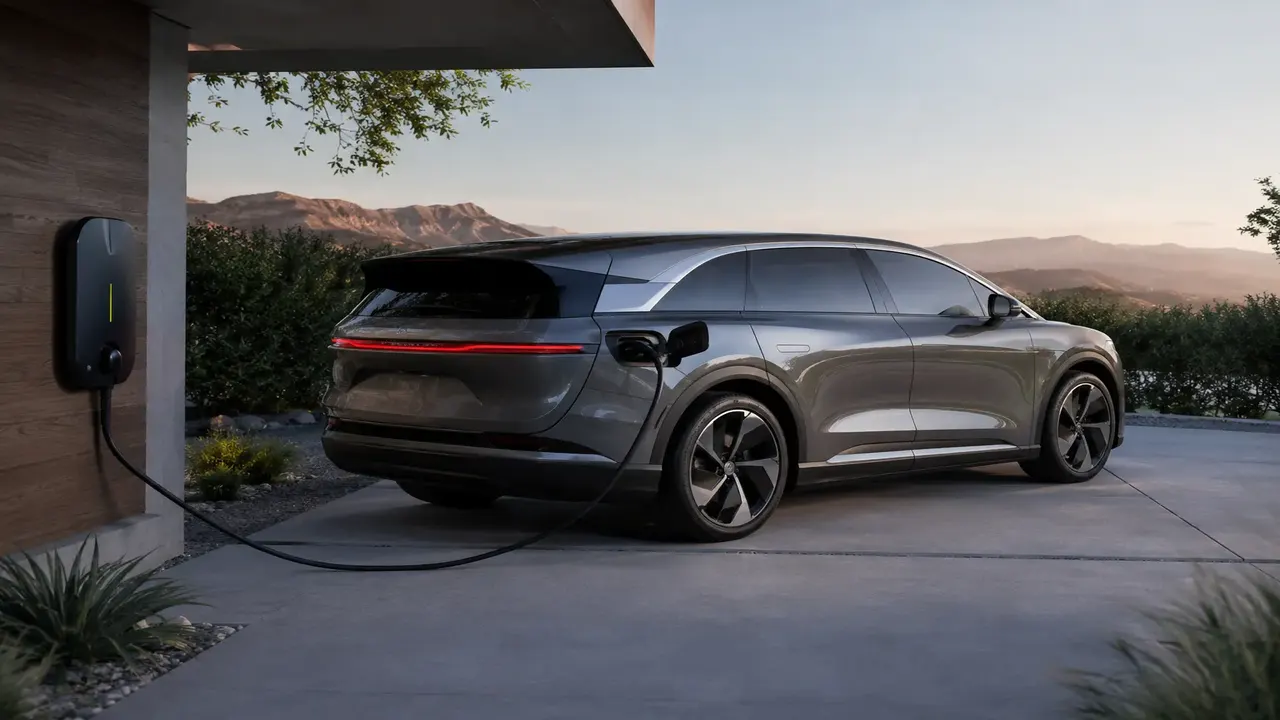
Outlet plug adapters (like NEMA 14-50-to-6-50 or 10-30-to-14-50) that let a portable EVSE work with an existing 240V outlet are generally safe when properly rated, costing $30-$80. Standard household extension cords, however, are explicitly discouraged by most EV manufacturers for charging use — they're typically undersized for sustained high current and lack weatherproofing, creating a real overheating and fire risk. Purpose-built, UL 2594-certified EV extension cords in heavier 8-10 AWG gauge cost $60-$150 and are the only recommended option if an extension is unavoidable.
At a glance
| Item | Purpose | Price band |
|---|---|---|
| Outlet plug adapter (e.g., 14-50 to 6-50) | Match portable EVSE plug to an existing outlet type | $30-$80 |
| Standard household extension cord | NOT recommended for EV charging | N/A — avoid |
| UL 2594-certified EV extension cord | Heavy-gauge, weatherproof extension when unavoidable | $60-$150 |
Plug adapters: usually fine, if matched correctly
Many households already have a 240V outlet for a dryer or range — often a NEMA 10-30 or 14-30 — that doesn't physically match a portable EVSE's factory plug. An adapter that converts between compatible outlet types (matching amperage and voltage, not just physical shape) is a reasonable, widely used solution, as long as the underlying circuit's amperage rating supports what the EVSE will draw.
Why standard extension cords are a real risk
EV charging draws sustained high current — often for hours at a stretch — that most household extension cords, sized for occasional light loads like lamps or power tools, simply aren't built to handle. Running that much current through an undersized cord for hours generates heat that a light-duty cord's insulation isn't rated to dissipate safely, which is why the overwhelming majority of EV manufacturers explicitly warn against using standard extension cords with their charging equipment.
If you truly need an extension
Purpose-built EV charging extension cords exist, using heavier gauge wire (typically 8-10 AWG for 240V circuits, compared to 16-18 AWG in many household cords), full weatherproof outdoor ratings, and UL 2594 certification specifically covering EV charging equipment. These cost significantly more than a generic extension cord, and that price reflects genuinely different, safer construction — not just a marketing label.
Wire gauge matters more than length
- 10 AWG — generally adequate for lower-amperage (up to ~30A) 240V EV charging over shorter runs.
- 8 AWG or heavier — recommended for higher-amperage (40A+) circuits or longer cable runs, since voltage drop increases with distance.
- Always check the specific cord's rated amperage and length combination — a cord rated for 40A at 25 feet may not be safely rated for 40A at 100 feet.
Mistakes to avoid
Using a light-duty household extension cord for EV charging — even 'just this once' — is one of the most commonly cited causes of melted plugs and charging equipment fires in owner forums and safety bulletins. If a permanent circuit isn't available, invest in a purpose-built, UL-certified EV extension rated for your exact amperage, or better yet, have an electrician install a properly located outlet instead.
Also worth checking: using an extension cord or adapter with EV charging equipment can affect manufacturer warranty coverage in the event of a fault — read your charger's manual before assuming any workaround is covered.
Frequently asked questions
Is it safe to use a regular extension cord with an EV charger?
What gauge extension cord do I need for 240V EV charging?
Can I plug my EV charger into a dryer outlet using an adapter?
Is a dedicated circuit better than using an adapter?
Does using an extension cord void my charger's warranty?
Sources & further reading
- National Fire Protection Association — NEC Article 625 (EV Charging Equipment)
- UL — Cord and Extension Cord Safety Standards
Figures, prices and policy details were current at the last-updated date above. Automotive pricing, incentives and regulations change frequently — verify time-sensitive details with the linked primary sources. Read our editorial policy and fact-checking standards.