Note: costs mentioned below are given in US dollars as a general point of reference — actual prices vary by country, currency, and local market.
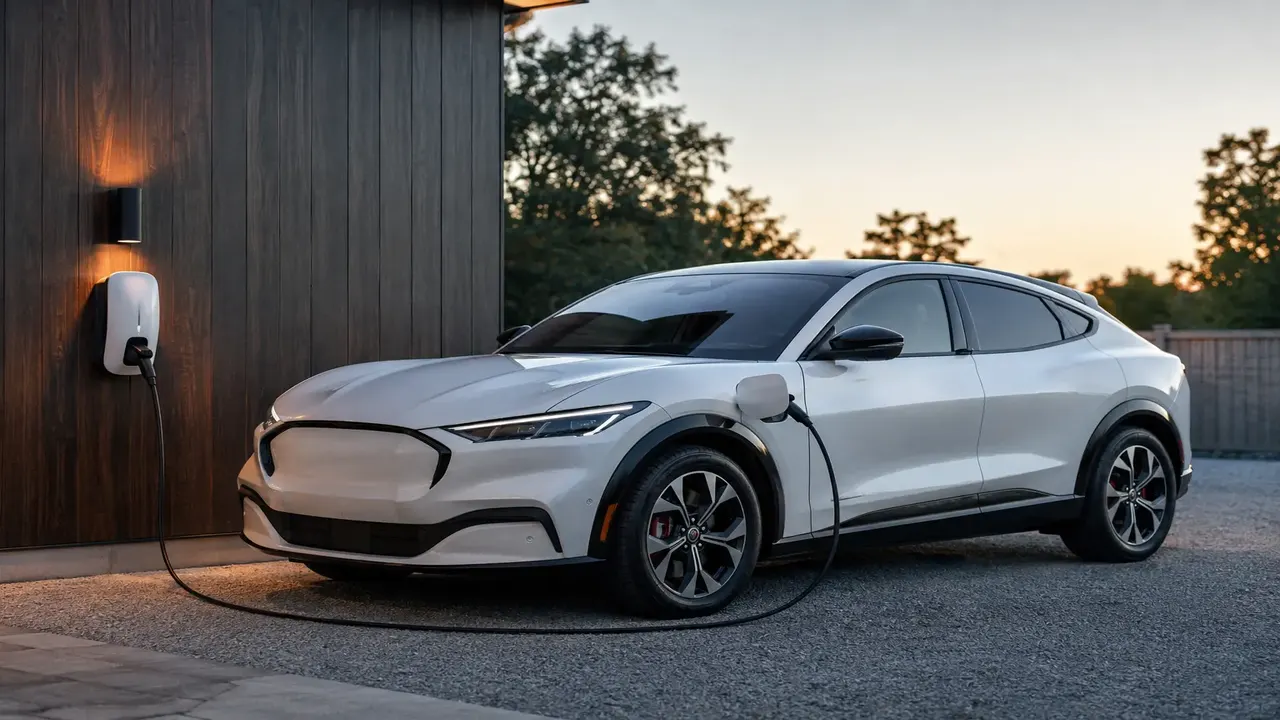
Level 1 charging uses a standard 120V household outlet and typically adds only 3-5 miles of range per hour, meaning a full overnight charge (10-12 hours) covers roughly 30-60 miles — fine for low-mileage daily driving, not enough for most commuters or road trips. Stock L1 cables that ship with EVs work adequately for occasional use; upgraded portable dual-voltage (120V/240V) EVSE units cost $150-$400 and add real flexibility, including faster Level 2-equivalent charging when plugged into a 240V outlet.
At a glance
| Charging type | Voltage/Amperage | Range added per hour | Typical price |
|---|---|---|---|
| Stock Level 1 cable | 120V, 12-16A | 3-5 miles/hr | Included with most new EVs |
| Upgraded dual-voltage portable EVSE | 120V/240V, adjustable 12-40A | 3-5 (L1) or 15-30+ (L2 mode) | $150-$400 |
What Level 1 charging actually delivers
Level 1 charging plugs into a standard household NEMA 5-15 outlet, the same type used for lamps and small appliances, and typically draws 12-16 amps at 120 volts. That translates to roughly 3-5 miles of driving range added per hour of charging — a full 10-12 hour overnight session adds somewhere between 30 and 60 miles, depending on the vehicle's efficiency and the exact amperage.
Who Level 1 actually works for
Drivers with short daily commutes (under 30-40 miles round trip) who can plug in every night often find Level 1 genuinely sufficient, especially for plug-in hybrids with smaller battery packs. It becomes a poor fit quickly for longer commutes, multi-driver households sharing one EV, or anyone who needs to recover a large amount of range overnight after a road trip.
The stock cable vs. an upgraded portable unit
The cable that ships with most new EVs is a basic Level 1 unit, sometimes with limited or no way to adjust amperage. Upgraded dual-voltage portable EVSE units add real flexibility: they can run on a standard 120V outlet for L1 speeds, but also accept various 240V outlet plugs (with the right adapter) to deliver true Level 2 charging speeds when a dedicated circuit is available — useful for travel, visiting family, or as a backup if a home L2 charger is ever out of service.
Features worth checking on an upgraded unit
- Adjustable amperage — lets you safely match output to whatever circuit you're plugged into, from a shared household outlet to a dedicated dryer circuit.
- Interchangeable plug adapters — NEMA 5-15, 6-20, 14-50 and similar let one unit work across many outlet types.
- UL certification (UL 2231/2251) — confirms the unit meets recognized EV charging safety standards.
- Weatherproof rating — matters if the unit will ever be used outdoors away from a garage.
Mistakes to avoid
Never use a standard household extension cord with an EV charging cable — extension cords aren't rated for the sustained current and can overheat, creating a fire risk; most manufacturers explicitly warn against it. Also avoid plugging an EVSE into an old or shared household circuit already near its breaker capacity, which can trip breakers repeatedly or overheat wiring not designed for hours of continuous draw.
Frequently asked questions
Is Level 1 charging enough for daily driving?
How many miles of range does Level 1 charging add per hour?
Can I upgrade my stock Level 1 cable?
Is it safe to use an extension cord with an EV charger?
Are dual-voltage portable chargers worth the extra cost?
Sources & further reading
- U.S. Department of Energy — Alternative Fuels Data Center: EV Charging Levels
- ENERGY STAR — Electric Vehicle Charging Guidance
Figures, prices and policy details were current at the last-updated date above. Automotive pricing, incentives and regulations change frequently — verify time-sensitive details with the linked primary sources. Read our editorial policy and fact-checking standards.