The limit that redrew the map
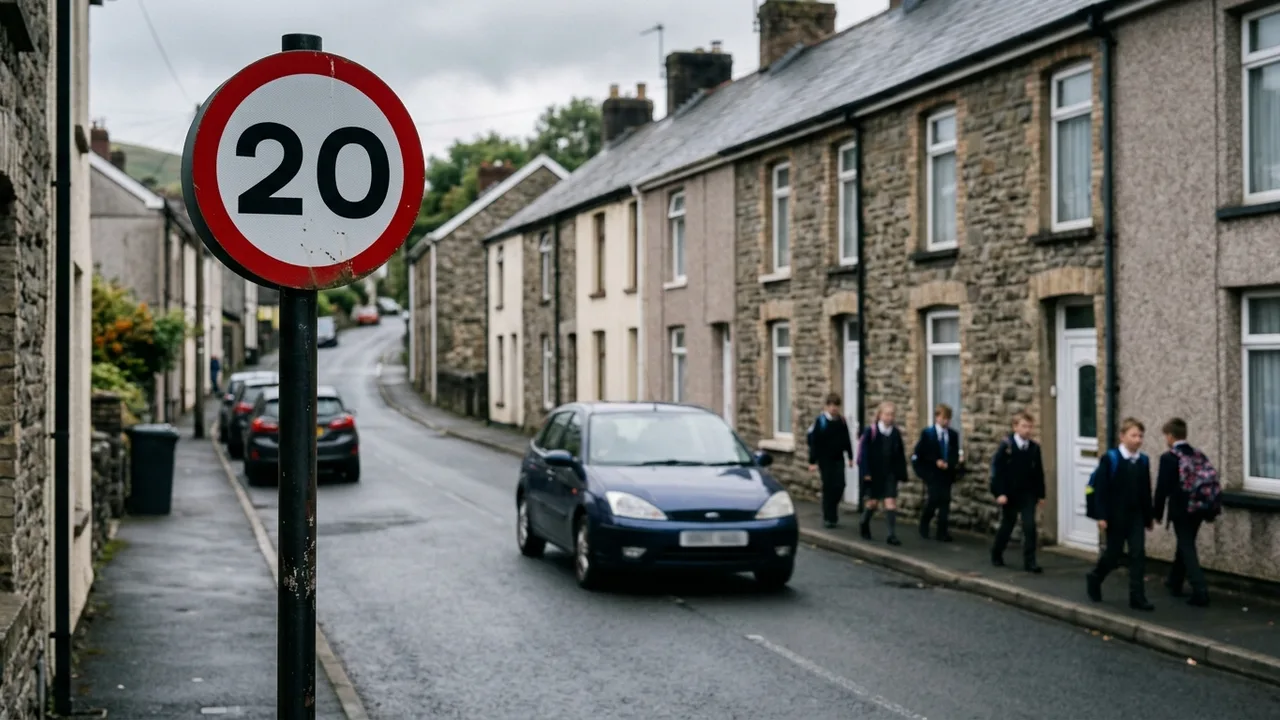
Twenty is no longer a school-gate novelty. Wales switched its national default on restricted (street-lit, 30mph) roads to 20mph in September 2023 — the largest single limit change in British history, followed by a 2024–25 recalibration returning some through-routes to 30 after review. London runs 20 across most borough roads and swathes of the TfL network; Scotland is legislating toward a similar default; and English towns from Bristol to Oxford blanket their centres. The direction of travel is one way, and enforcement has matured alongside.
Zones, limits and defaults — the legal furniture
- A 20mph limit is set by repeater signs: standard enforcement, no engineering required.
- A 20mph zone is entered by gateway signs and sustained by physical calming (humps, chicanes, cushions) — traditionally self-enforcing, with fewer repeaters legally required.
- A default (Wales): on restricted roads, 20 applies unless signed otherwise — the reversal of the old logic. In Wales, absence of signs on a lit urban street now means 20, and the driver's habit of "30 unless told" is precisely the ticket generator.
The practical reading: street lights + no repeater signs = assume the national default for that nation — 30 in England (for now), 20 in Wales.
Enforcement: the era of the warning is over
Early 20 limits went largely unenforced; that has changed. GoSafe in Wales, the Met and borough partnerships in London, and average-speed cameras on urban corridors all now process 20mph offences at volume. The mechanics mirror any limit: £100 fixed penalty and three points, awareness-course offers for margins within the standard threshold band (10% + 2mph — so enforcement typically from 24mph in a 20), and court escalation above band thresholds. Community Speed Watch feeds warning letters; repeat locations graduate to camera vans. The days of treating 20 as advisory ended with the defaults.
Does it actually work? The honest evidence
The safety case is strongest exactly where critics concede it: pedestrian survival curves. Struck at 30mph, roughly one pedestrian in five dies; at 20mph, the fatality risk falls several-fold — the physics of kinetic energy doubling between the two speeds. Post-implementation data from Wales' first years showed meaningful casualty reductions on affected roads, and London's long-running zone studies found significant injury declines, strongest for children.
The honest counterweights: journey-time costs are real but small (urban journeys are governed by junctions, not free-flow speed — average trip deltas measure in seconds-to-a-couple-of-minutes); compliance without enforcement is poor (mean speeds fall by low single-digit mph on signage alone — hence the camera maturation); and emissions arguments cut both ways by engine and driving style. The policy argument is genuinely about who streets are for; the casualty physics, though, is not in dispute.
Driving them well (and legally)
- Third gear, not second-guessing: most cars hold 20 comfortably in third; constant speedo-staring beats surging between 18 and 27.
- Watch for boundary signs religiously — the 20↔30 transitions are where points are farmed, especially leaving zones (the "acceleration zone" camera van is a Welsh institution already).
- In Wales, recalibrate the default: lit street, no signs — it's 20 until a sign says otherwise.
- Cyclists will keep pace with you at 20 — expect closer mixing, and give the Highway Code's 1.5m regardless of your patience level.
The questions drivers actually ask
Are 20 limits enforceable if there are no humps? Fully — signed limits need no engineering. The old "zones need calming" rule concerns zone design, not your liability.
Can I get points at 22mph? Enforcement guidance starts at 10% + 2 (24 in a 20), but that's guidance, not immunity — and average-speed corridors measure your whole journey, not your best moment.
Will England follow Wales? Politically contested and locally variable — but borough-by-borough expansion continues regardless of national defaults. Assume more 20, never less.
Key takeaways
- Wales' default on lit restricted roads is 20; London and many English cities blanket their streets by signs and zones
- Lit street with no repeaters = national default: 30 in England, 20 in Wales — recalibrate at the border
- Enforcement is now real: £100 + 3 points from ~24mph, camera vans and average-speed corridors included
- The pedestrian-survival physics between 20 and 30 is decisive even where journey-time debates rage
- Hold third gear, watch boundary signs, and treat exit-acceleration as the ticket trap it is
Sources & further reading
- Welsh Government default-20 legislation and first-year monitoring
- TfL and borough 20mph studies
- GoSafe and Met enforcement data
- NPCC speed-enforcement guidance
- pedestrian injury-speed research, 2026
Figures, prices and policy details were current at the last-updated date above. Automotive pricing, incentives and regulations change frequently — verify time-sensitive details against the primary sources listed below. Read our editorial policy and fact-checking standards.