🛒 BUYING GUIDE — DATED CONTENT. Tesla changes specifications and pricing frequently, sometimes mid-year. Verify against the current configurator before relying on this.
The three propositions
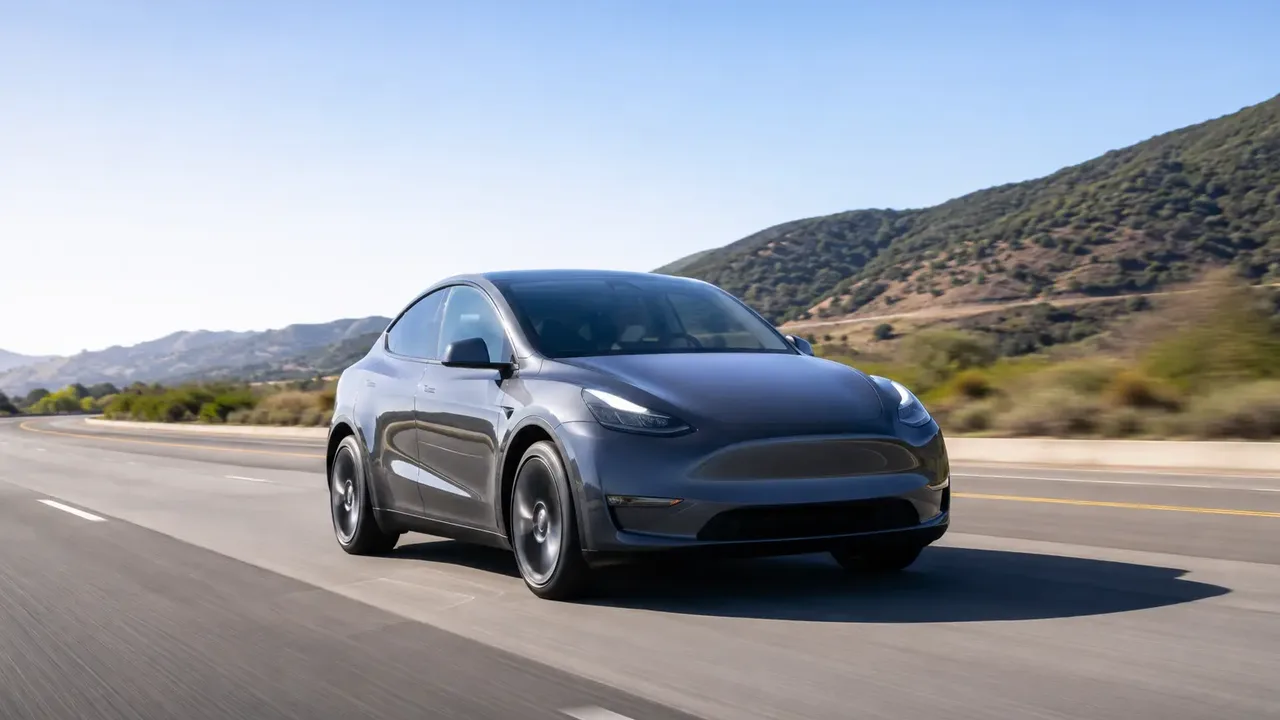
As our comparisons found, the 2026 "Juniper" Model Y won our $45K electric SUV test and finished first in our £40K saloon equivalent — on ecosystem completeness rather than product superiority.
The versions differ more than the naming suggests.
Standard / base RWD. Lowest price, lowest range, single motor. Sufficient for urban and suburban use with home charging.
⭐ Long Range RWD. The range champion of the lineup and the efficiency sweet spot. This is the version our long-term analysis focuses on, and the reasoning is explicit: it's the trim most buyers should consider.
Long Range AWD. Dual motor, all-weather traction, quicker — and slightly less efficient, because the second motor costs range.
Performance. Quickest, most expensive, least efficient, and typically on larger wheels with firmer suspension.
Why Long Range RWD is usually the answer
1. Maximum range in the lineup, which as our range testing established matters most in winter — expect 20–30% less in cold weather with the heating on.
2. Best efficiency. One motor, less weight, better mi/kWh. As our testing keeps finding, mass punishes everything — and in an EV it directly costs range.
3. Rear-wheel drive is sufficient for most conditions. AWD is genuinely valuable in snow and on poor surfaces, and largely redundant otherwise — particularly with good tyres, which as our braking work established dominate grip more than drivetrain does.
4. It's the sensible recommendation, which is why we're living with one.
Choose AWD if your climate genuinely warrants it, or you regularly drive on loose or steep surfaces.
Choose Performance only if you specifically want the acceleration and accept lower range, firmer ride and higher running costs. As our 0–60 inflation piece argued, the acceleration differences at this level are largely imperceptible in normal driving — and you pay for them daily in range.
The wheel decision
This is the most consequential option, and the same trap appears across every trim guide we have published.
Larger wheels look better and cost you range, ride quality and money.
On an EV the penalty is directly measurable: larger, wider, lower-profile tyres increase rolling resistance and weight, reducing range meaningfully.
Take the smaller wheels. You'll get better range, a better ride, cheaper replacements and — as our braking testing found — the tyre is what determines stopping distance anyway.
What else to consider
Colour. Tesla charges for most colours. As our used-car column noted, unfashionable colours cost less new and less at resale — the paint doesn't affect how it drives, but it does affect both ends of the transaction.
Interior. Verify current options.
Full Self-Driving / driver assistance. This is a substantial cost decision, and our position is consistent with our subscription-features opinion piece: check carefully whether it transfers to a used buyer, because account-linked features frequently don't. Our used-buying guidance flags this explicitly.
Tow hitch, if you tow — the Model Y is rated for meaningful towing, unlike several rivals.
The honest context
Our comparisons placed the Model Y first, and the reasoning matters:
It wins on ecosystem — the Supercharger network, mature software, efficiency leadership and strong residuals — rather than on product superiority. As we noted, an AWD Chevrolet Equinox EV undercuts an AWD Model Y by over $10,000 with near-identical range.
And as our Tesla history documented, the Supercharger advantage has been commoditised — native NACS now appears on the Bolt, bZ, Ioniq 9, Cayenne Electric, BMW i3, Rivian R2 and Scout.
So cross-shop seriously. The Model Y is a strong choice; it is no longer the obvious one.
The bottom line
Take the Long Range RWD. Maximum range, best efficiency, sufficient traction for most conditions, and the version we're running long-term precisely because it's what most buyers should consider.
Add AWD only if your climate justifies it. Take Performance only if you specifically want acceleration and accept the range cost.
Take the smaller wheels — the single most consequential option, and the one most people get wrong.
Check whether software features transfer to a used buyer before paying for them.
And cross-shop properly, because the ecosystem advantage that won our comparisons is genuinely narrowing.
Key takeaways
- ⚠️ Dated content — Tesla changes specifications and pricing frequently. Verify against the current configurator
- Long Range RWD is usually the answer: maximum range, best efficiency, and the version we chose for our long-term test
- Take the smaller wheels — on an EV the range penalty from larger wheels is directly measurable, and tyres determine braking anyway
- Check whether software features transfer to a used buyer before paying for them — account-linked features frequently don't
- Cross-shop seriously: our comparisons placed it first on ecosystem, not product — and NACS adoption has commoditised the charging advantage
Sources & further reading
- Tesla configurator
Figures, prices and policy details were current at the last-updated date above. Automotive pricing, incentives and regulations change frequently — verify time-sensitive details against the primary sources listed below. Read our editorial policy and fact-checking standards.