🛒 BUYING ADVICE. General principles; specific values vary by market, model and time. Verify current residual guidance before relying on figures.
The general rule
Most options lose most of their value immediately.
A £2,000 option typically adds far less than £2,000 to the car's value the moment you drive away, and considerably less again after three years.
As our depreciation investigation established, depreciation is usually the largest cost of car ownership — routinely exceeding fuel — and options are depreciation you chose to buy.
That's not an argument for buying a base car. It's an argument for spending the options budget on things that either hold value or genuinely improve your ownership, and skipping the rest.
Options that genuinely hold value
1. ⭐ Safety and driver assistance.
The strongest value retention of any option category, and increasingly so as buyers prioritise safety.
Automatic emergency braking, adaptive cruise, blind-spot monitoring and higher-level assistance packages are increasingly expected, and their absence is noticed at resale.
They also improve your ownership, which is the ideal combination — as our Learner's Permit column noted, AEB intervenes faster than a human can.
2. All-wheel drive, in the right market.
In snowy regions, AWD holds value strongly because the next buyer wants it too. In mild climates it's a cost you carry — and, as our testing keeps finding, the added weight punishes efficiency and braking.
Market-dependent, so judge locally.
3. Towing packages, if the vehicle is a plausible tow vehicle. A properly-equipped tow package is difficult to retrofit and valued by the buyers who need it.
4. Automatic transmission, in markets where manuals are the minority. As our used-car column noted, the reverse is also an opportunity — manuals are cheaper used precisely because fewer people want them.
5. The efficient powertrain. As our comparisons repeatedly find, hybrids hold value well where efficiency is a purchase criterion — and the Camry going hybrid-only gave its whole range that advantage.
6. Popular, neutral colours. Not glamorous, but white, silver, grey and black sell fastest.
Options that mostly don't
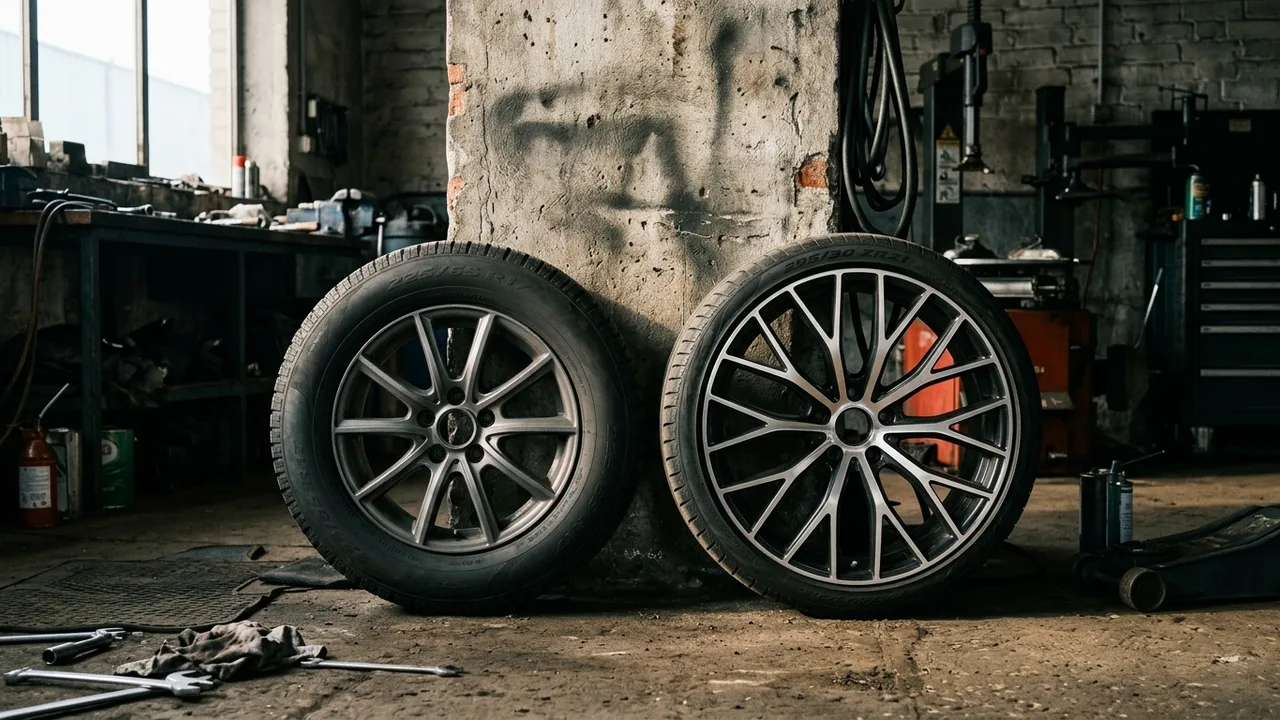
1. ⭐ Large wheels — the clearest value trap.
This has appeared in every trim guide we have published, and it deserves the emphasis.
They cost substantially more new, ride worse, marginally reduce efficiency, cost more to replace, and add little at resale — and on an EV the range penalty is directly measurable.
Worse, larger wheels can actively deter used buyers who know replacement tyres will be expensive.
2. Premium audio. Most buyers don't value it enough to pay for it used.
3. Panoramic roofs. Cost, weight, headroom — and a used buyer may view a large glass roof as a future leak risk.
4. Cosmetic and appearance packages. Contrast roofs, badge packs, decals. Almost pure depreciation.
5. Unusual colours. As our used column noted, the paint doesn't affect how it drives — but bold colours narrow the buyer pool substantially.
6. Subscription-based features. As our subscription opinion piece argued, check whether they transfer at all. A feature that doesn't follow the car adds nothing to its value.
The exceptions worth knowing
Some options that lose value are still worth buying — because the point of a car isn't only its resale value.
Heated seats and steering wheels in cold climates. Ventilated seats in hot ones. As our India guides noted, these are genuinely used daily, and daily use is worth paying for even if the resale return is modest.
A good reversing camera, which compensates for the poor rearward visibility modern crash structures create.
The right powertrain for your actual driving, even if it costs more.
The principle: buy what you'll use every day, and skip what you'll notice once.
How to spend an options budget
1. Safety first, always. Best value retention, best ownership improvement.
2. Then daily-use comfort — the heated or ventilated seats, the climate control, the camera.
3. Then the efficient powertrain, if the maths works for your mileage.
4. Then stop.
5. Take the smaller wheels with whatever's left.
The bottom line
Most options are depreciation you chose, and the general rule is that they lose most of their value immediately.
The exceptions that genuinely hold value are safety and driver assistance, AWD in the right markets, towing packages, the efficient powertrain and neutral colours.
The clearest waste is large wheels — worse ride, higher replacement cost, marginal efficiency penalty, and they can actively deter used buyers.
But resale isn't the only measure. Buy the things you'll use every day — heated seats where it's cold, ventilated where it's hot, a camera you'll use every time you park — and skip the things you'll notice once and then forget.
Spend on daily life. Skip the cosmetics. Take the smaller wheels.
Key takeaways
- Most options lose most of their value immediately — options are depreciation you chose to buy
- Best value retention: safety and driver assistance, AWD in the right markets, towing packages, efficient powertrains and neutral colours
- Large wheels are the clearest value trap — worse ride, dearer replacement, marginal efficiency penalty, and they can deter used buyers
- Check whether subscription features transfer — one that doesn't follow the car adds nothing to its value
- Resale isn't the only measure: buy what you'll use daily, skip what you'll notice once