🛒 TRIM GUIDE — DATED CONTENT. Check Maruti Suzuki's current configurator before you order — the 2026 Brezza was recently updated, and the variant structure moves.
The context
The Brezza competes in the sub-four-metre SUV segment — India's most contested space, shaped directly by the tax structure our GST coverage explained. The 4,000 mm threshold is why this segment exists at all.
Maruti's advantages here are the ones our comparisons cite constantly: India's largest service network, excellent resale, and low running costs.
Powertrain
Petrol — the default, with Maruti's mild-hybrid technology on several variants improving efficiency modestly.
⭐ CNG — genuinely worth considering. As our CNG comparison established, the payback maths favours CNG strongly above roughly 60 km/day, and Maruti's CNG products are well-developed.
The honest caveats, from that same comparison: single-cylinder CNG installations occupy most of the boot (unlike Tata's twin-cylinder iCNG design), spark plugs need replacing every 15,000–20,000 km, and cylinder hydro-testing is mandatory every three years. Factor all three.
Also factor the queueing. As our CNG piece noted, waiting at CNG stations is the most under-discussed ownership cost — genuinely time-consuming in busy metros.
What matters most
1. ⭐ Safety, and check the specific variant.
This is the priority, and it's where this segment has historically been weakest.
As our micro-SUV comparison argued, the Tata Punch's 5-star Global NCAP rating at an accessible price proved crash protection needn't be a premium feature — and it took India's best-selling car title partly on that basis.
That competitive pressure is welcome and overdue. Check the Bharat NCAP or Global NCAP rating and airbag count for your exact variant, and don't accept a lower-safety variant to save money.
Ask for the safety rating before the mileage figure.
2. Air conditioning and rear vents, given Indian conditions.
3. Ground clearance, given Indian road surfaces.
Worth paying for
- Full safety equipment — airbag count, ESC, and any available driver assistance
- A reversing camera with sensors
- Automatic climate control
- Rear AC vents
Not worth the jump
1. The sunroof. Cost, weight, headroom, and limited practical use in Indian heat. Demand is genuinely real, so buy it if you want it — just recognise it as a want.
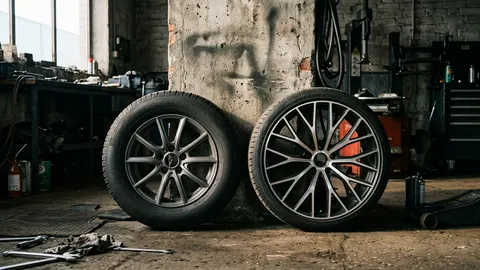
2. Larger alloys — worse on Indian surfaces and dearer to replace.
3. The largest screen if the software is the same. Test responsiveness.
4. Cosmetic packages and dual-tone paint.
The recommendation
Mid-to-upper-mid trim — the pattern that has held across every trim guide we have published.
Choose CNG if you cover 60+ km daily and can tolerate the boot compromise and the queueing.
Before you sign
1. Verify the safety rating and airbag count for your exact variant.
2. Get the on-road price, not ex-showroom.
3. For CNG, check the boot arrangement in person and factor the maintenance requirements.
4. Check the waiting period.
5. Cross-shop the Punch, Nexon, Fronx and Exter. As our micro-SUV comparison found, the Punch leads on safety and value, the Fronx on efficiency and service reach, and the Exter on features.
The bottom line
The Brezza's strengths are Maruti's strengths — service reach, resale and running costs — and those are genuinely valuable in a market where a car is a decade-long household investment.
Buy on safety first. Check the rating for your exact variant, and don't trade protection for equipment. The Punch proved this segment can do 5 stars at an accessible price, and buyers should demand it.
Take mid-to-upper-mid trim, consider CNG if your mileage supports it, and skip the sunroof and the big wheels.
Key takeaways
- ⚠️ Dated content — verify against Maruti's current configurator; the 2026 Brezza was recently updated
- CNG is genuinely worth considering above ~60 km/day — but factor boot compromise, spark plugs every 15,000–20,000 km, 3-yearly hydro-testing and station queueing
- Buy on safety and check your exact variant — the Punch proved 5-star protection is achievable at accessible prices, and buyers should demand it
- Rear AC vents are genuinely worth it in Indian conditions; the sunroof mostly isn't
- Maruti's real advantages are service reach, resale and running costs — genuinely valuable for a decade-long household investment
Sources & further reading
- Maruti Suzuki configurator
Figures, prices and policy details were current at the last-updated date above. Automotive pricing, incentives and regulations change frequently — verify time-sensitive details against the primary sources listed below. Read our editorial policy and fact-checking standards.