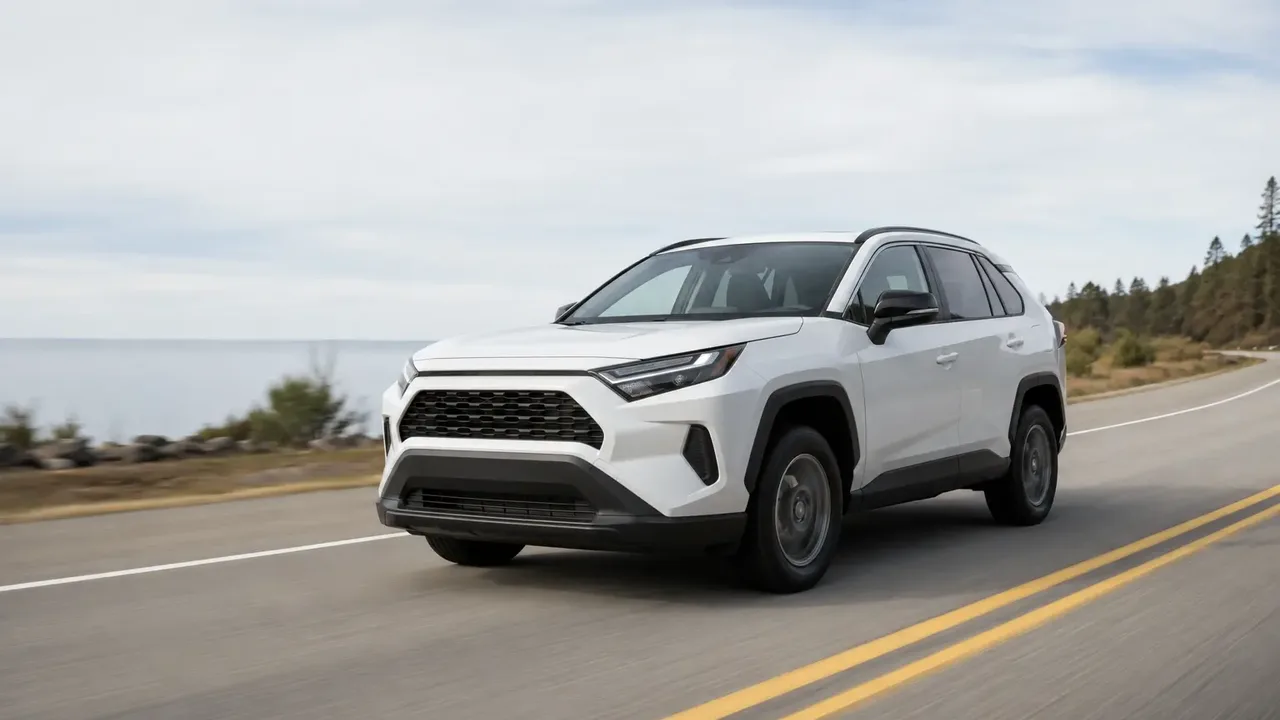
🛒 TRIM GUIDE — DATED CONTENT
⚠️ Trims, equipment and pricing change annually and mid-cycle. Check Toyota's current configurator before you order.
Start with the powertrain
This decision matters more than trim, and for the RAV4 it's unusually clear.
As our compact SUV comparison found, the RAV4 won on class-leading hybrid efficiency, the strongest resale value and the best reliability reputation — and the hybrid is central to all three.
The hybrid is the default recommendation, and the reasoning is straightforward:
- Toyota's hybrid system remains the segment benchmark — smoother, more efficient and more proven than any rival's
- As our hybrid economy testing established, full hybrids generally deliver close to their official figures, particularly in urban driving
- The efficiency advantage compounds over the years buyers typically keep a RAV4
- It supports resale, which as our comparisons repeatedly note is real money over an ownership cycle
The plug-in hybrid is a genuinely different proposition, and our warning is emphatic: as our hybrid economy piece concluded, an uncharged PHEV is worse than the equivalent petrol car — carrying hundreds of kilograms of dead weight for no benefit.
Buy a PHEV only if you will genuinely charge it nightly. If you won't, buy the regular hybrid and be happier.
The trim principle
Across this entire project, the same pattern holds: the mid-to-upper-mid trim carries the meaningful equipment, and the top trim adds cosmetics and rarely-used features at a substantial premium.
We've reached that conclusion for the Ram Tradesman, the Renault 5 Techno+, the Maruti e Vitara Zeta and the Toyota bZ XLE Plus — and it applies here.
What genuinely matters:
1. Safety and driver assistance. Toyota's assistance suite is typically standard across the range, which is genuinely commendable — verify what's included at each level for the current model year.
2. All-wheel drive, if your climate warrants it. If it doesn't, front-drive is lighter, more efficient and cheaper — and as our testing repeatedly finds, mass punishes everything.
3. Practical equipment — power tailgate, heated seats, a reversing camera with good resolution, and adequate charging ports.
What frequently isn't worth the jump:
1. Larger wheels. They look better and they ride worse, cost more to replace, and marginally reduce efficiency. This is one of the clearest value traps in modern trim ladders.
2. Panoramic roofs, which add cost and weight and reduce headroom.
3. Premium audio, unless you genuinely care — many buyers don't and pay anyway.
4. Cosmetic appearance packages.
5. The largest screen, if the software is the same. Test responsiveness, not diagonal.
The rugged trims
A specific caution. Rugged-styled trims typically add cosmetic elements, sometimes with all-terrain tyres and a slight lift.
If you genuinely go off-road, they're worth it. If you don't — and as our Ranger Raptor coverage noted honestly, most owners of rugged-styled vehicles never leave tarmac — you're paying for road noise, worse economy and a firmer ride.
Be honest with yourself about this, because it's a substantial premium for a capability many buyers never use.
Our recommended approach
The hybrid, in mid-to-upper-mid trim, with all-wheel drive only if your climate genuinely requires it.
Before you sign
1. Verify what's standard at each trim for the current model year — Toyota moves equipment between levels regularly.
2. Check dealer availability and waiting periods, which vary substantially by trim and powertrain.
3. Compare total cost of ownership, not purchase price. As our depreciation and cost-per-mile work established, depreciation is usually the largest cost — and the RAV4's strong resale is a genuine financial advantage.
4. Cross-shop the CR-V and CX-5. As our comparison found, the gap between first and third in this segment is narrower than almost any we test — the CR-V has more space and the CX-5 is clearly better to drive.
5. Test-drive the wheel size you're buying, not a different one. Ride quality differs noticeably.
The bottom line
Buy the hybrid. It's the reason the RAV4 wins our comparison — class-leading efficiency, supporting the strong resale that makes it cheap to own.
Avoid the plug-in unless you'll genuinely charge it nightly, because an uncharged PHEV is worse than a petrol car.
Take the mid-to-upper-mid trim, which carries the safety and practical equipment without the cosmetic premium — the pattern that has held across every trim recommendation we have published.
Skip the larger wheels, add all-wheel drive only if your climate justifies it, and be honest about whether you'll use the rugged trim's capability.
And verify everything against the current configurator, because this is the fastest-ageing content we publish.
Key takeaways
- ⚠️ Dated content — verify trims, equipment and pricing against Toyota's current configurator before relying on this
- Buy the hybrid: class-leading efficiency, and it supports the strong resale that makes the RAV4 cheap to own
- Avoid the plug-in unless you'll charge it nightly — an uncharged PHEV is worse than the equivalent petrol car
- Mid-to-upper-mid trim is the smart money, consistent with every trim recommendation across our coverage
- Skip the larger wheels — they ride worse, cost more to replace and slightly reduce efficiency, which is a clear value trap
Sources & further reading
- Toyota configurator
Figures, prices and policy details were current at the last-updated date above. Automotive pricing, incentives and regulations change frequently — verify time-sensitive details against the primary sources listed below. Read our editorial policy and fact-checking standards.