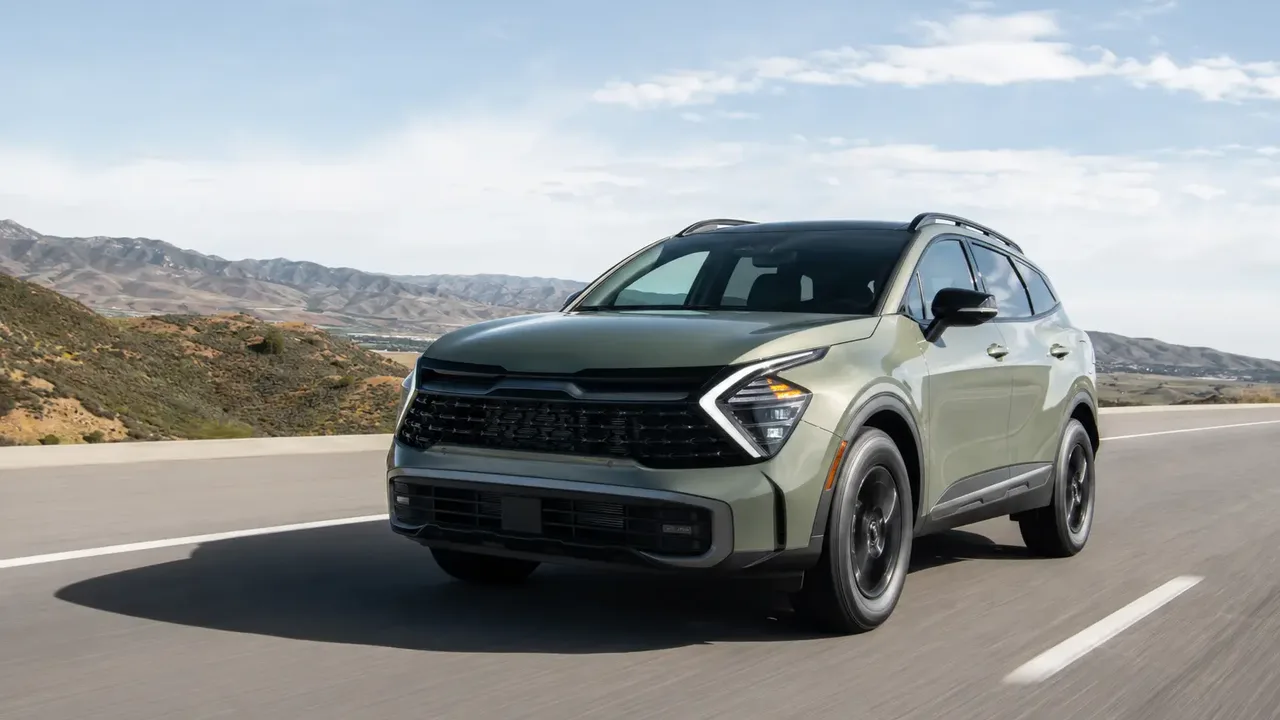
🛒 TRIM GUIDE — DATED CONTENT. Check Kia UK's current configurator before you order — trims, equipment and pricing change frequently.
Powertrain first
As our Britain's best-sellers comparison found, the Sportage scored 8.5/10 and finished second — praised for being excellent everywhere with no real weaknesses, with the best powertrain range in the test and a class-leading 7-year warranty.
That breadth is the shopping problem. Decide the powertrain before the trim.
Petrol / mild hybrid. Lowest purchase price, simplest ownership. Sensible for lower-mileage private buyers who don't want complexity.
⭐ Full hybrid (HEV) — the default recommendation for most buyers. As our hybrid economy testing established, full hybrids generally deliver close to their official figures, particularly in urban and mixed driving. No infrastructure required, no charging behaviour needed, reliable real savings.
Plug-in hybrid (PHEV). Genuinely excellent if you will charge it nightly and your daily distance sits within the electric range.
⚠️ The warning is emphatic, and consistent across our coverage: as our hybrid economy piece concluded, an uncharged PHEV is worse than the equivalent petrol car — carrying substantial battery weight for no benefit.
For company-car drivers, PHEV benefit-in-kind treatment can be materially advantageous — but that's a tax calculation to verify with current rates, not a driving recommendation. If you take a PHEV for the tax and never charge it, you've bought the worst version of the car.
The trim principle
The pattern holds here as everywhere in our coverage: mid-to-upper-mid trim is the smart money.
What genuinely matters:
1. Safety and driver assistance. Verify what's standard at each level for the current model year. Automatic emergency braking, lane keeping and blind-spot monitoring are the ones that matter — as our Learner's Permit column noted from experience, AEB intervenes faster than a human can.
2. Heated seats and heated steering wheel. In Britain, genuinely useful — and as our winter EV testing found, heated seats use a fraction of what cabin heating does, which matters on a hybrid too.
3. A good reversing camera and sensors. Modern crash structures mean thick pillars and poor rearward visibility, as our design convergence piece explained. The camera compensates for a genuine deficiency.
4. Adaptive cruise control if you do motorway miles.
What frequently isn't worth the jump:
1. ⭐ The largest wheels. As with the RAV4, this is one of the clearest value traps in modern trim ladders: they ride worse, cost substantially more to replace, and slightly reduce efficiency. As our braking testing found, tyres dominate stopping distance — and larger, lower-profile tyres are dearer to replace with good ones.
2. Panoramic roofs — cost, weight and headroom.
3. Premium audio, unless you genuinely care.
4. The largest screen if the software is identical. Test responsiveness, not diagonal.
5. Cosmetic packages and contrast roofs.
The warranty, and how not to lose it
Kia's 7-year warranty is the Sportage's most quantifiable advantage, and it supports residuals as well as protecting you.
Two things to know:
1. It typically transfers to subsequent owners for the remaining term, which is part of why residuals benefit.
2. Servicing conditions apply. Verify the current requirements — warranty cover generally depends on the servicing schedule being met, and as our used-buying coverage argues, a complete service history is valuable anyway.
The checks before you sign
1. Verify current standard equipment by trim — manufacturers move features between levels annually.
2. Confirm the warranty terms and servicing requirements in writing.
3. Test-drive the wheel size you're actually buying. Ride quality differs noticeably between 17- and 19-inch fitments.
4. If considering the PHEV, be honest about charging. Can you charge at home? Will you do it nightly?
5. Compare total cost of ownership, not monthly payment. As our depreciation work established, depreciation is usually the largest cost — and the 7-year warranty helps here.
6. Cross-shop the Ford Puma and Nissan Qashqai, as our comparison did — though note the Puma is a segment smaller, which decides it if you need family-SUV space.
The bottom line
Take the full hybrid unless you'll genuinely charge a PHEV nightly or your mileage is low enough that petrol makes sense.
Take mid-to-upper-mid trim, which carries the safety and comfort equipment that matters without the cosmetic premium.
Skip the largest wheels — the clearest value trap on the list.
And treat the 7-year warranty as a real financial asset, not a marketing line. Verify the servicing conditions, keep the history complete, and note that it supports your resale as well as your peace of mind.
Key takeaways
- ⚠️ Dated content — verify against Kia UK's current configurator before relying on this
- The full hybrid is the default recommendation — reliable real savings with no infrastructure or charging behaviour required
- Only take the PHEV if you'll charge it nightly. An uncharged PHEV is worse than the equivalent petrol car
- Skip the largest wheels — they ride worse, cost more to replace and slightly reduce efficiency
- The 7-year warranty is a genuine financial asset — it typically transfers to used buyers and supports residuals. Verify servicing conditions
Sources & further reading
- Kia UK configurator
Figures, prices and policy details were current at the last-updated date above. Automotive pricing, incentives and regulations change frequently — verify time-sensitive details against the primary sources listed below. Read our editorial policy and fact-checking standards.