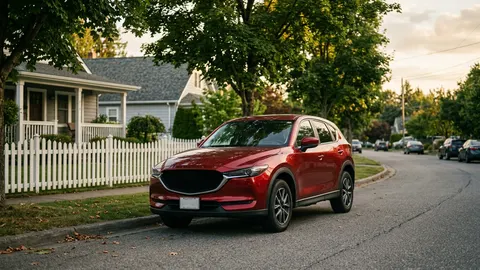
Two systems, one confusion
Dealers use the terms loosely, and buyers pay for capability they never use. The distinction is real and mechanical, and it matters most on the worst day of your driving year.
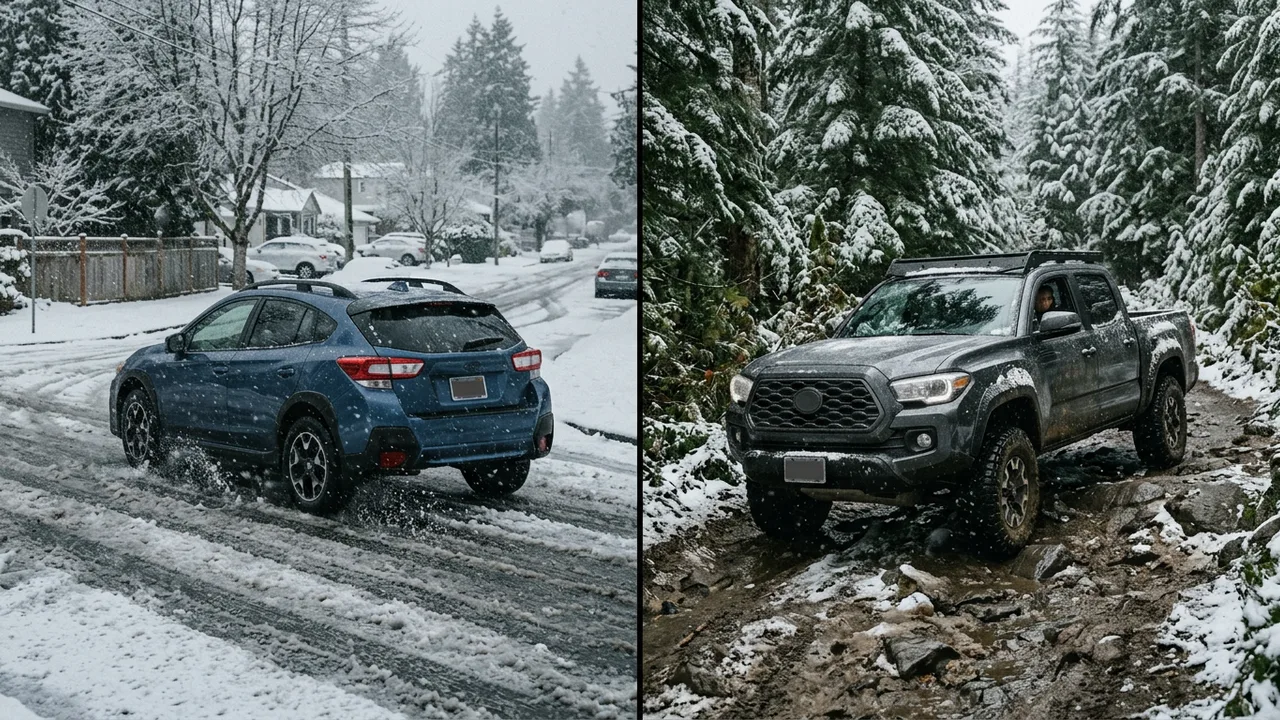
All-wheel drive (AWD) powers all four wheels through a center coupling that varies torque front-to-rear automatically. It is always ready, requires nothing from the driver, and is designed for slippery conditions: rain, snow, gravel, ice. Most crossovers, wagons and sedans offering four driven wheels use AWD.
Four-wheel drive (4WD/4x4) in its traditional form uses a transfer case the driver engages, locking front and rear axles to turn at the same speed, often with a low-range gear set for crawling. It is designed for low-traction, low-speed, rough terrain: off-road trails, deep snow, boat ramps, heavy towing on loose ground. Body-on-frame trucks and serious SUVs use it.
The engineering consequence buyers should remember: a locked 4WD system must not be used on dry pavement — the axles fight in corners (driveline binding), wearing the system. AWD has no such restriction; that is the point of it.
What each is genuinely good at
AWD earns its money in: rain-belt and snow-belt commuting, unplowed suburban streets, gravel driveways, quick-moving highway slush. Modern systems pre-emptively shuffle torque and work with stability control; the driver just drives.
4WD earns its money in: true off-road driving, mud and sand, deep unplowed snow, towing on wet grass or ramps, mountain fire roads. Low range is the unique gift — engine braking and controlled crawling that no crossover AWD replicates.
Neither fixes braking or cornering. This is the sentence that should be printed on every window sticker: extra driven wheels help you accelerate on slippery surfaces; they do nothing for stopping or turning, which are tire jobs. An AWD SUV on worn all-seasons stops worse in snow than a front-drive sedan on winter tires. Every winter, ditch recoveries are full of overconfident AWD drivers who learned this the expensive way.
The costs, honestly
Four driven wheels cost money three ways:
- Purchase: typically $1,500–$3,000 on crossovers; 4WD truck packages can run more.
- Fuel: added weight and driveline drag cost roughly 1–2 mpg on most modern systems — less than it used to, not zero.
- Maintenance and tires: extra differentials and couplings mean more fluids and more possible failures, and many AWD systems require replacing tires in matched sets when one dies — a surprise $800 lesson taught by a single nail.
So which do you need?
- Mostly paved roads, real winters: AWD is a genuine convenience — paired with winter tires if snow is serious. This is the classic Midwest/Northeast/mountain-state answer.
- Mild-winter, paved-road life: front-wheel drive plus good tires is the honest answer, and the money saved buys a lot of tires. Most Sun Belt AWD purchases are marketing victories.
- Off-road, deep snow, ranch/trailhead/towing life: proper 4WD with low range. No AWD crossover substitutes for a transfer case when you genuinely need one.
- Performance buyers: AWD launches faster and manages power better in fast cars; that's a different purchase logic and a fair one.
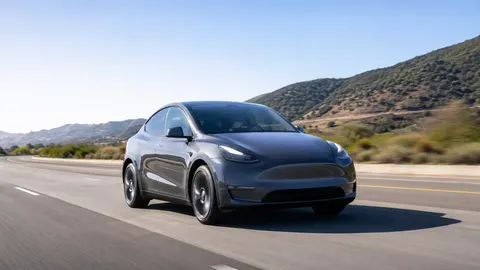
The modern wrinkle — electric AWD: dual-motor EVs deliver all-wheel drive with no mechanical link at all, meting torque per axle in milliseconds. Superb in slippery conditions; still no low-range substitute for rock crawling (though a few electric trucks now simulate it convincingly).
The questions buyers actually ask
What about "full-time 4WD" and all the mode dials? Some SUVs blur the line: full-time 4WD systems add a center differential so all four wheels drive on any surface, with a lockable mode and low range for the rough stuff — the best of both, at the price of both. If your vehicle has a 4A (auto) setting, you own one of these hybrids of the concept.
Does AWD help with towing? On loose or wet surfaces — launching a boat, a grassy field — meaningfully yes. On dry pavement, tow ratings and cooling matter far more than driven-wheel count. Check the tow package, not the badge.
Should I disable anything in snow? Leave stability control on; it's calibrated to work with your drivetrain. The one exception is being genuinely stuck — many vehicles allow reduced traction-control modes precisely to permit the wheelspin that rocking out of deep snow requires. Read that page of the manual before the storm, not during it.
Key takeaways
- AWD is automatic and for slippery roads; 4WD is driver-engaged, locks axles, adds low range, and is for genuine off-road use
- Locked part-time 4WD shouldn't run on dry pavement; AWD can, always
- Neither system improves braking or cornering — tires do; winter tires beat drivetrain badges
- Budget the real premium: purchase price, ~1–2 mpg, matched-set tire replacement and extra driveline service
- Fair-weather commuters usually don't need either; snow-belt drivers want AWD; trail and heavy-tow users need true 4WD
Sources & further reading
- Manufacturer drivetrain engineering documentation
- tire-industry winter-braking test data
- EPA fuel-economy pairings for 2WD/AWD model variants, 2026
- True Motion Auto winter test program
Figures, prices and policy details were current at the last-updated date above. Automotive pricing, incentives and regulations change frequently — verify time-sensitive details with the linked primary sources. Read our editorial policy and fact-checking standards.