The junction that pays for itself
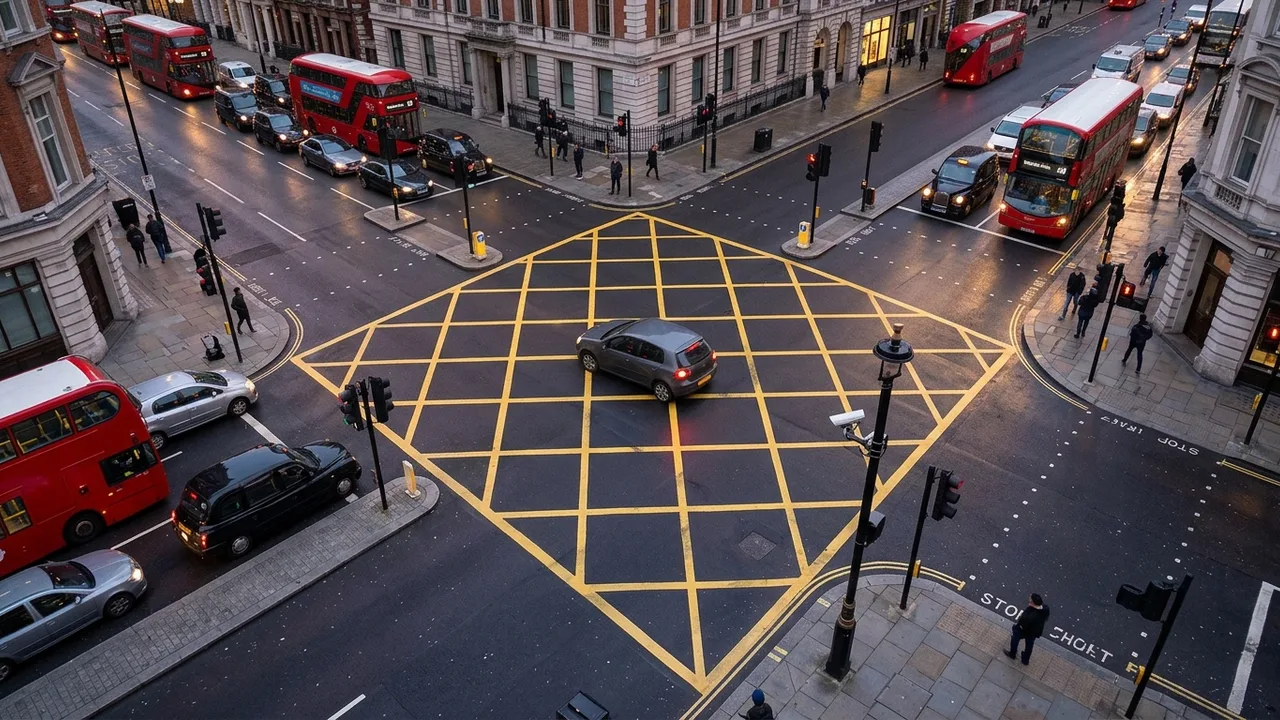
The yellow criss-cross box is Britain's most profitable road marking. London boroughs and TfL have issued hundreds of thousands of box-junction PCNs a year, and since 2022 councils outside London gained the same moving-traffic enforcement powers — box junctions, banned turns, bus gates — with camera rollouts spreading ever since. Bus-lane enforcement runs on the same machinery. Understanding the exact rules matters twice over: to avoid the fines, and to beat the meaningful fraction issued in error.
The box junction rule, precisely
You must not enter a box junction unless your exit road is clear. Stopping in the box because traffic ahead stopped is the offence — with one exception: you may enter and wait in the box when turning right, held only by oncoming traffic or other vehicles also waiting to turn right.
The precision points that decide cases:
- The offence is stopping due to stationary traffic ahead. Entering with a clear exit that then blocks (a car brakes unexpectedly, a pedestrian steps out) is defensible — adjudicators distinguish "entered when exit wasn't clear" from "exit became blocked."
- Partially in counts. A wheel over the line, stationary, is enough for a PCN; cameras capture dwell time.
- The right-turn exception doesn't cover being blocked by stationary traffic in your exit road — only waiting for oncoming flow or fellow right-turners.
- Boxes marked at roundabout entries and fire-station exits follow the same core rule.
The tactic that prevents it all: treat the far side of the box as a stop line — commit only when you can see car-lengths of clear tarmac beyond it. The driver behind honking is cheaper than the PCN.
Bus lanes: the parallel money machine
Bus-lane cameras enforce the signed hours — many operate only peak times, others 24/7, and the blue sign at the lane's start is the contract. Outside the hours, the lane is yours. Common PCN triggers: drifting in early before the lane's end-marking, using it to pass left-turn queues, and satnav-led entries into bus gates (camera-enforced bus-only sections — the single largest generator of repeat PCNs in many towns; some individual gates have issued tens of thousands).
Who may use bus lanes is on the sign: buses always; taxis (hackney carriages, not usually private hire), motorcycles and cyclists frequently — but only where displayed.
The PCN process and the appeals that work
Councils issue Penalty Charge Notices — civil, not criminal: no points, no insurance entry, typically £70 outside London / £130–£160 in London, halved for prompt payment. The sequence: PCN by post (within 28 days of the contravention) → informal representations → Notice to Owner → formal representations → independent adjudication (London Tribunals / Traffic Penalty Tribunal), free to use.
Appeals that genuinely succeed:
- Exit was clear on entry — the council's own video often proves it; always watch the footage before paying.
- Signage/marking defects — worn box paint, missing or obscured bus-lane signs, non-compliant hours plates; adjudicators void PCNs on strict signage standards regularly.
- Forced entry — directed by police, avoiding an emergency vehicle, or boxed by another's illegal manoeuvre.
- Procedural failures — late notices, wrong vehicle details.
- The discount clock usually resets if you lose informal representations — challenging is largely free of downside when grounds are real. Pay-then-appeal, by contrast, generally closes the case.
The questions drivers actually ask
Do box-junction fines carry points? No — civil PCNs only, no licence or insurance effect. (Police can separately prosecute obstruction in egregious cases, but that's rare.)
I followed the car ahead and traffic stopped — really my fault? Under the rule, yes: their brake lights are precisely what "exit not clear" looks like. The follow-the-flow habit is the offence's whole business model.
A bus lane was empty at 6pm — how was I fined? Its plate said until 7pm. Photograph the sign when you contest hours; and if the sign was missing or wrong, that's a winning ground, not a grievance.
Key takeaways
- Never enter a yellow box unless the exit is clear — except waiting to turn right against oncoming traffic
- Councils nationwide now run camera enforcement for boxes, bus lanes and banned turns; PCNs are civil, no points
- Bus-lane legality is entirely on the sign: hours, and which vehicles are admitted
- Watch the council's video and check signage standards — a meaningful share of PCNs fall at adjudication
- Treat the box's far side as a stop line and bus-gate signs as walls; both habits cost nothing
Sources & further reading
- TSRGD box-junction and bus-lane provisions
- Traffic Management Act 2004 Part 6 powers extension (2022)
- London Tribunals and Traffic Penalty Tribunal adjudication statistics
- council PCN issuance data, 2026
Figures, prices and policy details were current at the last-updated date above. Automotive pricing, incentives and regulations change frequently — verify time-sensitive details against the primary sources listed below. Read our editorial policy and fact-checking standards.