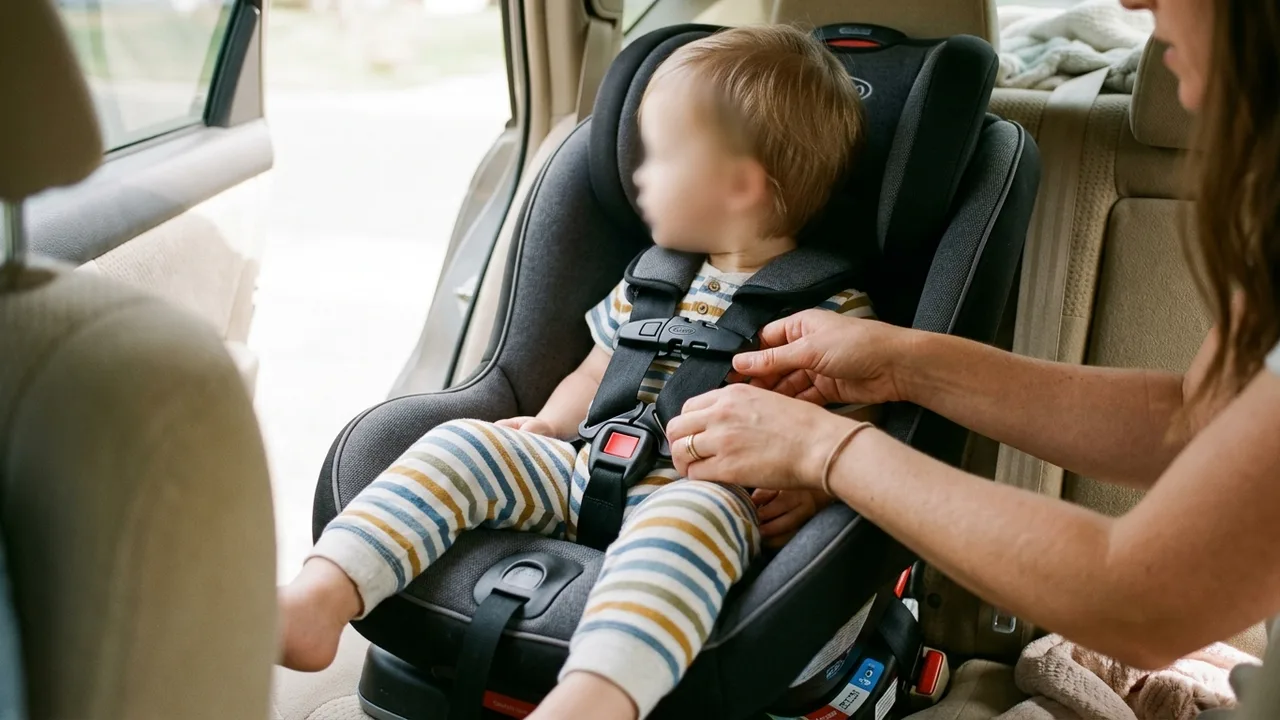
Fifty laws, one ladder
Child restraint law in America is a patchwork — every state legislates its own ages, weights and fines — but pediatric safety science underneath is a single, universal ladder. Understand the ladder and you'll exceed every state's law; memorize only your state's minimums and you'll likely be under-protecting your child, because statutes are floors, not recommendations. (The specifics below describe the general landscape — your state's exact thresholds are a two-minute DMV-website check, and the standing caveat applies: this is safety information, not legal advice.)
The four stages, and when to move up
1. Rear-facing — from birth to as long as the seat allows. The strongest recommendation in child passenger safety: rear-facing until the child outgrows the seat's rear-facing height/weight limits — for modern convertibles, commonly around age 2 to 4. A growing list of states legislates rear-facing to age 2 minimum. The physics is unforgiving: rear-facing spreads crash forces across the whole back and cradles the head and neck; turning a child early trades that protection for parental convenience.
2. Forward-facing with harness — until the harness limit. After outgrowing rear-facing: a forward-facing seat with a five-point harness and top tether, used to the seat's harness maximum (frequently 50–65 lbs), not to a birthday. Most states require harnessed seats through roughly age 4 and beyond by weight.
3. Booster — until the adult belt genuinely fits. Boosters position the vehicle's lap-shoulder belt across strong bones instead of soft anatomy. State laws typically require boosters to somewhere between age 8 and 9, or 4'9" (57 inches) — but the real graduation test is the five-step fit check below, which most children don't pass until 10–12.
4. Adult belt — after the fit test, in the back seat. Lap belt on the thighs (not stomach), shoulder belt across the chest (not neck), back against the seat, knees bending at the edge, able to sit properly the whole trip. Fail any step: back in the booster.
The back seat itself is a stage: most states require or recommend children ride rear through at least age 12 — and an active front airbag with a rear-facing seat is prohibited everywhere it can be.
Where states genuinely differ
- Rear-facing-to-2 mandates: an expanding roster of states; others still allow forward-facing at 1 year (the science doesn't).
- Booster graduation: ages 6 through 9 depending on state, with height alternatives in many.
- Fines: first offenses commonly $25–$250, some states with points; enforcement is primary in most states (stoppable for the seat alone).
- Rideshares and taxis: exemptions vary wildly — several states exempt taxis, fewer exempt rideshares; practically, a traveling car seat is the only safe answer regardless of exemption.
- Leaving-children-in-vehicles and smoking-with-minors laws ride alongside restraint statutes in many states — worth knowing your state's set.
The errors that undo a correct seat
Misuse rates in observational studies have run around half of all seats. The repeat offenders: loose installation (more than an inch of movement at the belt path), loose harness (fails the pinch test at the shoulder), chest clip at belly level instead of armpit level, winter coats under the harness (compress in a crash, creating slack), early graduation at every stage, and expired or crash-history seats (seats expire — check the shell, typically 6–10 years). A correct cheap seat outperforms a misused premium one, every time.
Free help exists: certified CPS technicians check installations at fire stations, hospitals and events nationwide — Safe Kids' locator finds them. Twenty minutes with a tech is the highest-value safety appointment parenting offers.
The questions parents actually ask
My child's legs touch the seatback rear-facing — isn't that unsafe? No; leg injuries rear-facing are rare, and children fold legs comfortably. Neck loading forward-facing is the real risk being managed.
Can grandparents' older seat do occasional duty? Only if unexpired, never crashed, complete with labels and manual, and installed correctly — the checklist matters more than the mileage.
Which seat brand is safest? Every seat sold must pass FMVSS 213; the safest seat is the one that fits your child, your vehicle and gets used correctly on every trip.
Key takeaways
- Follow the ladder — rear-facing to seat limits, harness to seat limits, booster until the belt truly fits — and you'll exceed every state law
- State minimums vary (rear-facing-to-2, booster ages 6–9); treat them as floors
- The five-step belt-fit test, not a birthday, decides booster graduation; back seat through at least 12
- Half of seats are misused: pinch-test the harness, armpit-level chest clip, no coats under straps, replace expired or crashed seats
- Free certified fitting checks exist nationwide — use one
Sources & further reading
- AAP child passenger safety recommendations
- NHTSA restraint guidelines and FMVSS 213
- state child-restraint statute compilations
- Safe Kids Worldwide misuse studies, 2026
Figures, prices and policy details were current at the last-updated date above. Automotive pricing, incentives and regulations change frequently — verify time-sensitive details with the linked primary sources. Read our editorial policy and fact-checking standards.