The insurance that works backwards
Mainstream insurance assumes your car depreciates; classic insurance assumes it might not. That single inversion produces the specialist market's defining feature: agreed value — you and the insurer fix, in writing and usually with photos or a club valuation, exactly what the car is worth before anything happens. No post-accident haggling from trade guides that don't understand why your unrestored survivor is worth double a restored one.
The premiums surprise newcomers: classics are often cheaper to insure than modern cars, because the actuarial profile is golden — low annual mileage, obsessive owners, garaged storage, gentle driving. Policies formalise those assumptions as conditions.
The features that matter
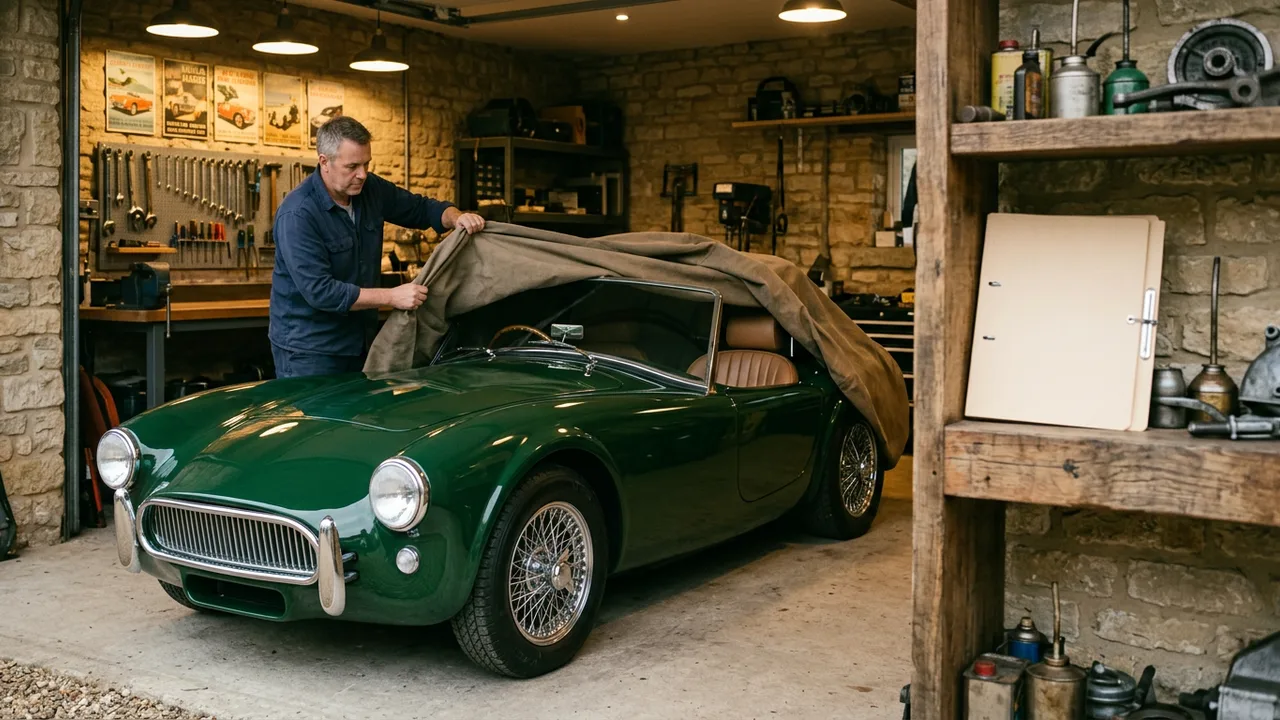
Limited-mileage tiers (commonly 1,500–5,000 miles a year) price the biggest discount — declare honestly, because exceeding it invites proportionate settlement arguments. Laid-up cover insures a car during restoration or winter storage against fire and theft while it's off the road on SORN. Club membership discounts are real and stack with the social benefits. Specialist policies often include salvage retention (you keep the shell after a write-off — vital for rare metal), spare-parts cover, and agreed repairer freedom so a marque specialist, not a chain bodyshop, touches the car.
Eligibility usually keys on vehicle age (definitions vary — some insurers start at 15–20 years, "classic" tax/MOT exemptions in the UK arrive at 40), a second everyday car on the household, and storage arrangements.
The traps
Modified classics need every change declared — period-correct upgrades are usually embraced, undeclared engine swaps void claims. Commuting exclusions are common: use the classic for the daily grind and you may be driving uninsured in the policy's eyes. Valuations need refreshing as markets move; an agreed value from 2020 may badly under-insure today's car. And laid-up cars still need securing — theft-from-garage terms have conditions worth reading twice.
The questions owners actually ask
Is my 1990s car a "classic" to insurers? Increasingly yes — modern-classic schemes cover 80s/90s/00s cars the mainstream market prices badly. Ask specialists, not comparison sites.
Agreed value vs market value — how big a deal? It's the whole point. In a total loss, agreed value pays the number on the schedule. Market-value policies pay an opinion.
Can young drivers get classic policies? Harder but possible, often via club schemes; the cars' profiles offset the age maths more than you'd expect.
Key takeaways
- Agreed value fixes the payout before the loss — get it in writing, refresh it
- Limited-mileage and garaging honesty drive the famously low premiums
- Laid-up cover protects restorations and winter storage on SORN
- Declare every modification; commuting exclusions are common
- Club membership earns discounts and stronger valuations
Sources & further reading
- UK specialist-insurer policy documentation
- classic-club insurance-scheme guidance
- DVLA historic-vehicle rules
Figures, prices and policy details were current at the last-updated date above. Automotive pricing, incentives and regulations change frequently — verify time-sensitive details with the linked primary sources. Read our editorial policy and fact-checking standards.