The pitch you've definitely heard
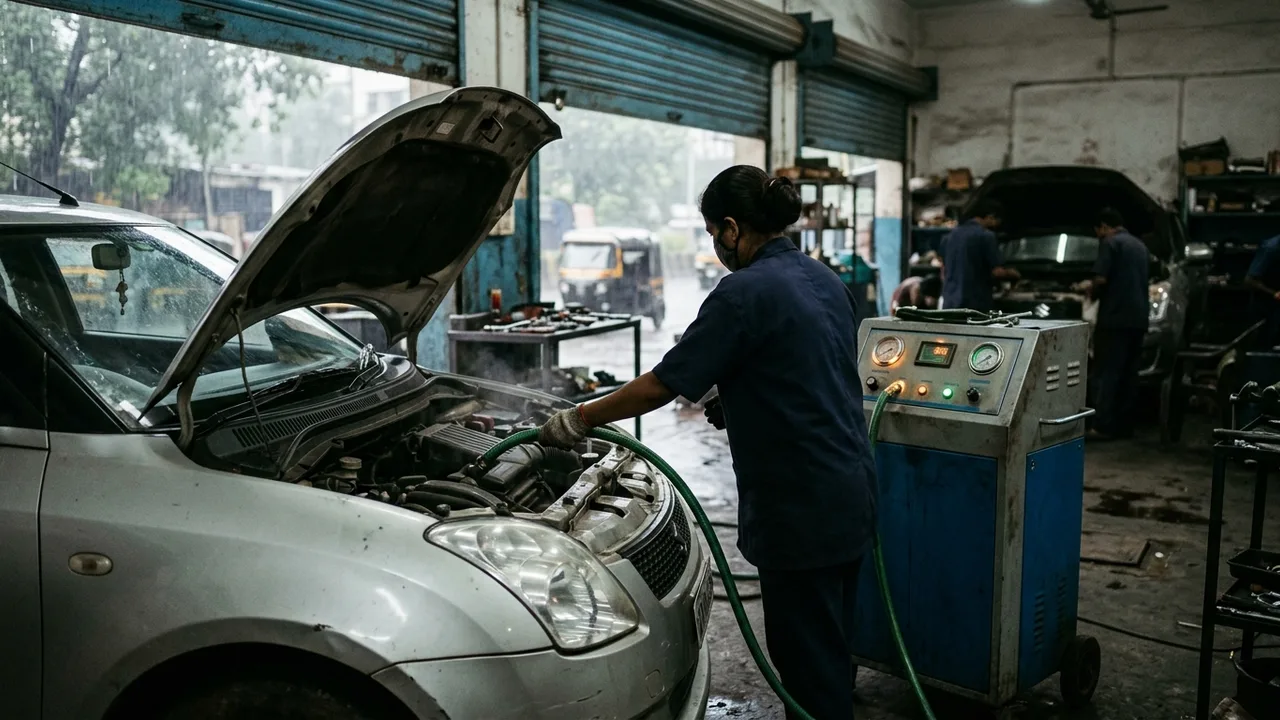
Somewhere between the bill and the keys, it arrives: "Engine mein carbon jam gaya hai — decarbonisation karwa lo, mileage improve ho jayega." The service costs ₹1,500–₹6,000 depending on the method and the city, promises restored mileage, smoother idling and more power, and has become one of Indian workshops' most reliable revenue lines. Sometimes it's legitimate maintenance. More often it's sold to engines that don't need it. Knowing the difference is worth thousands of rupees a year.
What carbon build-up actually is
Combustion leaves residue. Over tens of thousands of kilometres, deposits can accumulate on valves, injector tips, piston crowns and in EGR passages. Whether that matters depends almost entirely on engine type and usage:
- Port-injected petrols (most Marutis, Hyundais, Tatas' NA engines): fuel sprays onto the intake valves' backs, continuously washing them. Meaningful build-up is slow; a healthy PFI engine driven normally can run a lakh-plus kilometres without ritual cleaning.
- Direct-injection engines (TSI, GDI, turbo-petrols): fuel enters the cylinder directly, so nothing washes the intake valves — these engines do accumulate valve deposits over time. This is the population where cleaning has genuine engineering basis.
- Diesels in city duty: EGR valves and intake tracts soot up with short-trip running; DPF-era diesels add their own regeneration story. Symptom-led cleaning here is legitimate.
- CNG-converted cars: dry running raises valve-deposit concerns of a different flavour — follow the kit maker's schedule, not the counter pitch.
What the machines actually do
Chemical/foam intake cleaning: solvent introduced through the intake dissolves soft deposits. Cheap, moderately effective on light fouling.
Hydrogen/"HHO" decarbonisation: the fashionable one — oxy-hydrogen gas fed into the intake purportedly burns deposits off. Marketing outruns evidence: independent testing shows modest, inconsistent gains, mostly on engines that were genuinely dirty. On a clean engine it does approximately nothing, expensively.
Walnut blasting: the real fix for baked-on DI valve deposits — media-blasting with the manifold off. Labour-intensive, ₹8,000+, and the only method that fully restores heavily coked valves.
Italian tune-up: a sustained spirited highway run burns off light deposits free of charge. Genuinely underrated, especially for city-bound diesels.
When it's worth paying for
Say yes when symptoms exist: measurable mileage drop with no other cause, rough idle, hesitation, a failed PUC on hydrocarbons, EGR fault codes, or a DI engine past 60,000–80,000 km showing the classic signs. Say yes to the method matching the problem — EGR/intake cleaning for a sooted diesel, walnut blasting for coked DI valves.
Say no when: the car idles smooth, pulls clean, passes PUC and returns normal mileage — "preventive" decarbonisation of a healthy port-injected petrol is the automotive equivalent of paying to shampoo a bald head. Say no, twice, when it's pitched at every service regardless of symptoms.
The prevention that costs nothing extra
Right oil spec on schedule (oil vapour is a major deposit source), quality fuel from busy pumps, air filter on time, occasional sustained highway runs, and — for DI turbo owners — synthetic oil discipline above all. An engine treated this way needs the machine rarely, if ever.
The questions owners actually ask
My mileage dropped 2 km/l — is carbon the culprit? Start cheaper: tyre pressures, a clogged air filter, dragging brakes, old plugs and even a monsoon's worth of AC use all cost that much. Carbon is the diagnosis after the basics pass, not before.
Is decarbonisation needed before a PUC test? A genuinely sooted engine can fail hydrocarbons, and cleaning may help — but a healthy engine failing PUC points at plugs, sensors or the catalytic converter, and no intake foam fixes those. Diagnose the failure code, then choose the remedy.
How often should a DI turbo owner budget for cleaning? With synthetic-oil discipline and regular highway runs, think in 60,000–80,000 km horizons, symptom-led — not the every-service ritual counters suggest. Put the annual "preventive decarb" money into better oil instead; it prevents more carbon than the machine removes. Over a five-year ownership, that single swap typically saves ten to fifteen thousand rupees while leaving the engine genuinely cleaner inside.
Key takeaways
- Port-injected petrols self-clean their valves; routine decarbonisation for them is mostly upsell
- Direct-injection turbos and short-trip diesels are the genuine candidates — symptoms first, service second
- Hydrogen decarb is oversold; walnut blasting is the real remedy for heavy DI valve deposits
- A spirited highway run remains the cheapest decarbonisation ever invented
- Refuse "preventive" pitches on healthy engines; spend the money on oil quality instead
Sources & further reading
- SAE literature on GDI intake-valve deposits
- EGR fouling service bulletins
- independent HHO-cleaning test evaluations
- Indian workshop pricing survey, 2026
Figures, prices and policy details were current at the last-updated date above. Automotive pricing, incentives and regulations change frequently — verify time-sensitive details against the primary sources listed below. Read our editorial policy and fact-checking standards.