🔧 SEASONAL GUIDANCE. General advice; follow your vehicle's manual for specifics.
What winter actually costs
As our winter range testing established, expect a 15–35% reduction, with the position within that band largely determined by one component.
The mechanisms, in order of impact:
⭐ 1. Cabin heating — usually the largest factor.
A resistive heater converts electricity to heat at roughly 1:1 — every kilowatt of warmth costs a kilowatt of range.
A heat pump moves heat rather than generating it, typically delivering 2–3 kW of warmth per kilowatt consumed.
On a cold day, that single component can account for 10–15 percentage points of range.
2. Reduced battery efficiency. Lithium-ion chemistry is genuinely less efficient cold — internal resistance rises and available capacity drops until the pack warms.
3. Battery thermal management. In severe cold, the car spends energy heating its own battery.
4. Increased rolling resistance. Cold tyres, cold lubricants and denser air.
5. Ancillaries — demisting, heated seats, wipers, lights, all at once.
⭐ The two habits that change everything
These matter more than any preparation, and most owners don't know about the second one.
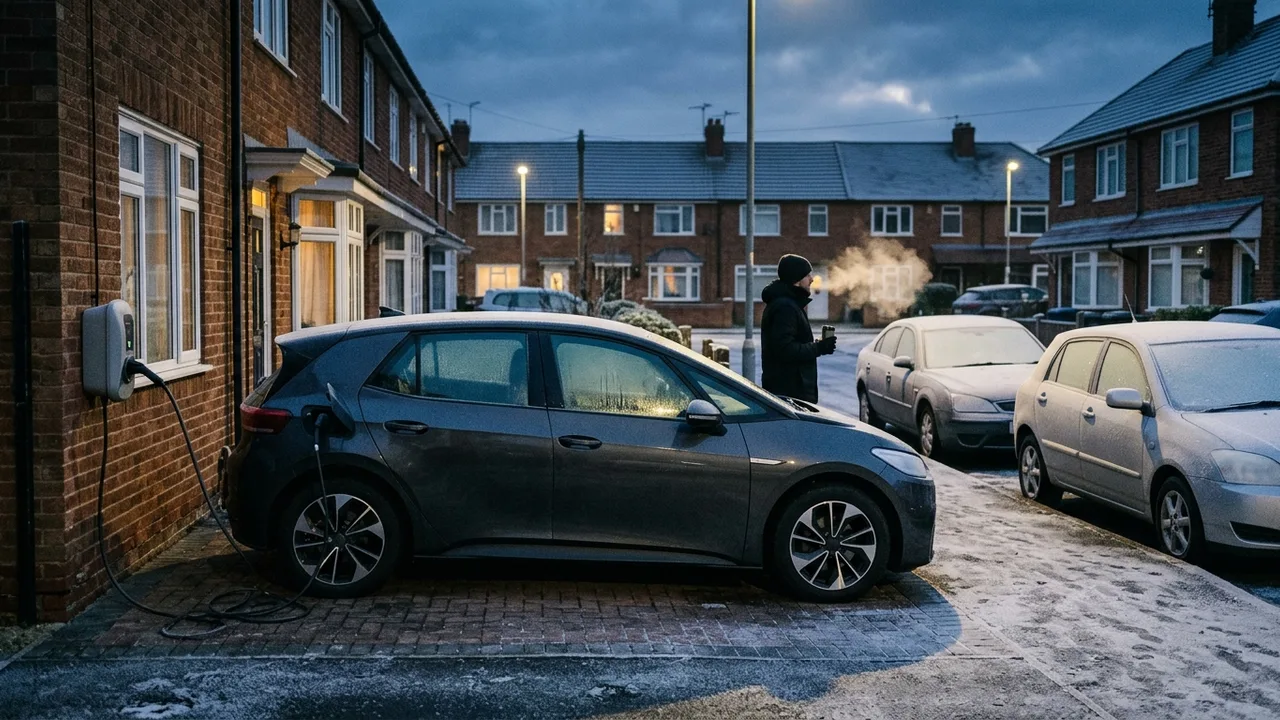
1. Precondition while still plugged in.
The single most effective winter habit, and it costs nothing from the battery.
Warming the cabin and the battery using grid power before you unplug means you set off with a warm car and a pack already in its efficient window. The energy comes from your home supply rather than your range.
Set a departure time in the car's app so it happens automatically — most people who know about it still forget to schedule it.
⭐ 2. Set the charger as a destination in the car's own navigation.
This is the one nobody is told.
Cold batteries charge slowly — the management system limits power to protect the cells. On a winter morning, an unpreconditioned pack might accept a fraction of its rated peak, turning a 25-minute stop into an hour.
Most modern EVs precondition the battery for rapid charging automatically — but only if you navigate to the charger using the car's native navigation. Drive there knowing the way and the car has no idea it needs to warm the pack.
In cold weather this can halve your charging time, and it costs nothing.
The preparation
⭐ 1. Tyres — the most important physical preparation.
As our braking testing established, tyres dominate stopping distance more than any other factor.
In genuine winter conditions, winter or all-season tyres are the difference that matters — far more than drivetrain. An all-wheel-drive EV on summer tyres is worse in snow than a rear-drive one on winter tyres.
Check pressures regularly. Cold air reduces pressure, and under-inflated tyres cost range as well as grip.
2. Understand your heat pump situation.
Check whether your vehicle has one. As our winter testing found, it's the strongest single predictor of where a car lands in the 15–35% loss band — and it's a specification line most buyers skip.
If you don't have one, lean harder on the habits below.
3. Use heated seats and steering wheel instead of cabin air.
Heating a body directly is dramatically more efficient than heating the entire cabin volume. Seats and wheel draw a fraction of what the climate system does.
This is the most effective in-drive economy measure available.
4. Park indoors where possible. A garage keeps the pack warmer overnight, meaning less energy spent warming it.
5. Keep the charge level higher in winter, so cold-weather range reduction doesn't leave you short.
⚠️ But note the interaction with regenerative braking: as our Ghats brake-fade test established, regen capacity is reduced at high state of charge. On a long descent starting at 100%, you'll have less regen and more friction braking. Worth knowing in mountainous areas.
6. Wipers, washer fluid rated for freezing temperatures, and a scraper. Unglamorous and necessary.
Planning around it
⭐ Buy on winter range, not summer range.
Take the official figure, subtract 25–30%, and check that still covers your regular journeys. If it does, you'll be content year-round. If it only works in July, you'll spend every January frustrated.
On road trips, plan more conservatively. Fewer miles between stops, and never arrive below 10% — you need the option to reach an alternative if a charger is broken or occupied, which as our public-charging diary found is the most consistent frustration.
Expect charging to be slower unless you precondition.
The honest framing
Winter range loss is physics, not a defect.
Combustion cars suffer too — they simply hide it, because their inefficiency dumps waste heat that warms the cabin for free, and a five-minute fuel stop makes reduced economy invisible.
And the habits genuinely work. An owner who preconditions while plugged in and uses native navigation before rapid charging will have a materially better winter than one who doesn't, in the same car.
The bottom line
Expect 15–35% less range, with the heat pump the strongest predictor of where you land.
⭐ The two habits matter more than any preparation: precondition while still plugged in — it costs nothing from the battery — and set the charger in the car's own navigation, which can halve cold-weather charging times and which almost nobody is told.
Then: proper winter tyres (which matter more than drivetrain), heated seats over cabin heat, park indoors where you can, and keep the charge higher.
And plan on official range minus 25–30%. Winter EV ownership is entirely manageable — it just rewards owners who know the two habits.
Key takeaways
- Expect 15–35% winter range loss, with the heat pump the strongest predictor — a resistive heater costs ~1:1, a heat pump delivers 2–3 kW per kW
- ⭐ Precondition while still plugged in — the single most effective habit, and it costs nothing from the battery
- ⭐ Set the charger in the car's OWN navigation — most EVs only precondition the battery that way, and it can halve cold-weather charging times
- Winter tyres matter more than drivetrain — an AWD EV on summer tyres is worse in snow than a rear-drive car on winter tyres
- Buy on winter range: take the official figure, subtract 25–30%, and check it still covers your regular journeys