💷 Not financial advice. Interest rates, tax treatment and lender terms change frequently. GST rates on vehicles have been revised — verify current rates and on-road pricing before relying on any calculation. Figures below are illustrative.
How most people actually shop
Most Indian car buyers start with a monthly figure, not a car. "I can afford ₹20,000 a month" comes before "I want a Creta."
That's a reasonable way to shop — but working backwards from an EMI has specific traps, and understanding the arithmetic protects you from all of them.
The four variables
An EMI is determined by four things, and changing any one changes what you can buy:
1. Loan amount — the on-road price minus your down payment.
2. Interest rate.
3. Tenure — how many months.
4. And therefore the EMI.
Fix any three and the fourth follows. Most buyers fix the EMI and let tenure stretch to accommodate — which is the single most expensive mistake in car buying.
⭐ The tenure trap
This is the arithmetic that matters most.
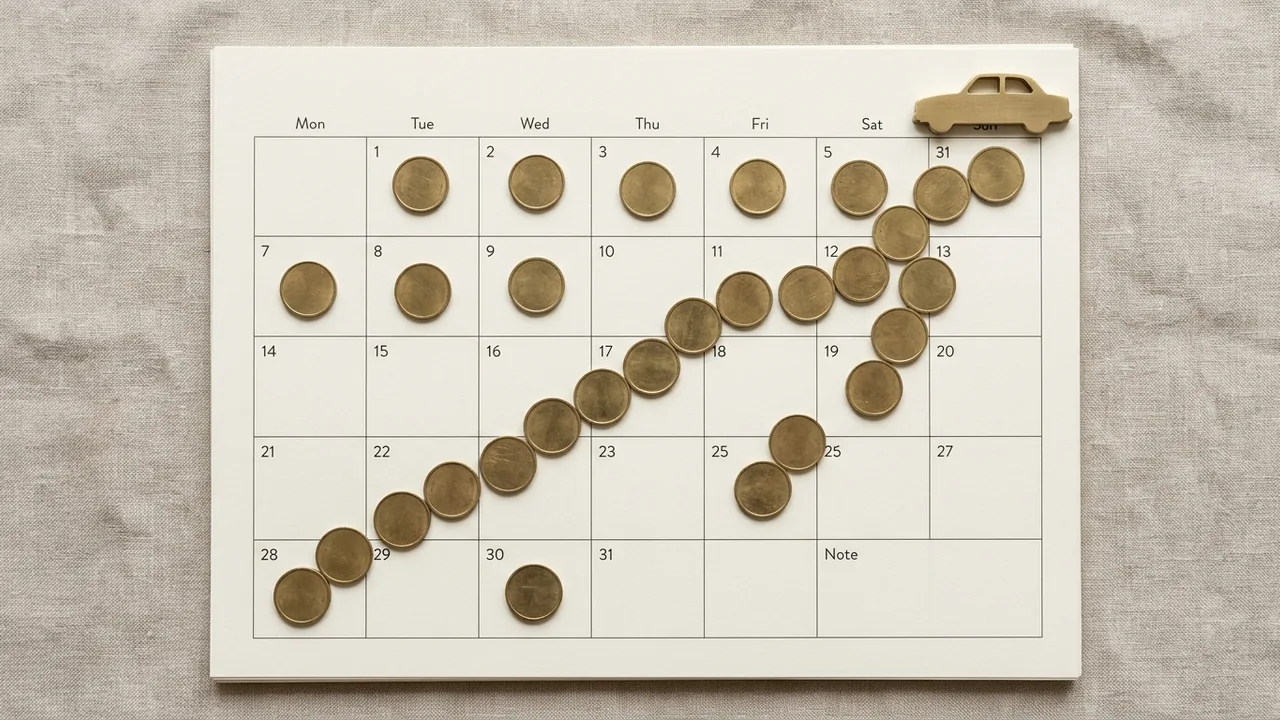
A longer tenure lowers your EMI and increases your total cost — substantially.
Illustratively: the same loan over seven years rather than five produces a comfortably lower monthly payment and considerably more total interest. You're not buying a cheaper car. You're buying a more expensive one, slowly.
Two further consequences:
Negative equity lasts longer. Early in a long loan, you owe more than the car is worth. If you need to sell — or it's written off — you're exposed.
You lose the payment-free years. As our loan-versus-lease piece argued, keeping a car past the payments is the cheapest motoring most people get. A seven-year loan on a ten-year ownership gives you three payment-free years. A five-year loan gives you five.
The principle: take the shortest tenure you can genuinely afford.
What actually changes your budget
1. ⭐ On-road price, not ex-showroom.
Indian buyers know this and it still catches people out. The on-road price includes registration, insurance and applicable taxes, and the gap is substantial.
Budget on-road from the start. A car that fits your EMI at ex-showroom may not at on-road.
2. GST and cess.
⚠️ Vehicle tax treatment in India has been revised, and rates differ by vehicle category — notably, small cars, larger vehicles and EVs are treated differently.
As our India coverage has noted, EVs attract a substantially lower rate than petrol vehicles, which materially changes the arithmetic for an electric purchase.
Verify current rates for your specific vehicle category — this is not a stable number.
3. Down payment. A larger down payment reduces the loan, the EMI and the total interest. If you have the capital and no more expensive debt, use it.
4. The interest rate, and — as our fixed-versus-floating explainer covered — whether it's fixed or floating, and what happens to your tenure if a floating rate rises.
What the EMI doesn't include
This is where budgets break, and it's the part buyers most often overlook:
- Insurance, which recurs annually
- Fuel or charging
- Servicing — as our 30,000 km service piece argued, verify actual costs rather than indicative ones
- Tyres, which are a real periodic cost
- Parking, where applicable
⭐ And the largest of all: depreciation. As our cost-of-ownership work established, depreciation is usually the biggest cost of owning a car — and it appears on no statement.
A ₹20,000 EMI does not mean ₹20,000 a month of motoring. Budget realistically for the rest, or the car becomes a strain.
The smarter approach
1. Establish your true monthly capacity, including running costs — not just the EMI.
2. Work backwards to a total on-road price, using the shortest tenure you can afford.
3. Then shop within that, and — as our trim guides consistently conclude — take mid-to-upper-mid trim rather than stretching to the top variant.
4. Consider running costs as part of the purchase decision. As our CNG comparison found, CNG's payback favours it strongly above roughly 60 km/day — which can make a slightly dearer car cheaper to own.
5. Don't forget resale. As our comparisons repeatedly note, Indian buyers weight resale heavily and are right to — a car that holds value costs less to own even at a higher price.
The bottom line
Working backwards from a monthly figure is a reasonable way to shop — provided you understand the arithmetic.
The expensive mistake is letting tenure stretch to fit the EMI. A longer loan is a more expensive car paid slowly, it extends negative equity, and it costs you the payment-free years that are the cheapest motoring available.
Budget on-road, not ex-showroom. Verify current GST treatment for your vehicle category, because it has changed and differs by category. And remember that an EMI is not the cost of running a car — insurance, fuel, servicing, tyres and above all depreciation sit outside it.
Take the shortest tenure you can afford, and buy the trim rather than the badge.
Key takeaways
- 💷 Not financial advice — and GST treatment has been revised and differs by vehicle category. Verify current rates before calculating
- The tenure trap is the expensive mistake: a longer loan lowers the EMI, raises total cost, extends negative equity and costs you the payment-free years
- Budget on-road, not ex-showroom — the gap is substantial and it catches people out
- An EMI is not the cost of motoring: insurance, fuel, servicing, tyres and depreciation — the largest cost of all — sit outside it
- Consider running costs at purchase: CNG's payback favours it above ~60 km/day, which can make a dearer car cheaper to own
Sources & further reading
- Indian retail lending frameworks
Figures, prices and policy details were current at the last-updated date above. Automotive pricing, incentives and regulations change frequently — verify time-sensitive details against the primary sources listed below. Read our editorial policy and fact-checking standards.