The sixty-second theft
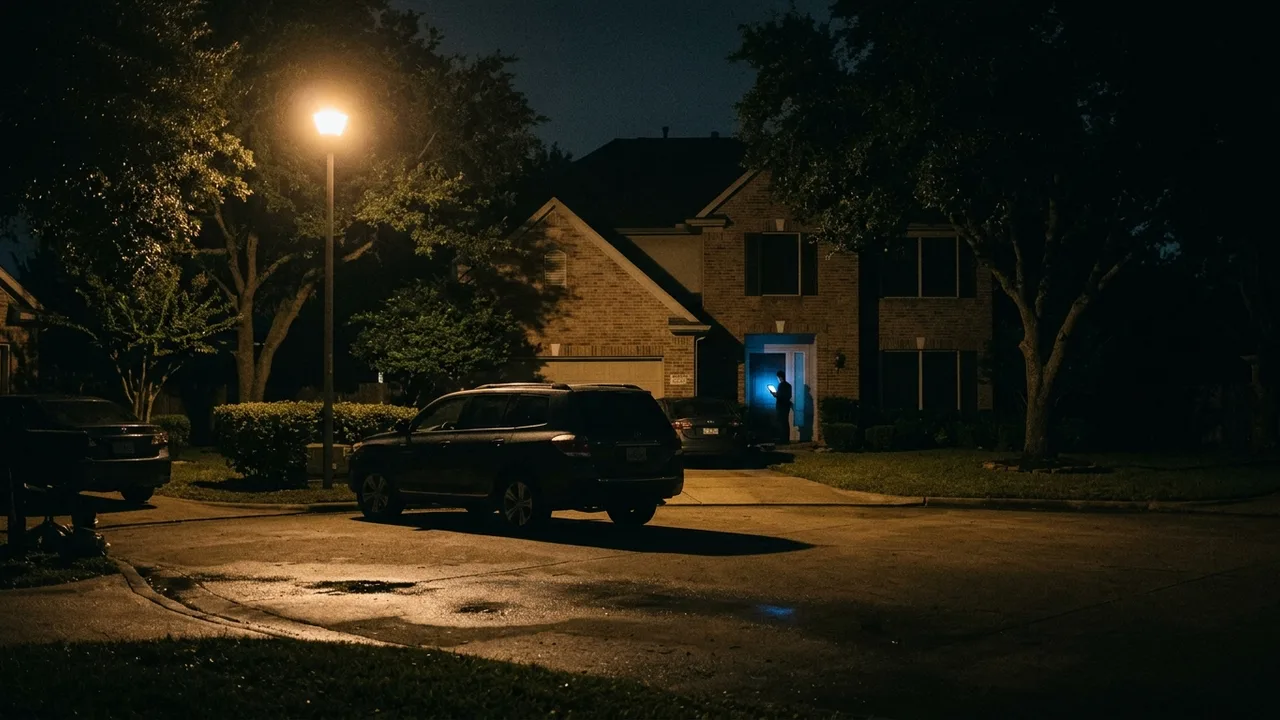
The scene repeats nightly across the UK: two figures on a driveway, one holding a device near the front door, the other beside the car. No smashed glass, no forced lock. The car unlocks, starts and drives away in less time than it takes to make tea. This is relay theft, and it exploits convenience technology — keyless entry and keyless start — exactly as designed.
Vehicle theft in England and Wales has run at elevated levels for several years, and police and insurer analyses consistently attribute a large share of modern-car thefts to electronic compromise rather than burglary for keys. Understanding the mechanism is the first defence.
How a relay attack works
Your keyless fob constantly listens for a low-power radio challenge from the car. Walk up, the car senses the fob, the doors unlock; sit down, press start, drive. The system's assumption is that radio proximity equals physical presence.
Relay equipment breaks that assumption. One thief stands near your home with a receiver-amplifier that captures the car's challenge and relays it — through walls and doors — to your fob on the hallway table. The fob answers as it always does; the second device beside the car replays that answer. The car concludes the key is present. Total time: seconds. The equipment is compact, and the attack leaves no damage — which is also why some insurers scrutinise keyless-theft claims closely.
Two related attacks are worth knowing. CAN-bus injection skips the key entirely: thieves pry off a headlight or bumper trim to reach the car's wiring and inject unlock/start commands directly — a reminder that some thefts defeat even perfect key hygiene. Signal jamming is cruder: a jammer stops your lock command reaching the car in a car park, leaving it open behind you. The habit that defeats jamming is simple — watch for the flash of the indicators and listen for the lock before walking away.
The defences, ranked by effectiveness
1. A Faraday pouch — for every key, every night. (Essential, ~£5–£15.) A metallised pouch blocks the fob's radio entirely; the relay has nothing to amplify. Buy two per key — one for the hallway, one for your pocket — and test them: a properly working pouch means the car will not unlock with the pouched key held against the door handle. The spare key in the kitchen drawer defeats the whole exercise if it isn't pouched too.
2. Motion-sensing fobs and manufacturer updates. (Free — switch it on.) Many manufacturers now ship fobs that go to sleep when stationary, closing the relay window. Check whether your fob supports sleep mode or whether keyless entry can be disabled entirely in the car's settings or by the dealer — many owners never learn their car offers this.
3. A visible mechanical lock. (~£40–£150.) Steering-wheel and pedal locks look like a return to the 1990s because they are — and that is the point. Relay kit doesn't defeat hardened steel, and a thief stealing to order simply moves to a car that takes sixty seconds rather than five minutes. Insurer-recognised (Sold Secure) models carry real deterrent weight.
4. A tracker for the aftermath. (~£100–£400 plus subscription.) Thatcham-approved S5 trackers with dedicated response teams recover a meaningful share of stolen vehicles. This protects the outcome, not the car — but for high-value or theft-targeted models it can also unlock insurance terms.
5. Parking strategy. A car boxed into a driveway behind a cheaper one, nose-in against a wall, under lighting or a camera, is a slower and riskier target. Thieves optimise for speed above all.
If your model is on the hot list
Theft is concentrated: certain premium SUVs, fast Fords and popular pickups dominate insurer theft tables year after year. If you own one, layer defences — pouch plus mechanical lock plus tracker — and ask your dealer specifically about security software updates; several manufacturers have issued retrofits hardening keyless systems on exactly these models.
Key takeaways
- Relay theft amplifies your fob's signal from inside your home — no keys are taken and no damage is left
- Faraday pouches for every key, tested and used nightly, remove the attack outright for a few pounds
- Enable fob sleep mode or disable keyless entry where the manufacturer allows it
- A hardened visible lock changes the thief's time calculation; a Thatcham S5 tracker changes the recovery odds
- Lock-jamming is beaten by one habit: confirm the indicators flash before you walk away
Sources & further reading
- Home Office vehicle-theft statistics for England and Wales
- insurer and Thatcham Research theft-method analyses
- Sold Secure product testing
- manufacturer keyless-security bulletins, 2023–2026
Figures, prices and policy details were current at the last-updated date above. Automotive pricing, incentives and regulations change frequently — verify time-sensitive details against the primary sources listed below. Read our editorial policy and fact-checking standards.