💷 Not financial advice.
⚠️ US electric vehicle incentives, eligibility rules and tax treatment have changed repeatedly and vary by vehicle, buyer and lease structure. Verify the current position before making any decision — we have deliberately avoided asserting specifics that change frequently.
The argument
Leasing suits electric vehicles better than it suits combustion cars, and the reason is specific: an EV purchase carries risks that a lease transfers to someone else.
That's the case. Here it is honestly, along with the case against.
⭐ Why leasing addresses EV-specific risks
1. Residual value risk — the strongest argument.
As our EV depreciation investigation documented, electric vehicle values have been genuinely volatile — driven by rapid technological improvement, new-car price cuts, battery-health caution and incentives.
If you buy, you carry that risk entirely.
If you lease, the finance company does. As our loan-versus-lease piece put it, that's a real service, and it's priced in.
Given how quickly EV technology is moving, this is the single most compelling reason to lease one.
2. Technology obsolescence.
The pace of improvement is unusual. As our coverage documented, the BMW i3 offers up to 559 miles WLTP and 400 kW charging — 249 miles added in 10 minutes. The Zeekr 7X charges 10–80% in 13–16 minutes.
A three-year-old EV competes against genuinely different technology, in a way a three-year-old petrol car doesn't.
A lease means you're not holding an asset while that happens.
3. Battery uncertainty.
As our used-EV guidance insists, a battery health report is non-negotiable when buying used — and the fact that buyers need one at all reflects genuine uncertainty.
Over a typical lease term, degradation is minimal and warranty coverage applies throughout. You return the car before the question becomes yours.
4. Warranty coverage throughout. A lease term typically sits comfortably within warranty.
The genuine case against leasing
1. You own nothing at the end. Perpetual payments, no asset.
2. ⭐ You lose the payment-free years.
As our loan-versus-lease analysis argued, keeping a car past the payments is the cheapest motoring most people get. A lease structurally prevents that.
3. Mileage limits. Excess charges are substantial, and people routinely under-declare optimistically.
4. Condition charges at return, which surprise people.
5. If EV values stabilise, buying becomes better. The residual argument depends on volatility continuing. If the used EV market matures — and as our depreciation piece noted, the used EV market currently offers the strongest value in motoring — buying looks better.
6. Early termination is expensive.
⚠️ The incentive question
US electric vehicle incentives have changed repeatedly, and eligibility has depended on vehicle, manufacturing location, buyer income and — significantly — whether the vehicle is purchased or leased, with different rules historically applying.
We are deliberately not asserting the current position, because it has moved frequently and readers may encounter this article long after publication.
What we'd advise:
1. Verify the current rules directly before assuming any incentive applies.
2. Ask the dealer to show how any incentive is reflected in the lease or purchase figures — not merely that it exists.
3. Compare the total cost with and without, because incentives can change the arithmetic substantially.
4. Don't let an incentive alone drive the decision. As our subscription and options coverage argued repeatedly, a benefit you may not actually realise shouldn't determine a multi-year commitment.
⭐ The variable that actually decides it
Not the incentive. Not the residual forecast.
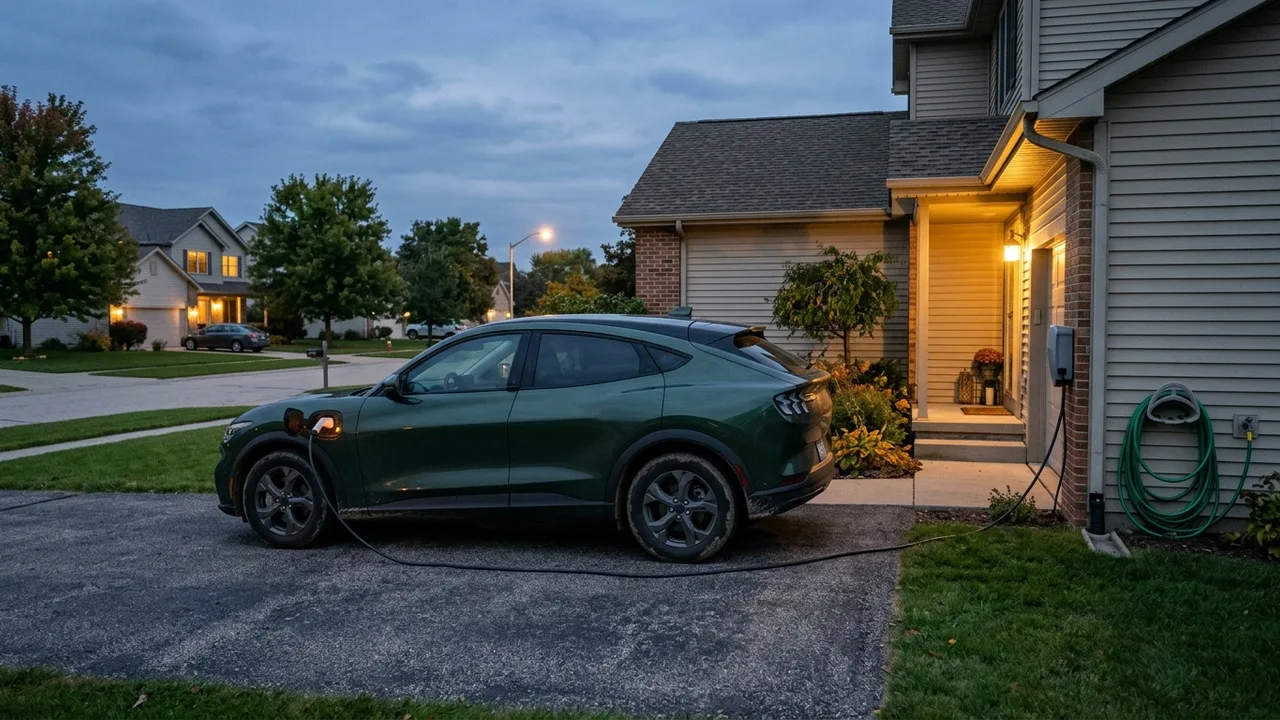
Whether you can charge at home.
As our testing establishes repeatedly — most directly in our public-charging diary — home charging is the foundation of the EV value proposition. With it, EV ownership is genuinely better than petrol. Without it, the running-cost advantage narrows substantially and the time cost is real.
If you can't charge at home, the lease-versus-buy question is secondary. As our powertrain comparison concluded, a hybrid may simply be the better answer — it asks nothing of you and refuels in five minutes anywhere.
Resolve charging first. Then decide how to pay.
The bottom line
Leasing suits EVs better than combustion cars because it transfers the risks that are specific to electric: volatile residuals, rapid technology obsolescence and battery uncertainty.
The counter-argument is real: you own nothing, you lose the payment-free years that are the cheapest motoring available, and if EV values stabilise the calculation shifts toward buying.
⚠️ Verify current incentive rules directly — they've changed repeatedly, they differ between purchase and lease, and an article is a poor place to learn the current position.
And resolve the charging question before either. It matters more than the finance structure, the incentive or the badge.
Key takeaways
- 💷 Not financial advice, and ⚠️ US EV incentive rules have changed repeatedly — verify the current position directly
- Leasing transfers the risks specific to EVs: volatile residuals, rapid technology obsolescence and battery uncertainty
- The pace matters — a three-year-old EV competes against 559-mile, 400 kW technology in a way a three-year-old petrol car doesn't
- The counter-argument is real: you own nothing, and you lose the payment-free years that are the cheapest motoring available
- ⭐ The variable that actually decides it is whether you can charge at home — resolve that first; if you can't, a hybrid may be the better answer